Auto-Injectors to Immunotherapy: A Complete 2026 Guide to the Anaphylaxis Treatment Landscape
Published on May 25, 2026
The Landscape Has Changed
For most of the last twenty years, the food-allergy conversation began and ended with one product: the epinephrine auto-injector. You carried two of them, you hoped you never had to use them, and your only other tool was strict avoidance. That picture has changed quickly. By the spring of 2026 an allergy family in North America can choose, in consultation with their allergist, between two classes of rescue medication (auto-injector or needle-free spray), two approved disease-modifying therapies (oral immunotherapy and the biologic omalizumab), and a third therapy that may receive U.S. approval within the next year. The question is no longer whether treatment exists. The question is which combination of treatments makes sense for a particular patient and household, and in what order.
This guide walks through the major options as they stand in 2026: what each one does, what the evidence shows, and the trade-offs families and adults need to weigh when sequencing decisions with their allergist.
Rescue Medications, Part One: The Traditional Auto-Injector
Epinephrine remains the only first-line treatment for anaphylaxis, the severe, potentially fatal allergic reaction that food-allergic patients are most at risk of. Auto-injectors deliver a single dose intramuscularly through a spring-loaded needle, typically into the outer thigh, and they have saved lives for more than three decades. Brand-name and authorized generic devices are widely available, prescribed in two-packs because up to one in five reactions follow a biphasic pattern in which symptoms return hours after the initial wave subsides.
The limitations are well known. Auto-injectors typically expire after about a year, which means a household paying out of pocket may refill its devices several times a year as different sets expire on different schedules. The needle, however briefly visible, is a documented barrier to use: surveys consistently find that a meaningful fraction of teenagers and adults hesitate to inject themselves or a child in an emergency, and that hesitation costs time precisely when minutes matter most. The carrying burden is also non-trivial. A teen pointing at a friend’s auto-injector pouch and asking “what’s that?” is a familiar source of social friction in the allergy community.
Rescue Medications, Part Two: Neffy and the Needle-Free Option
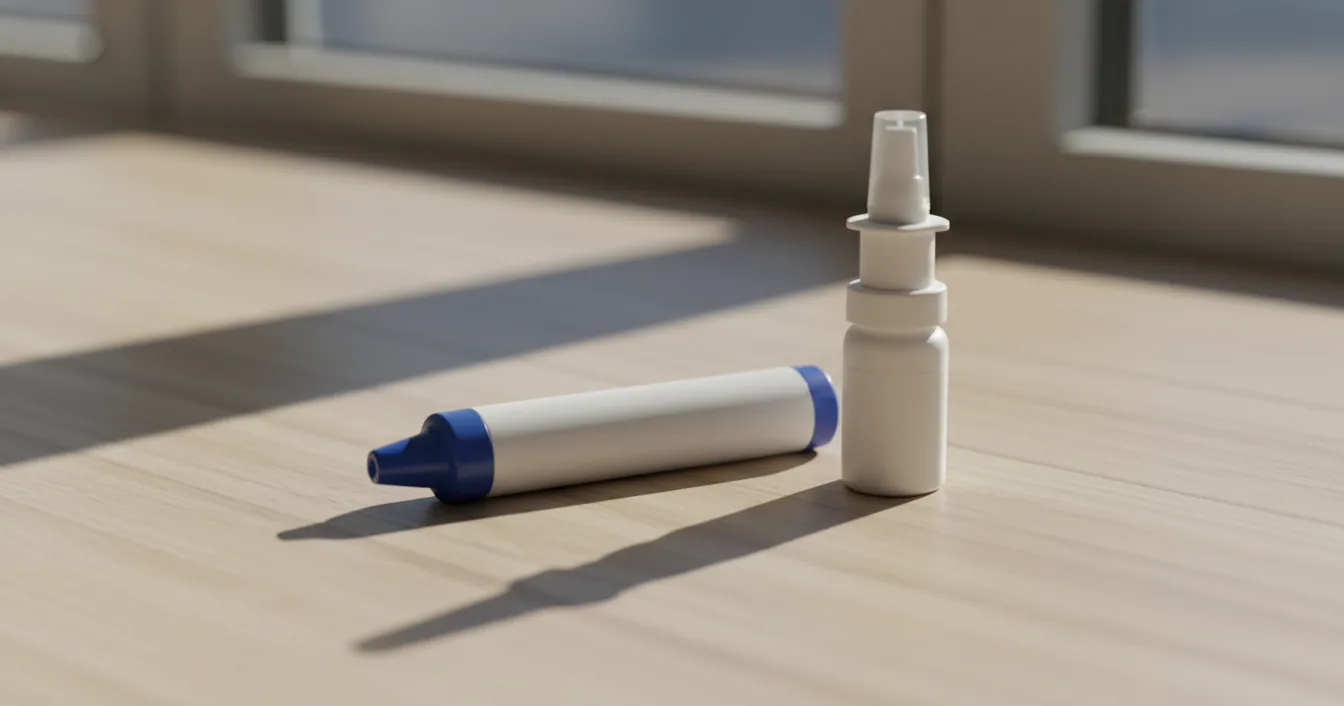
Neffy, the first needle-free epinephrine, changes the calculus for many of those patients. It is a single-use nasal spray about the size of a thick keychain that delivers a measured dose into one nostril. The FDA cleared the adult version in 2024 and the pediatric 1-milligram device for younger children in 2025. In March 2026 the FDA dropped the lower age limit on the kids’ 1-milligram spray, widening access for the smallest children. One month later Health Canada approved Neffy as the country’s first needle-free anaphylaxis treatment, with availability in Canadian pharmacies expected in summer 2026.
For many families the practical wins are the shelf life and the form factor. Neffy carries a 30-month shelf life, roughly two and a half times that of a typical auto-injector, which reduces both the refill cost and the risk of carrying expired medication. The device is compact enough to slip into a pocket without the dedicated pouch that signals “allergy kid” to the rest of the playground. Allergists interviewed about the Canadian approval framed needle-free epinephrine as a tool that lowers psychological barriers to use, particularly for caregivers and teens who may otherwise delay or skip an injection.
Neffy does not replace the auto-injector for every patient. Some clinicians still prefer an intramuscular dose when a patient has a severe nasal obstruction, profuse rhinorrhea, or a history of biphasic anaphylaxis that may demand multiple doses. The two delivery routes are best treated as options to discuss with an allergist, not as a binary upgrade.
Oral Immunotherapy: Eating Toward Tolerance
Rescue medications treat the reaction. Oral immunotherapy (OIT) tries to change the underlying allergy. A patient ingests a tiny, carefully measured amount of the allergen under medical supervision, then takes daily doses at home and returns to the clinic for graduated up-doses every one to several weeks. Over months to years the body’s reactivity declines.
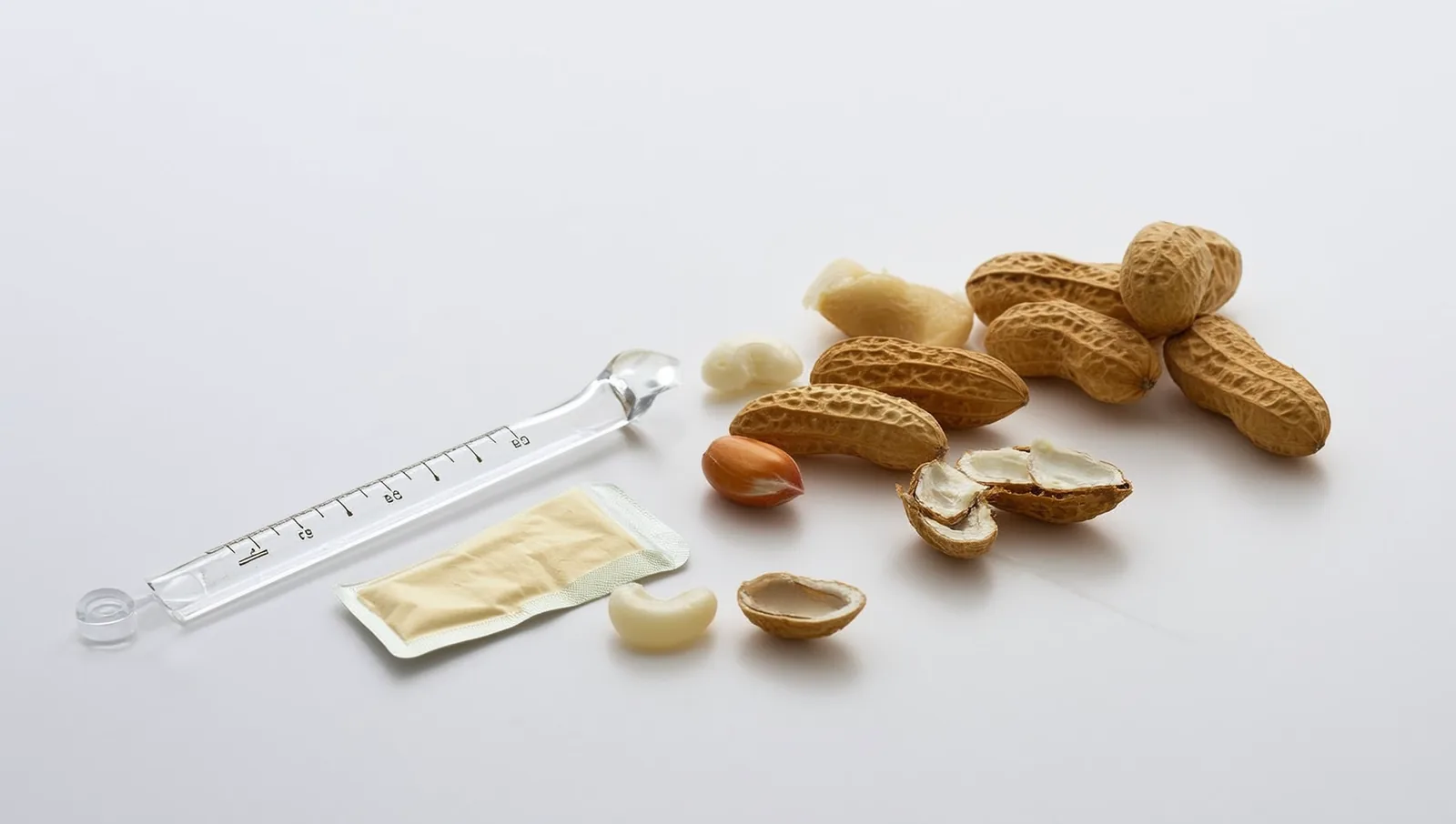
OIT is not a 2020s invention. The first published account of using oral exposure to treat egg allergy dates to 1908. What changed in 2020 was the FDA’s approval of Palforzia, a standardized peanut OIT product with a defined protein content and a fixed dosing schedule. In the pivotal PALISADE trial, around 500 peanut-allergic children aged 4 to 17 were randomized between Palforzia and placebo. After roughly a year, half of the Palforzia children could tolerate one gram of peanut protein in a supervised challenge, compared with two percent in the placebo arm. Two-thirds tolerated at least 600 milligrams of peanut protein, roughly two peanut kernels. Among patients who completed active treatment, 85 percent reached that threshold. The maintenance dose is 300 milligrams of peanut protein, about one peanut kernel, taken daily.
The therapy is not without cost. Reactions during dose-up are common, ranging from itchy mouth and stomach upset to systemic anaphylaxis that requires epinephrine. Roughly 10 to 30 percent of patients drop out, most often because of gastrointestinal symptoms. A smaller fraction, three to fifteen percent, develop eosinophilic esophagitis (EoE) during or after treatment. OIT is also offered in private practice for milk, egg, tree nut, wheat, soy, sesame, and baked-milk and baked-egg products, though these protocols vary by clinic and are not FDA standardized.
The patients who do well on OIT generally describe the same trade. They still avoid the allergen as a food, but they no longer fear that a hidden trace will kill them. That reframing, more than any specific milligram of tolerance, is what tends to change a household’s day-to-day stress level. For families weighing whether to start, the evidence-based diagnostic pathway behind a confirmed allergy matters: OIT only makes sense for IgE-mediated allergies confirmed by an allergist, not for sensitivities flagged by consumer kits.

Xolair: A Biologic Approach
Omalizumab, marketed as Xolair, is an anti-IgE biologic that has been used in asthma and chronic urticaria for years. In 2024 the FDA approved it for food allergy as well, in adults and children one year and older. It is given by subcutaneous injection every two or four weeks. Unlike OIT, it is allergen non-specific: a single regimen can reduce the risk of accidental-exposure reactions across multiple food allergens at once.
A 2026 comparative analysis reported that more than 60 percent of children with multiple food allergies who began eating their allergens after omalizumab treatment were able to do so, a rate comparable to OIT in the same population. That finding is significant because it offers a path for the substantial group of patients who carry several food allergies simultaneously and would face an impractical multi-year stack of separate OIT protocols. Xolair can also be combined with OIT, with the biologic dampening reactions during the up-dose phase.
The trade-offs are real. The injection schedule and cost mean Xolair is rarely a casual choice, and the long-term durability of its effect, particularly if a patient stops the drug, is still being studied.
The Viaskin Patch: The Next Likely Approval
For families of toddlers, the most-watched late-stage candidate is the Viaskin peanut patch developed by DBV Technologies. It is an epicutaneous (skin-based) immunotherapy: a small adhesive patch worn on the back delivers tiny amounts of peanut protein through the skin. In a large Phase 3 trial reported in March 2026, the patch produced a statistically significant therapeutic effect in young children, and DBV indicated it would soon submit the data to the FDA. If approved, Viaskin would be the first non-oral disease-modifying therapy for food allergy and would specifically target the youngest patients, for whom OIT logistics and dose tolerability can be hardest.
Cofactors and the Adult Reality
One under-discussed piece of 2026 reaction data: roughly half of severe food-allergy reactions in adults appear to be linked to cofactors that lower the reaction threshold on a given day. Exercise within a few hours of an exposure, nonsteroidal anti-inflammatory drugs like ibuprofen, alcohol, infection, hot showers, and even menstrual cycle phase can all push a previously tolerated dose into anaphylaxis. The clinical implication is that an adult patient cannot rely on past tolerance as a guarantee of future safety, and that decisions about OIT maintenance dosing, exercise timing, and rescue-medication carry deserve to be revisited as life circumstances change.
Sequencing the Decisions

No single pathway suits every household. A general framework most allergists would recognize looks something like this. Rescue medication is non-negotiable for any patient at risk of anaphylaxis: that means carrying epinephrine, whether auto-injector or Neffy, at all times. Disease-modifying therapy is the second conversation. For a single severe allergy, OIT (Palforzia for peanut, or a clinician-supervised protocol for other foods) is often the first option discussed. For multiple food allergies, Xolair as a stand-alone or as a bridge into OIT is increasingly common. For very young children with peanut allergy, the Viaskin patch may shortly become a third path. Strict avoidance still has a place, particularly for households managing several conditions at once where adding a daily therapy on top of existing dietary restrictions is unwelcome.
The decision that matters most is choosing an allergist who will walk through the trade-offs honestly, revisit them as new data arrives, and respect that the right plan for one family may not be the right plan for another. The 2026 landscape gives both sides of that conversation more options than ever before. Used carefully, that is unambiguously good news.
Sources
- Allergic Living on the FDA dropping the age limit on the kids’ Neffy spray
- Allergic Living for Health Canada’s approval of Neffy
- Global News with coverage of the first needle-free anaphylaxis treatment in Canada
- FARE on the basics of oral immunotherapy
- FARE with the broader food allergy treatment landscape