The Complete Food Allergy 101 Guide for 2026: Top 9 Allergens, Diagnosis, Labels, and Daily Safety
Published on June 1, 2026

Starting From Zero
A new food allergy diagnosis, whether it lands on you or your child, tends to arrive as a pile of fragments: a frightening reaction, a referral, a prescription, a list of foods to avoid, and a stack of pamphlets that all assume you already know the basics. This guide is the opposite. It builds the whole picture from the ground up, in the order that actually helps: what an allergy is, which foods cause most reactions, how a real diagnosis works, how to read a label, how to keep allergens apart in a kitchen, and what a basic emergency plan looks like. By the end you will have a mental model you can build on, not a folder you are afraid to open.
Food allergy is both common and serious. The U.S. Food and Drug Administration estimates that food allergies and related hypersensitivities affect millions of Americans, and reactions range from mild hives and lip swelling to anaphylaxis, a severe response that can involve breathing trouble and shock. There is no cure yet. The two tools that keep people safe are an accurate diagnosis and consistent, informed avoidance. Everything below serves those two goals.
Allergy, Intolerance, and “Sensitivity” Are Not the Same Thing
The single most useful thing a newcomer can learn is that these three words describe different things, even though menus and marketing tend to use them interchangeably.
A food allergy is an immune-system reaction. The body mistakes a harmless food protein for a threat and, in the most common type, produces immunoglobulin E (IgE) antibodies against it. On later exposure those antibodies trigger a rapid release of histamine and other chemicals, which can cause hives, swelling, vomiting, wheezing, or full anaphylaxis. The reaction is reproducible, it can be life-threatening, and the amount of food needed to set it off can be tiny.
A food intolerance is a digestive problem, not an immune one. Lactose intolerance, for example, comes from low levels of the enzyme that breaks down milk sugar. It can cause real misery, including bloating, gas, and cramping, but it does not cause anaphylaxis and is not dangerous in the way an allergy is.
“Sensitivity” is the slippery one. It has no agreed medical definition and is the word most often attached to unvalidated mail-in test kits. If you are tempted by one, it is worth understanding why at-home sensitivity tests are not allergy tests before you change a single thing about your diet.
The Top 9 Allergens in the United States
A short list of foods accounts for the large majority of serious allergic reactions. U.S. law calls them the major food allergens, and there are now nine:
- Milk
- Eggs
- Fish (such as bass, flounder, or cod)
- Crustacean shellfish (such as crab, lobster, or shrimp)
- Tree nuts (such as almonds, walnuts, or pecans)
- Peanuts
- Wheat
- Soybeans
- Sesame
Sesame is the newest addition. The Food Allergen Labeling and Consumer Protection Act of 2004 (FALCPA) originally named eight allergens. The FASTER Act, signed in April 2021, declared sesame the ninth, and the labeling requirement took effect on January 1, 2023.
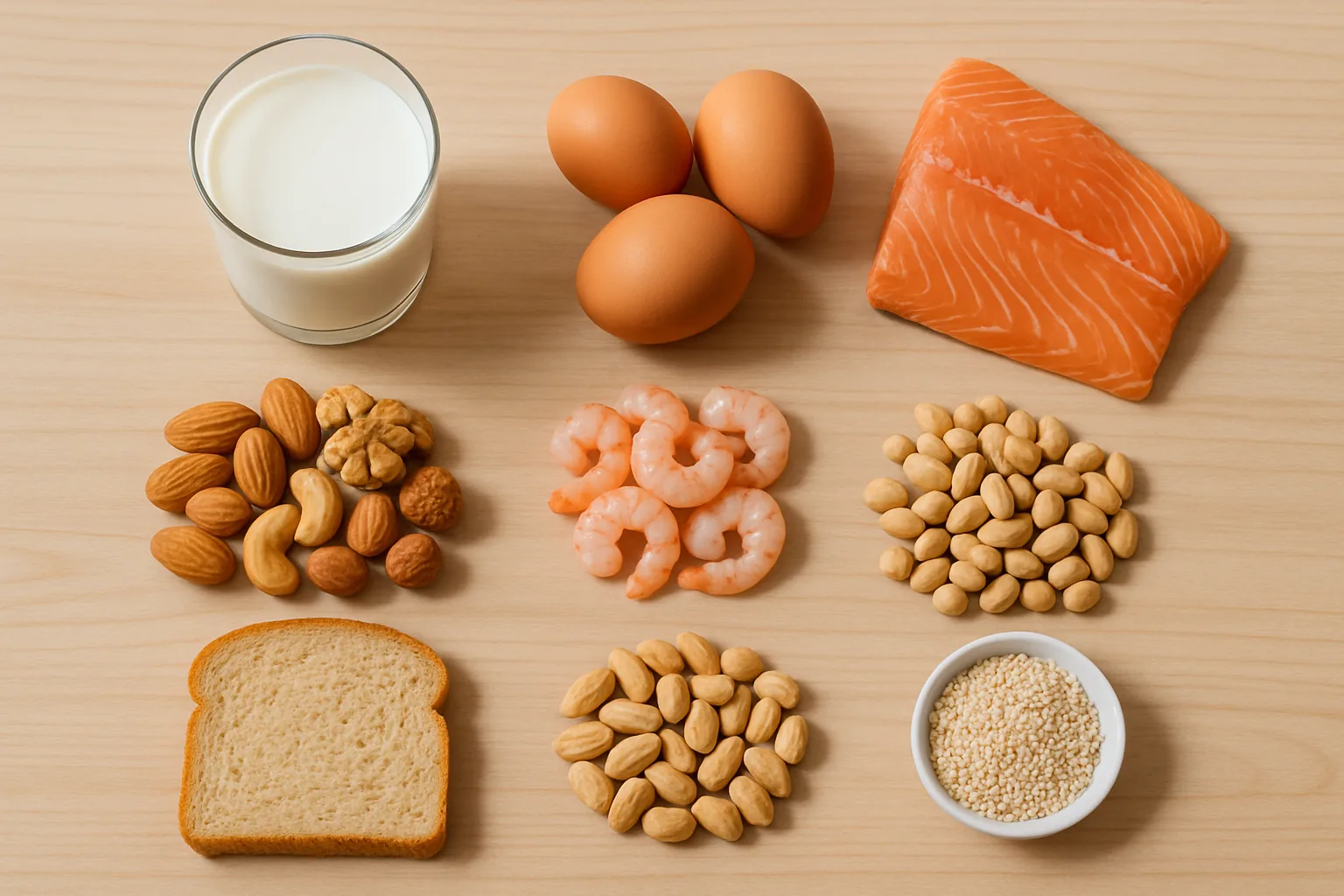
Two things trip people up. First, allergens hide inside ingredients you would not suspect, so wheat can turn up in soy sauce and milk can turn up in processed deli meat. Wheat also overlaps with a separate condition, celiac disease, so the gluten free landscape for celiac and allergy is worth reading if wheat is on your list. Second, the nine are the legally labeled allergens, not the only ones. People can and do react to foods well outside this list, which is why your own diagnosis matters more than any chart.
How Food Allergy Is Actually Diagnosed
A real diagnosis is not a single test result. Board-certified allergists combine a detailed history with testing, and they read the tests in light of what actually happens when you eat the food.
The usual tools are a skin-prick test, in which tiny amounts of suspected allergens are introduced just under the surface of the skin to watch for a small hive, and a blood test that measures food-specific IgE. Neither number is a verdict on its own. A positive result with no history of reaction is called sensitization, and most sensitized people tolerate the food without any trouble. The most definitive tool is a supervised oral food challenge, where you eat measured amounts of the food under medical observation. It is also the one that should never be attempted at home.

This is why the order matters: see a doctor, get a referral to an allergist, and bring a written record of what you ate, how much, and what happened. The clinical story is the part no kit can replace.
Reading a Label Under FALCPA
FALCPA is the reason allergen information on U.S. packaged food is readable at all. The law requires that the food source of any major allergen be declared in plain English, in one of two ways.
It can appear in parentheses right after the ingredient, as in “lecithin (soy),” “flour (wheat),” or “whey (milk).” Or it can appear in a separate “Contains” statement just after the ingredient list, as in “Contains Wheat, Milk, and Soy.” If a “Contains” line names your allergen, put the product back on the shelf. The reverse is not safe to assume, though: not every product carries a “Contains” line, so you still have to read the full ingredient list every time, even on a brand you buy every week, because recipes change without warning.

Two gaps are worth memorizing. First, FALCPA covers most packaged foods the FDA regulates, but not poultry, most meats, certain egg products, or most alcoholic beverages, which fall under other agencies and their own rules. Second, advisory phrases like “may contain peanuts” or “made in a facility that also processes milk” are voluntary. They are not required, not standardized, and their absence does not prove a product is safe. A “free from” claim on the front of a box is a marketing statement, not a guarantee of zero cross-contact, which brings us to the kitchen.
Cross-Contact at Home and When Eating Out
Cross-contact is the term for an allergen being transferred from one food to another, usually in amounts too small to see. Those traces are enough to trigger a reaction in someone who is allergic, and ordinary cooking does not destroy the protein the way heat kills bacteria. (The older phrase “cross-contamination” really describes germs. “Cross-contact” is the allergy-specific term.)
At home, the defenses are simple and physical. Wash hands, boards, knives, and pans with soap and water between foods. Prepare the allergen-free version first, before the allergen is anywhere on the counter. Use separate utensils, and where you can, keep dedicated items like a labeled toaster or a separate jar of spread so a used knife never goes back into the jar. Store allergens on lower shelves so nothing can spill down onto safe food.
Eating out raises the stakes because you cannot see the kitchen. Tell the server about the allergy, ask to speak with the manager or chef when a reaction would be severe, and be specific, because shared fryers, grills, and woks are common sources of cross-contact. Cooking for yourself stays the most controllable option, and building a small repertoire of naturally allergen-friendly meals, like an allergen-free vegan brunch, takes pressure off the days when you would rather not negotiate with a kitchen at all.
A Baseline Emergency Plan
Everyone with a diagnosed food allergy should have a plan in place before anything goes wrong. The cornerstone is recognizing anaphylaxis, a severe reaction that often starts within minutes of exposure and can affect breathing and blood circulation. Warning signs include trouble breathing, swelling of the throat or tongue, widespread hives, repeated vomiting, dizziness, or a sudden drop in alertness.
Epinephrine is the first-line treatment, and it works best when it is given early. If an allergist prescribes an auto-injector, carry two at all times, because one dose is not always enough and up to one in five reactions has a second wave, called biphasic anaphylaxis, that can arrive hours after the first appears to settle. The standard response is to give epinephrine, call emergency services, and go to the hospital even when symptoms seem to improve. Antihistamines can ease itching and hives, but they do not stop anaphylaxis, so they are never a substitute for epinephrine.
Put the plan in writing. A food allergy and anaphylaxis emergency care plan, signed by your doctor, tells caregivers, schools, and coworkers exactly what to watch for and what to do. The treatment options have widened in recent years, and our 2026 guide to anaphylaxis treatment walks through auto-injectors, the newer nasal spray, and immunotherapy in detail.
Where to Start This Week
You do not have to absorb all of this at once. If you are at the very beginning, three steps cover the most ground: book an appointment with a board-certified allergist and bring a written symptom diary, start reading the full ingredient list on everything you buy, and ask your doctor for a written emergency plan along with a prescription for epinephrine if it is warranted. The landscape keeps shifting, too. In February 2026 the FDA held a public meeting on food allergen thresholds, part of a slow move toward clearer rules on how much of an allergen is too much. The science is advancing. In the meantime, an accurate diagnosis and steady, label-reading vigilance remain the things that keep you safe. If your allergies are severe, treat this guide as a starting point and build the specifics with an allergist who knows your history.
Sources
- U.S. Food and Drug Administration on the nine major food allergens and how to read the label
- U.S. Food and Drug Administration for what you need to know about food allergies and FALCPA
- Food Allergy Research and Education with the basics of what a food allergy is
- Food Allergy Research and Education on avoiding cross-contact at home and out