FDA Allergen Thresholds: What the 2026 Public Meeting Means for Consumers
Published on June 11, 2026
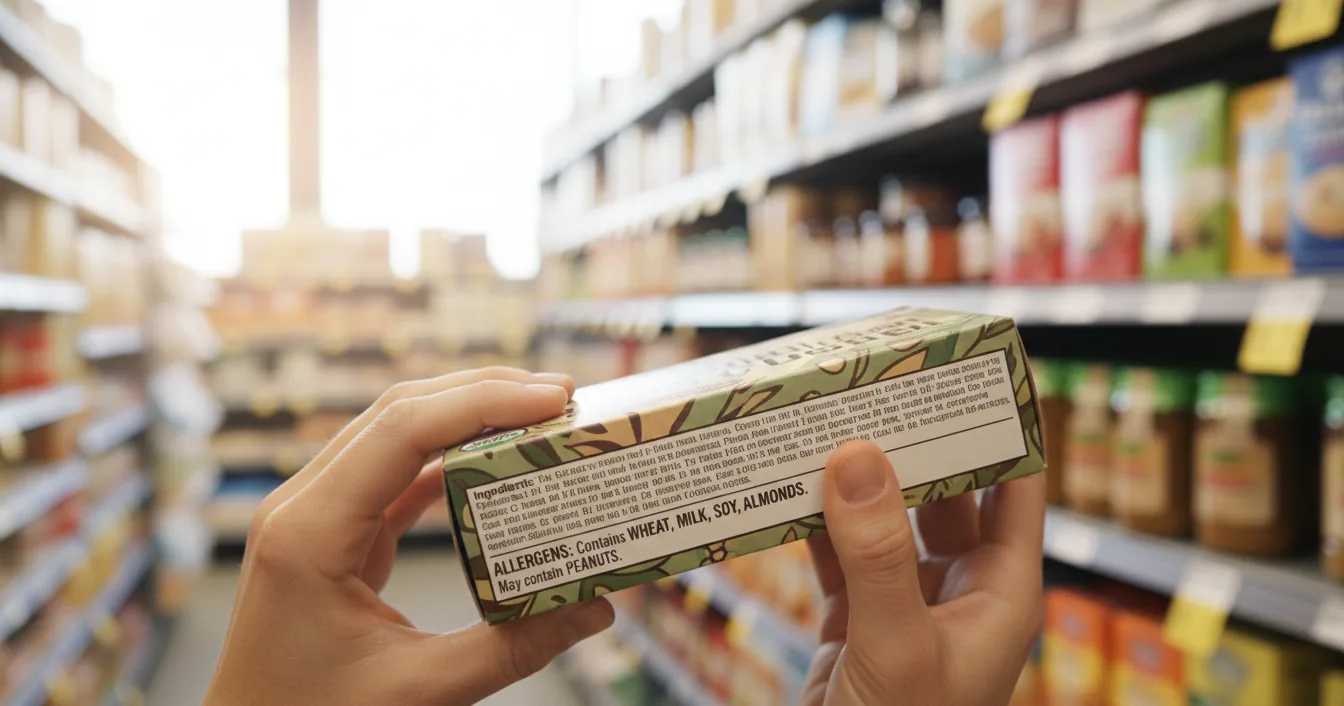
A Quiet FDA Meeting That Could Reshape Every “May Contain” Label
For the millions of Americans who read every food label before they eat, the most consequential allergy development of 2026 so far was not a recall or a new product. It was a three-day virtual meeting. From February 18 to 20, 2026, the U.S. Food and Drug Administration held a public meeting and listening session titled “Food Allergen Thresholds and Their Potential Applications.” No rule changed that week, and no label was redesigned. But the conversation the FDA started could eventually decide whether the “may contain” warning on the back of a granola bar is a meaningful signal or, as it usually is today, little more than a shrug.
What Actually Happened in February 2026
The first day was a public meeting featuring presentations on the FDA’s current allergen requirements, on allergen risk assessment, and on how other countries approach the problem, followed by panel discussions on threshold concepts, risk communication, and where thresholds might actually be applied. The next two days, February 19 and 20, held eight separate listening sessions where individuals and organizations spoke on four themes, including the underlying threshold concepts and what thresholds could mean for labeling.
The people in the virtual room were a deliberate mix: industry and trade groups, consumer and patient organizations, healthcare professionals, retailers, and academic researchers. The stated purpose was simply to gather input. The FDA says it will weigh what it heard, along with written comments submitted to a Regulations.gov docket, before deciding on next steps and which options to prioritize.
One point deserves to be in bold for every worried parent reading this: the FDA has not established or endorsed any allergen threshold. February was the opening of a process, not a decision. Nothing on a store shelf changes because of it yet.
”Contains” and “May Contain” Are Not the Same Label
To understand why this meeting matters, you have to separate two labels that look similar and mean very different things.
The “Contains” statement is the law. Under the Food Allergen Labeling and Consumer Protection Act of 2004 (FALCPA), any packaged food that deliberately uses one of the major allergens has to say so plainly, either in the ingredient list or in a “Contains” line right below it. The nine major U.S. allergens are milk, eggs, fish, crustacean shellfish, tree nuts, peanuts, wheat, soybeans, and sesame. That part of the label is mandatory and consistent. Our complete food allergy guide for 2026 walks through how to read it.
Advisory statements are a different animal. Phrases like “may contain peanuts,” “made in a facility that also processes milk,” or “produced on shared equipment with wheat” are precautionary allergen labeling, and they are entirely voluntary. The FDA notes that firms may choose to use them, but there are no requirements about when a manufacturer must add one or how it should be worded. A company can print “may contain” out of an abundance of caution on a product with almost no real risk, or leave it off a line with genuine cross-contact. Two products with identical risk can carry opposite labels. For a shopper trying to make a fast, safe decision, that inconsistency is the entire problem.

What a “Threshold” Actually Means
A threshold, often called a reference dose, is the amount of allergen protein below which the large majority of allergic people are unlikely to react. It is built from clinical data on the smallest doses that trigger a reaction across the allergic population. The FDA’s own Threshold Working Group called the quantitative, risk assessment based method the “strongest, most transparent” way to set one back in 2006, and a recent international expert consultation convened by the FAO and WHO recommended moving to risk-based reference doses. These doses are measured in milligrams of protein. The reference dose for fish that drove our reporting on reused restaurant breading, for example, sits at just 5 milligrams of total fish protein per serving.
Here is the caution that has to travel with every threshold conversation. A reference dose describes a population, not a person. It is chosen to protect most allergic individuals, not every single one, and the most sensitive people can and do react below it. A threshold is also about true IgE-mediated allergy, which is a different thing from an intolerance or the vague “sensitivities” that mail-in test kits claim to measure. None of this is a license to relax around a known allergen.
What Threshold-Based Labeling Could Change
The FDA laid out several places a threshold could be put to work: developing a policy for when advisory statements should appear, supporting petitions to exempt certain ingredients from labeling, guiding compliance and enforcement and recall decisions, and shaping guidance on how manufacturers control cross-contact.
The practical promise is that a threshold could turn the advisory label from noise into information. Picture a future where “may contain” only appears when realistic cross-contact could push a serving past the reference dose, and its absence actually tells you something. Today, faced with a meaningless warning, allergic shoppers split into two unhappy camps. Some learn to ignore “may contain” entirely, which is risky. Others avoid every product that carries it, which needlessly shrinks an already small grocery list. A numeric threshold is not a foreign idea in this space. Gluten-free labeling already runs on one, the 20 parts per million limit that, as we explained with gluten-free Cheerios, a batch can clear on average while individual boxes still carry a risky dose.

Why Some Allergy Families Are Wary
Not everyone wants this. When the FDA opened an earlier docket on allergen thresholds between 2012 and 2013, it drew 405 submissions, and more than half of the consumers who wrote in opposed the threshold concept outright. Three patient organizations urged caution as well, while industry and trade groups were uniformly in favor.
The worry is intuitive. If my child can react to a trace, why would I welcome a label that openly permits a trace? Supporters answer that the current system already allows unlabeled traces, it just does so silently, and that a science-based threshold at least makes the risk visible and consistent. Both sides agree on the biology underneath the debate: there is no cure, avoidance is the only real protection, and the text of FALCPA itself records that allergic reactions to food send roughly 30,000 people to the emergency room and cause about 150 deaths in the United States every year. Those stakes are exactly why the FDA is moving carefully rather than quickly.
What It Means for You Right Now
Five things are worth holding onto as this unfolds.
First, nothing has changed yet, so keep treating “may contain” as a real risk, especially if you or your child has a history of severe reactions. Second, remember that FDA guidance is not law. Even when the agency issues a threshold guidance, the word “should” in those documents means recommended, not required, unless it is tied to a binding regulation. Watch for the difference between a guidance document and an actual rule. Third, the next signal to watch is what the FDA does with the docket comments and whether it announces formal next steps. Fourth, keep your emergency tools current and carry two epinephrine auto-injectors; our 2026 guide to anaphylaxis treatment covers the options. Fifth, a “free from” claim on a package describes the recipe, not a guarantee of zero cross-contact, and it never replaces a plan built with a board-certified allergist who knows your history.
The Bottom Line
The February 2026 meeting did not change a single label, but it put a long-debated idea back on the table: replacing today’s inconsistent “may contain” warnings with thresholds grounded in how much allergen actually triggers a reaction. Done well, that could make labels honest and genuinely useful. Done carelessly, it could bless traces that harm the most sensitive among us. For now, read every label the way you always have, lean on your allergist, and keep your epinephrine close. The FDA is listening. The rules have not caught up yet.
Sources
- U.S. Food and Drug Administration on the virtual public meeting on food allergen thresholds
- U.S. Food and Drug Administration for where food allergen regulation stands now
Further reading
- Food Allergy Research and Education for practical ways to avoid cross-contact
- NIAID for the federal guidelines for diagnosing and managing food allergy