Fried Fish in a Reused Breading Bath: What the FDA's New Cross-Contact Study Means for Fish-Allergic Diners
Published on June 7, 2026
“It’s Just Chicken Tenders” Is No Longer a Safe Assumption
For years, a sensible workaround for a fish allergy at a fried-food counter was to skip the fish and order something else off the same menu: breaded chicken, onion rings, fried mushrooms, a basket of zucchini fries. The logic seemed airtight. If the food itself contains no fish, it should be safe to eat.
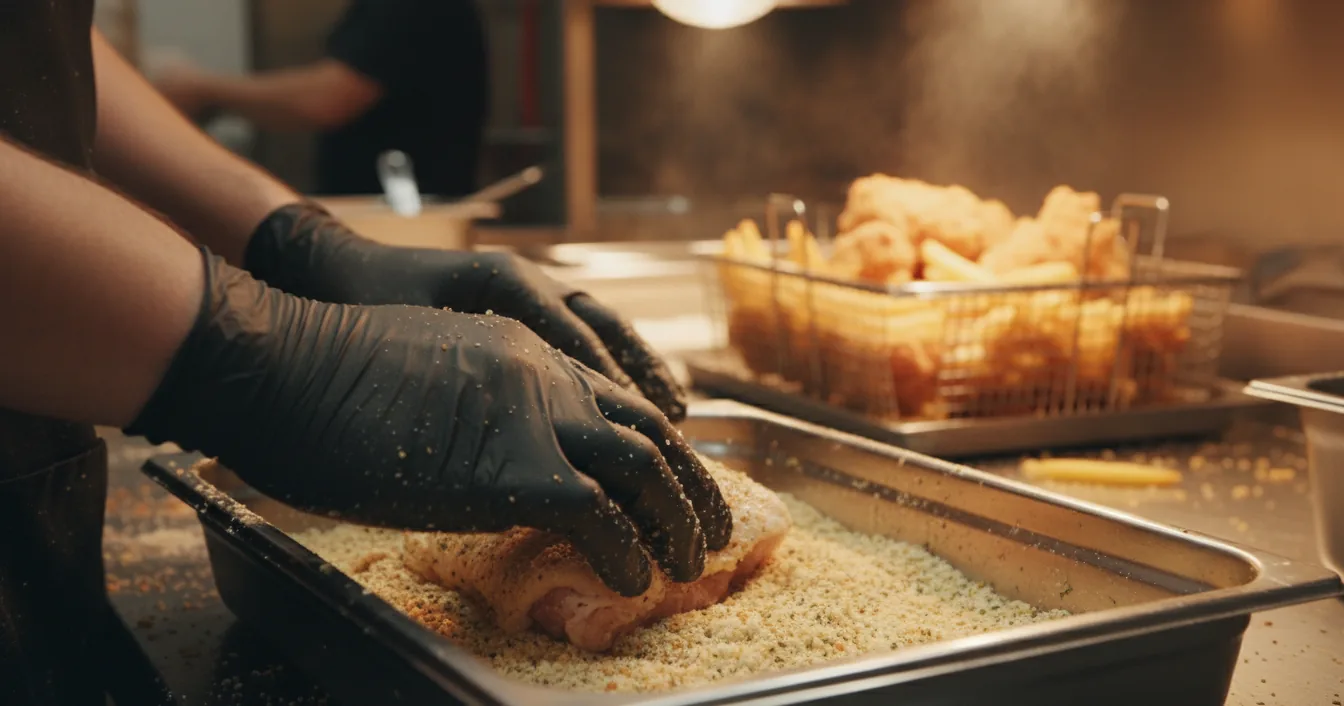
A study published in May 2026 by U.S. Food and Drug Administration researchers takes that assumption apart. Working in the lab and publishing in the Journal of Food Protection, the team measured how much seafood protein ends up in foods that are coated in a breading mix already used for fish. The short version is unsettling: when a kitchen reuses its breading after coating cod, a plain breaded chicken tender from that same bowl can carry enough fish protein to set off an allergic reaction. Cross-contact is the term for an allergen moving from one food to another in amounts too small to see, and the breading bath turns out to be a remarkably efficient way to move it.
What the Study Actually Measured
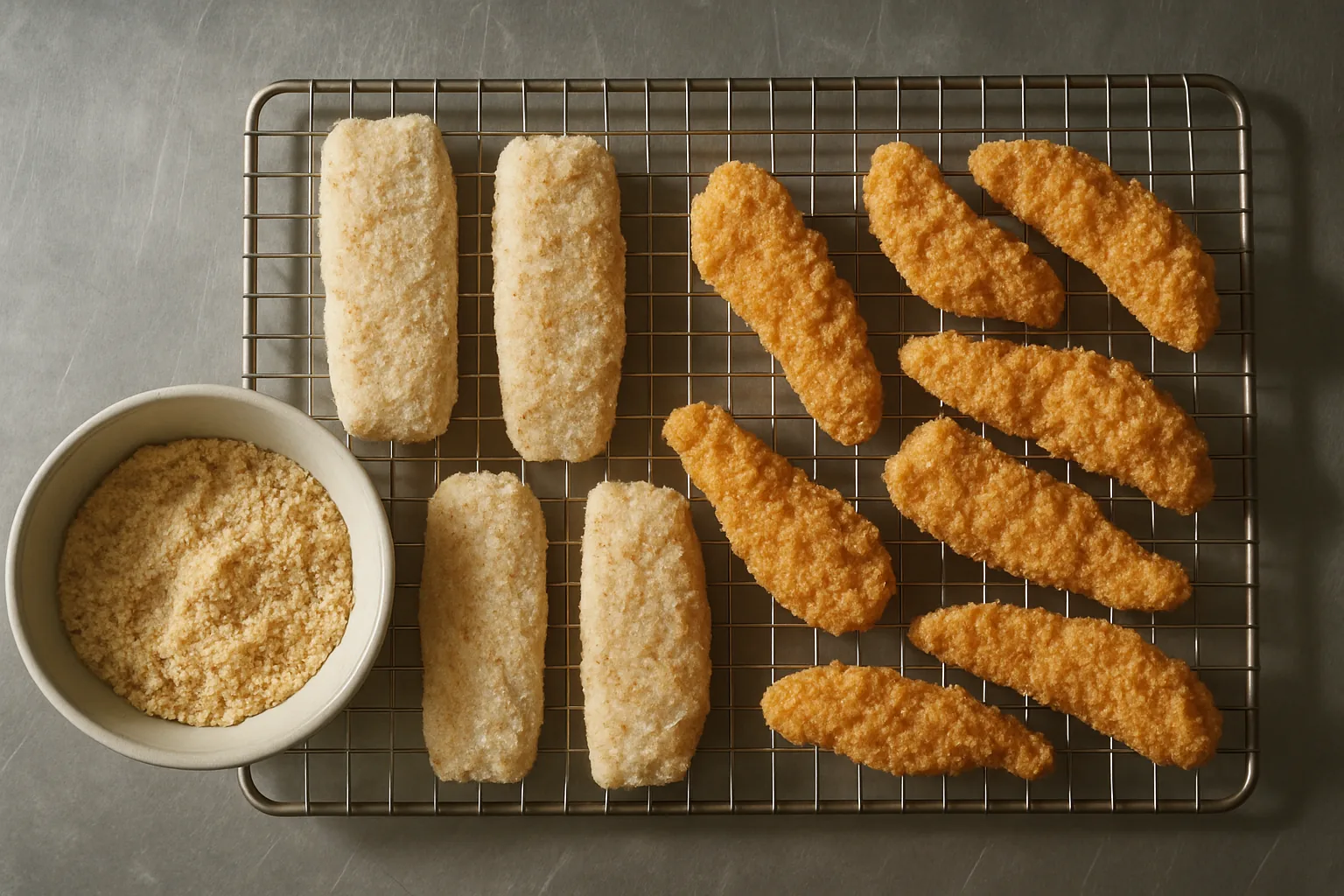
The setup was built to mirror how a busy kitchen really works. Researchers coated 20 separate batches each of cod and shrimp, roughly 20 to 30 grams per batch, in a bowl holding 200 grams of breading mix. They then used that same breading to coat chicken, mushrooms, and zucchini, and ran everything through ELISA tests, a standard laboratory method for detecting specific allergen proteins.
Two findings stand out. First, fish protein builds up in the breading the more it gets reused. After five batches of cod the breading already carried a measurable load, and by 20 batches the cod protein had climbed to 628.7 micrograms per gram, more than eighteen times the earlier level. The bowl does not reset between orders. It accumulates.
Second, that contaminated breading passed the protein straight into the next food. When the team coated chicken, mushrooms, and zucchini in the cod-used mix, single servings consistently exceeded 5 milligrams of total fish protein.
Why That 5 Milligram Number Matters
Five milligrams is not an arbitrary figure. It is the reference dose that the FAO and WHO propose under the Codex framework for fish, the kind of threshold used to guide precautionary allergen labeling. In plain terms, it is a level chosen to sit below what would provoke a reaction in most allergic people. A single serving of breaded zucchini from a cod-fouled breading bath blew past it. So did a breaded chicken tender.
That is the result that should reshape how a fish-allergic diner reads a fryer menu. The chicken is still chicken. The danger is the invisible coat of fish protein it picked up on the way into the oil.
Cod, Shrimp, and Why Fish Allergy Is Its Own Thing
The study tested two seafoods, and they did not behave the same way. Cod, a finfish, shed protein readily. Shrimp, a crustacean shellfish, shed far less: after 20 batches the breading held only 17.2 micrograms per gram of shrimp protein, and the amount passed into other foods stayed below 1 milligram, well under the 200 milligram Codex reference dose for shrimp.
For a fish-allergic diner, the cod result is the one that counts, and it is the worse of the two. Finfish allergy (cod, bass, flounder, tuna, and the rest) and shellfish allergy (shrimp, crab, lobster) are separate allergies driven by separate proteins, and plenty of people have one without the other. The reassuring shrimp numbers say nothing about your risk from fish. If anything, the study confirms that battered white fish like cod is exactly the kind of seafood most likely to leave a dangerous trace behind in shared equipment.
Sieving the Breading Does Not Fix It
The researchers also tested an obvious-sounding fix: sieving the breading between uses to strain out the fish particles. Finer sieves, down to 75 micrometers, did remove more allergen, but none of them removed it all, and the fine sieves wasted so much usable breading that the approach is impractical for a working kitchen. The conclusion was blunt. Sieving alone is not a reliable allergen control. A cook who reassures you that they “sift the flour” is not describing a safe process.
It is worth pairing this with a related point food-safety researchers have raised about shared frying oil, where filtering can reduce but never fully eliminate allergen carryover. The same logic runs across the whole fry line. A single shared step, whether the breading bowl or the oil, is enough to undo everything else.
The Questions to Ask Before You Order
You cannot see the breading station from your table, so you have to ask. Be specific, and treat a vague answer as a no. The goal is to find out whether your non-fish order ever touches anything that has touched fish.
- Is the breading or batter for this item shared with, or reused after, any fish? Ask about reuse directly, not just whether the dish “contains” fish.
- Do you have a dedicated breading or dredge station for non-seafood items, with separate bowls and utensils?
- Is there a dedicated fryer for non-fish foods, or does everything go through the same oil? Shared oil carries its own cross-contact risk.
- Is the oil changed and the station cleaned between fish and non-fish orders, or does it run continuously through service?
- Can the kitchen prepare my item from fresh, un-reused breading?
If the staff cannot answer, or the kitchen runs one breading bowl and one fryer for everything, the safe move is to order something that never goes near the fry station at all.

Where the Risk Runs Highest
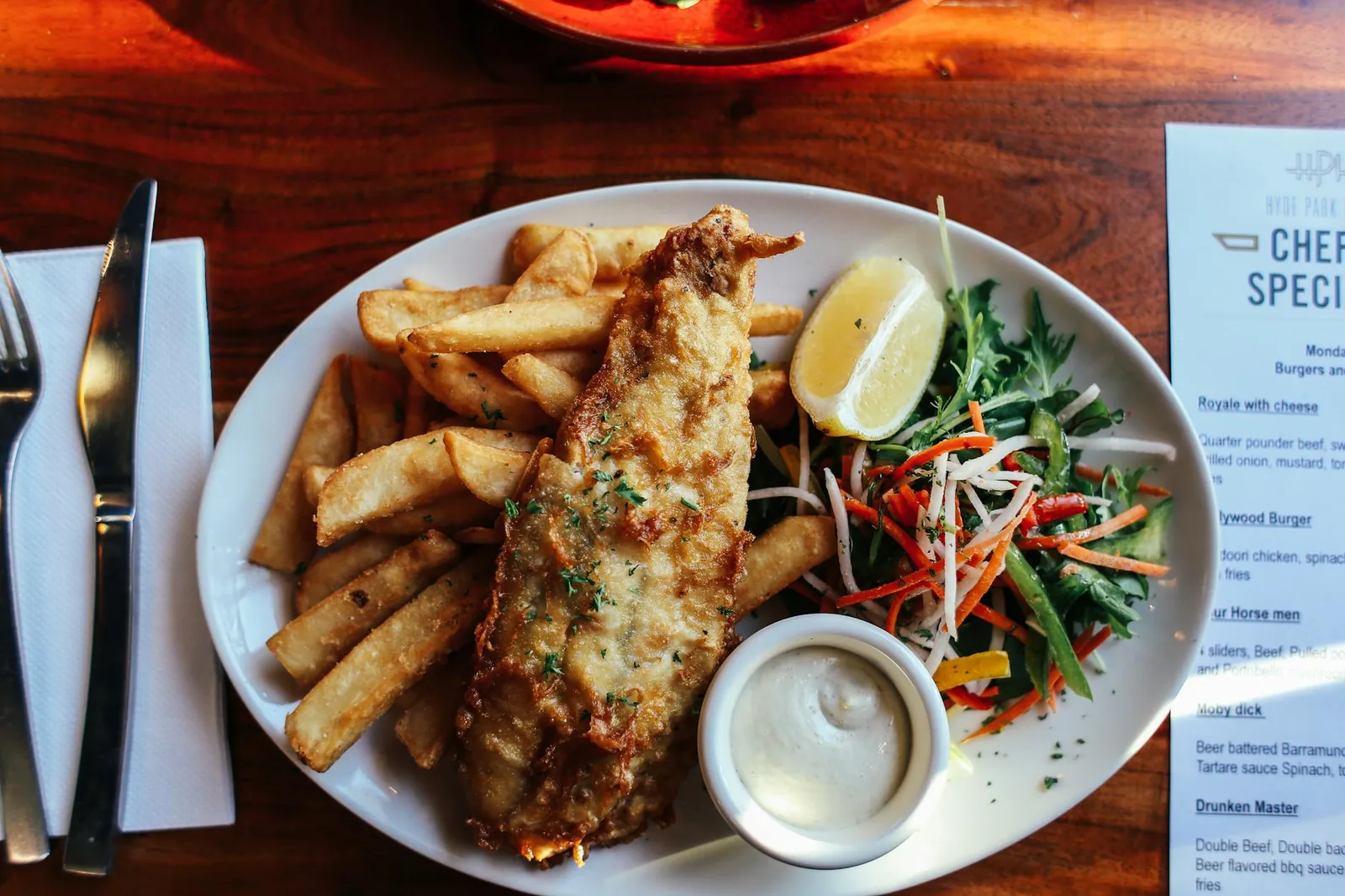
Three kinds of menus deserve extra caution. Fast-casual chains that run chicken tenders and fish sandwiches off the same line are built for the exact reuse the study modeled. Seafood-heavy spots, fish-and-chips shops, fry houses, and raw bars with a fried menu coat fish constantly, so their breading is the most saturated of all. And pub-style kitchens, where a single fryer turns out a mixed platter of everything, rarely separate their streams. A “free from” note on a menu describes the recipe, not the shared equipment behind it, and it is never a guarantee of zero cross-contact.
For the bigger picture on how trace allergens move through commercial kitchens, our complete food allergy guide for 2026 covers the fundamentals. And the way contamination accumulates unevenly across a shared production run is the same problem that makes labeled gluten-free cereal unreliable for some celiacs: a batch can pass on average while individual servings still carry a dangerous dose.
If You React, Have a Plan
A confirmed fish allergy is an IgE-mediated immune response, not the vague kind of “sensitivity” that mail-in test kits claim to measure, and fish is a frequent cause of severe, fast-moving anaphylaxis. Carry two epinephrine auto-injectors, learn the early signs (throat tightness, trouble breathing, widespread hives, repeated vomiting, dizziness), and use epinephrine first, then call emergency services. Antihistamines do not stop anaphylaxis. If you are still assembling your emergency kit, our 2026 guide to anaphylaxis treatment walks through the options. Because severe allergy decisions are personal, build your dining rules with a board-certified allergist who knows your history.
The Bottom Line
The FDA’s breading study removes a comfortable assumption. In a kitchen that fries cod, the breaded chicken, mushrooms, and zucchini are not automatically safe, because the breading itself becomes a reservoir of fish protein that climbs past the reference dose. Ask whether the breading is reused, whether the fryer and oil are shared, and whether the kitchen can start from fresh. If the answers are uncertain, choose a dish that never meets the fry station. The fish you are carefully avoiding may already be in the coating.
Sources
- Food Safety Magazine on the FDA study linking reused breading to fish allergen cross-contact
- U.S. Food and Drug Administration for what people with food allergies need to know
- Food Allergy Research and Education with practical ways to avoid cross-contact when eating out
Further reading
- Food Allergy Research and Education on recognizing and treating anaphylaxis
- U.S. Food and Drug Administration for how to read the allergen information on a label