Why Gluten-Free Cheerios Still Aren't Safe for Some Celiacs: The Oat Sorting Problem Explained
Published on June 4, 2026
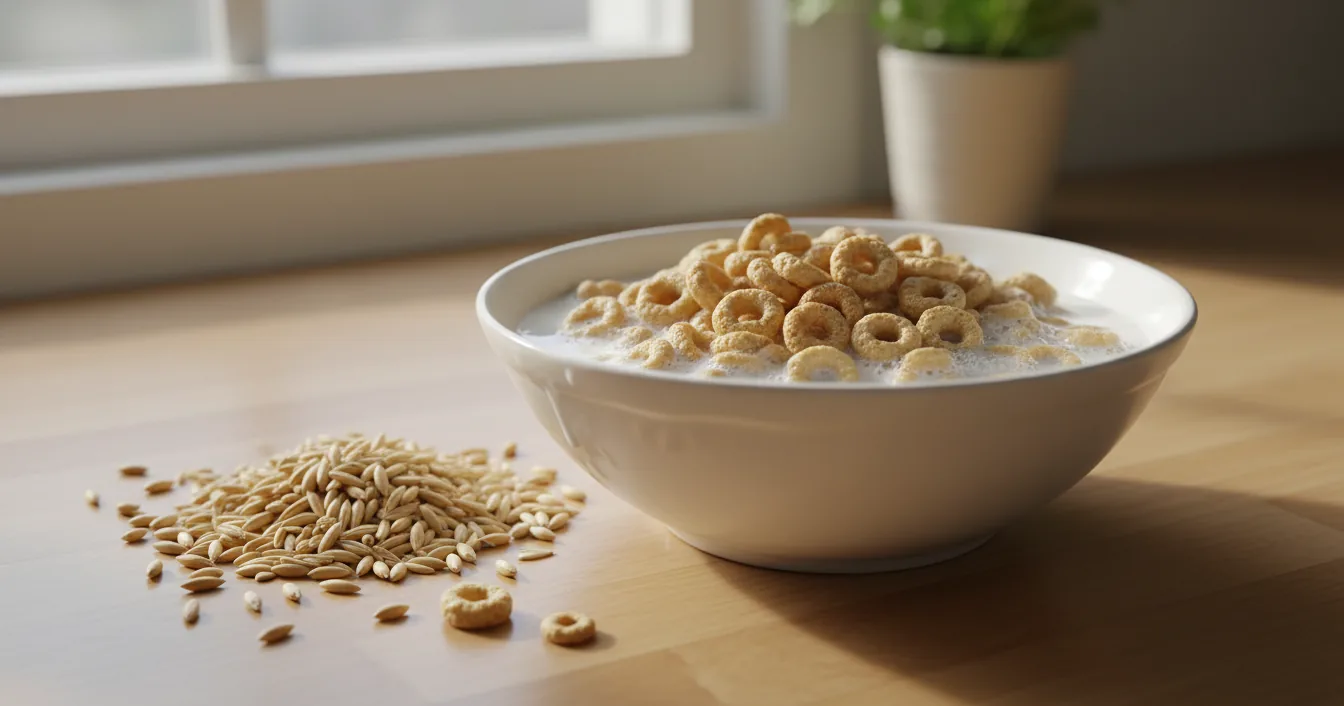
A box of gluten-free Cheerios carries the same three words celiacs scan for on every label: gluten free. The cereal is tested. The brand holds one of the largest gluten-free portfolios in the country. And yet, year after year, a steady trickle of people with celiac disease report the same thing. They ate a bowl, and within an hour the old, unmistakable symptoms came back: cold sweats, a migraine, joint pain, then the gastrointestinal misery that follows accidental gluten exposure. How can a labeled, tested product still make someone sick? The answer is not a conspiracy. It is a manufacturing method, a testing limitation, and a threshold that was never meant to mean zero. Understanding all three is the key to deciding whether oat-based cereals belong in your kitchen.
Two Ways to Make an Oat Gluten Free
Oats do not contain gluten. The problem is the company they keep. Oats are routinely grown in rotation with wheat, harvested with the same equipment, and stored alongside barley and rye, so conventional oats pick up gluten grains along the way. There are two competing strategies for cleaning them up.
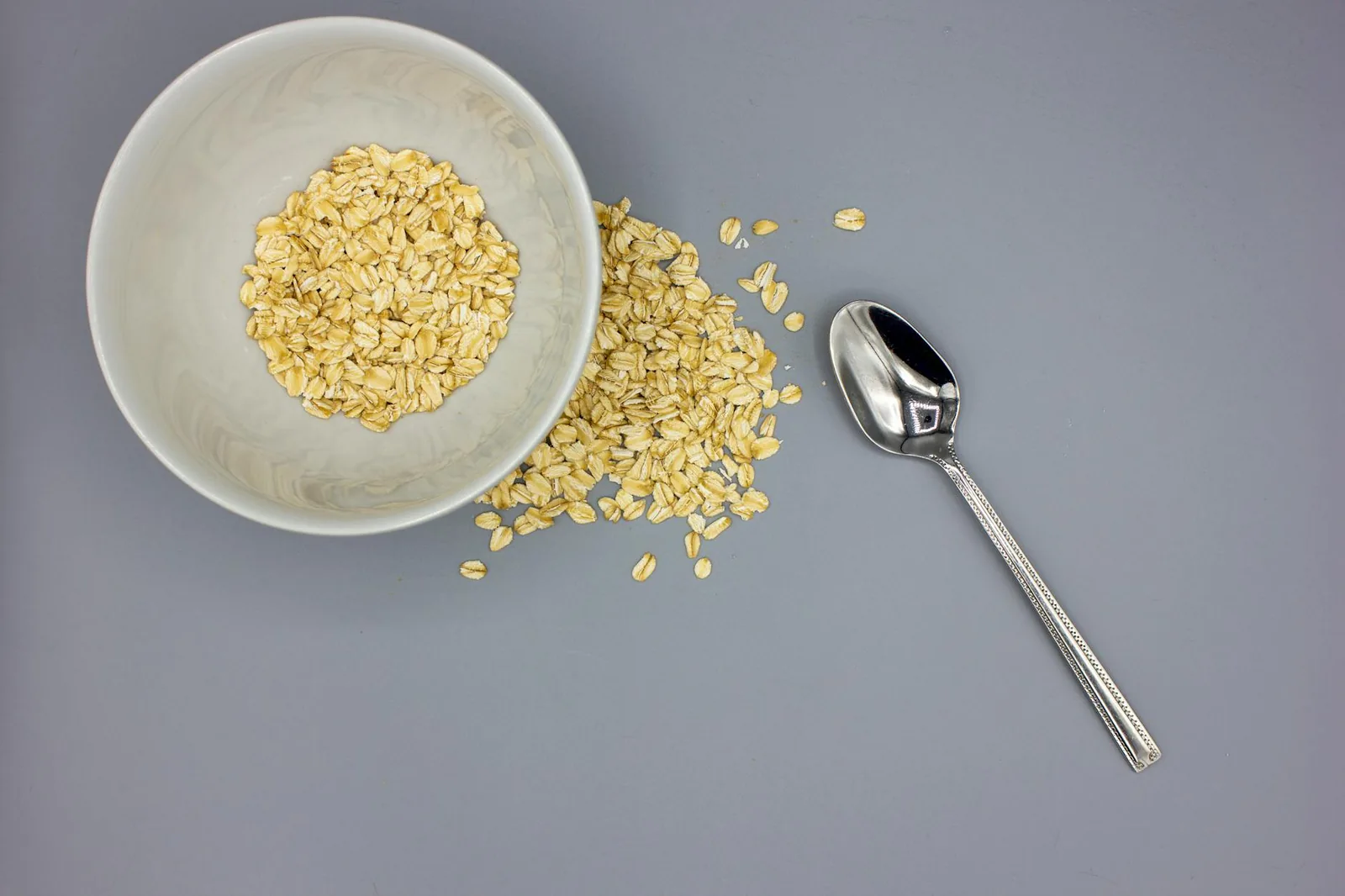
The first is mechanical and optical sorting. Bulk oats run through machinery that separates grains by size, shape, density, and color, pulling out kernels of wheat, barley, and rye. General Mills adopted this approach to supply the volume its cereal brands need, and the company says it tests the oat supply, the oat flour, and finished product on every date of production at every facility, aiming to meet and exceed the federal standard.
The second strategy is the purity protocol. Purity protocol oats are kept away from gluten grains at every step: dedicated seed, dedicated fields with buffer zones, dedicated harvesting and transport equipment, separate storage, and repeated visual and laboratory testing from field to finished bag. Instead of removing contamination after the fact, the protocol works to prevent it from ever entering the supply. It is slower, costs more, and yields less, which is why specialty suppliers use it and mass-market cereal lines generally do not.
Why a Passing Batch Can Still Hide a Hot Spot
Here is the part that surprises people. A lot of Cheerios can pass its average gluten test and still contain an individual box that would fail.
Gluten contamination in sorted oats is not spread evenly through the batch like sugar dissolved in water. It is lumpy. A single barley kernel that slips past the sorters is a concentrated packet of gluten. When it gets milled, it does not vanish. It becomes a pocket of gluten flour that may end up concentrated in a handful of boxes rather than smeared evenly across the whole production run. Mechanical sorting lowers the average contamination dramatically, but it cannot guarantee that every stray kernel is caught, and the ones it misses are exactly the high-gluten ones.
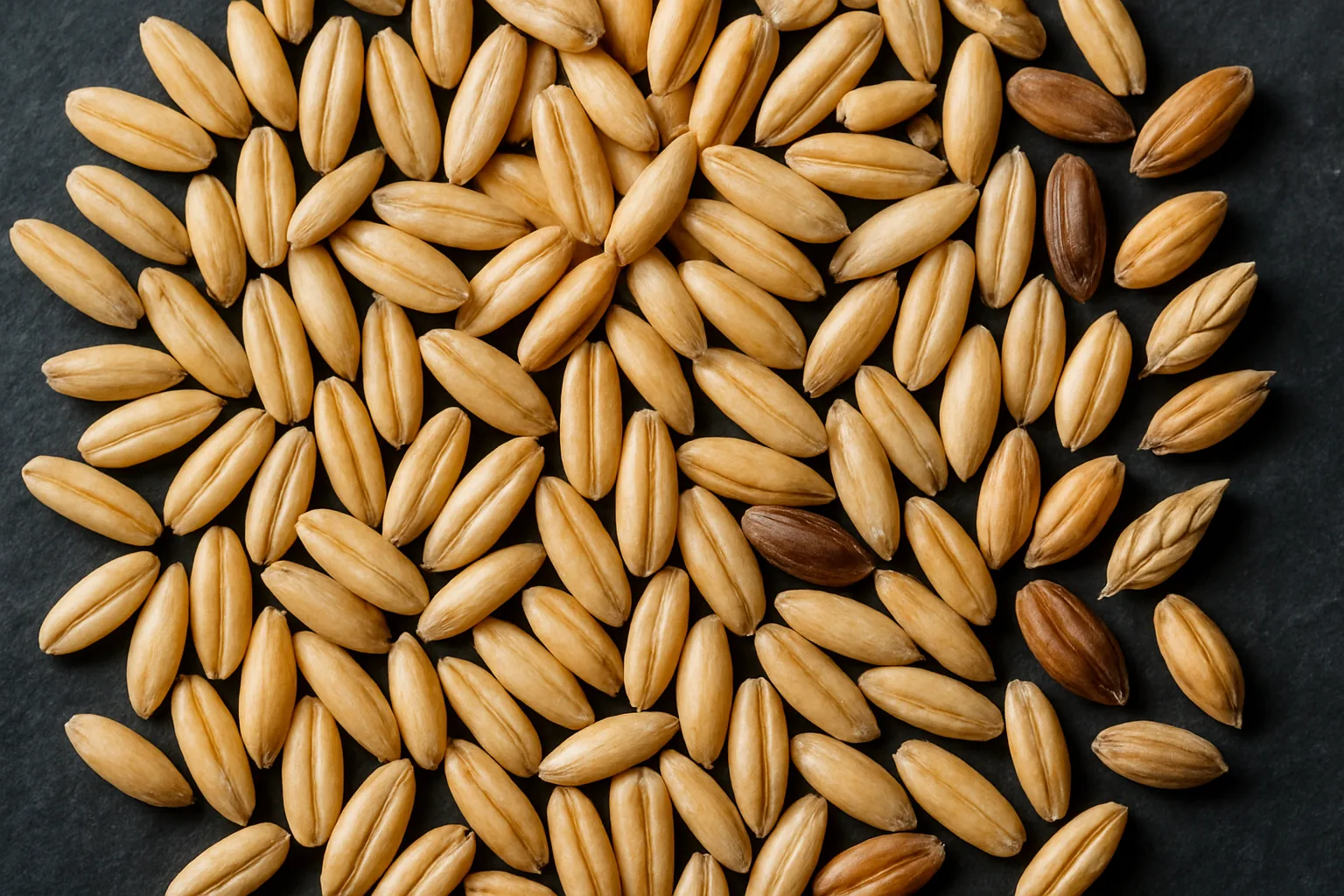
Testing makes this harder to see, not on purpose, but by design. Manufacturers test composite samples and report an average. If you take several scoops from a large lot, blend them, and measure, a few hot spots get diluted by all the clean oats around them. The lot average can sit comfortably under the limit while a specific box on a specific shelf carries far more. This is not a flaw unique to General Mills. It is a basic consequence of trying to certify a heterogeneous, unevenly contaminated product using averaged samples. Mathematically, uneven cross-contact from box to box is entirely possible even when every batch average passes.
What 20 PPM Actually Means
When the U.S. Food and Drug Administration finalized its gluten-free labeling rule, it set the bar at fewer than 20 parts per million of gluten. A product under that number can be labeled gluten free. Many people assume this means the food contains no gluten. It does not. It means the food contains a low enough amount that most people with celiac disease will not be harmed by a normal serving.
Most is not all. The 20 ppm figure was chosen as a practical, achievable threshold that protects the majority of the celiac population, not as a biological zero. Research on safe daily intake points to very small tolerances, on the order of ten milligrams of gluten per day or less before some patients show intestinal damage. A bowl of cereal that sits just under 20 ppm is not zero, and if you eat it every morning, the exposure accumulates. People vary widely in sensitivity, and the most reactive individuals can respond to amounts the label considers acceptable. For them, a technically compliant product and a genuinely safe product are not the same thing.
It is also worth knowing that Cheerios are not carried by an independent third-party certification program. The company relies on its own testing to the FDA standard. Certification bodies such as the Gluten-Free Certification Organization hold products to a stricter ceiling, generally 10 ppm or less, and add outside auditing on top. That extra layer is part of what separates a self-declared gluten-free claim from a certified one. As with any allergen, a free-from claim on the front of a package does not by itself rule out cross-contact in the box you actually bought.
Why the Complaints Keep Coming
This is not a purely theoretical worry. In late 2015, General Mills recalled roughly 1.8 million boxes of Cheerios after a production error meant the cereal might contain wheat, and the FDA logged well over a hundred adverse-reaction reports in a matter of weeks. The recall ended, but the reports did not. Federal records obtained by reporters showed dozens more complaints in the months that followed, all from people with celiac disease or gluten sensitivity who tied their symptoms to General Mills cereals.
A single complaint proves nothing on its own. The FDA is careful to note that an adverse event report does not establish that a product caused the reaction, and a top-selling cereal will naturally generate more reports simply because more people eat it. But clinicians who treat celiac disease see a pattern. Physicians at major celiac centers have described patients who become symptomatic after eating cereals made from mechanically and optically separated oats, and they point out that Cheerios is far from the only brand using the method. The Canadian Celiac Association went further, advising people with celiac disease or gluten sensitivity not to eat gluten-free labeled Cheerios because of concerns about the potential gluten levels in individual boxes. A leading North American celiac research society stopped short of that, but called on manufacturers using mechanical separation to adopt consistent, stringent, transparent, and reliable testing. The common thread is not that sorted oats are poison. It is that no one can yet tell you, box by box, which ones are safe.
How to Choose Oats If Cheerios Trigger You
If you have celiac disease and oat-based cereals reliably make you ill, you have options that do not require giving up oats entirely.

Start by separating the variables. Oats themselves provoke a true immune reaction in a small minority of people with celiac disease, through a protein called avenin, independent of any wheat or barley contamination. If you are not sure whether your trigger is gluten cross-contact or the oats themselves, that is a conversation for your gastroenterologist or allergist, not a guessing game at the breakfast table. Reliable answers come from medical evaluation, not from at-home kits that promise to map your food sensitivities.
When you do buy oats, look for the purity protocol. Several specialty brands grow and process their oats under that system and say so plainly on the package, and many also carry third-party gluten-free certification at the stricter 10 ppm ceiling. Choosing a certified purity protocol oat removes the mechanical-sorting question entirely, because the gluten grains were kept out from the start rather than picked out at the end. Reading the label every single time still matters, since suppliers and formulations change.
And if oats in any form keep causing trouble, it is completely reasonable to skip them. Oats are not nutritionally essential, and a celiac diet built on naturally gluten-free whole foods does not need them. The goal is an intestine that heals, not a particular cereal in the bowl.
The Bottom Line
Gluten-free Cheerios are not mislabeled in the legal sense. They are made with mechanically sorted oats, tested to a federal standard, and they clear that standard on average. The trouble is that average is the wrong unit for a person whose intestine reacts to a single bad box, and the 20 ppm line was never a promise of zero. If the cereal works for you, it works. If it does not, believe your own body over the label, switch to certified purity protocol oats or drop oats altogether, and bring your allergist into the decision. Because celiac disease is an autoimmune condition with long-term stakes, anyone reacting to a labeled product should treat that reaction as real information and confirm the path forward with a specialist rather than argue with their own symptoms.
Further reading (sources)
- BuzzFeed News on the celiac complaints that kept coming after the Cheerios recall
- U.S. Food and Drug Administration on how the gluten-free labeling rule defines the limit
- Gluten Free Watchdog for purity protocol oats versus mechanical or optical sorting
- Celiac Canada with its statement on gluten-free labeled Cheerios
- Beyond Celiac on the long-running debate over oats and celiac disease
- Gluten-Free Certification Organization for the stricter 10 ppm certification standard
- Celiac Disease Foundation with label reading and hidden sources of gluten