Traveling With Food Allergies in 2026: A Complete Playbook for Flights, Theme Parks, Cruises, and Hotels
Published on June 23, 2026

One Reference Instead of a Dozen Forum Threads
Planning a trip with a food allergy usually means opening fifteen browser tabs and trusting strangers on a forum to tell you whether a particular airline, park, or cruise line will keep you safe. This guide pulls the pieces into one place. It walks through the planning you do before you book, how to handle airports and flights after the year’s big regulatory shift, what the major theme parks actually offer, how hotels and cruise galleys deal with special diets, and what to do if a reaction happens far from home.
Two things hold true everywhere you go. A “free from” label or an allergy-friendly menu describes a recipe, not the shared equipment behind it, so it is never a guarantee of zero cross-contact. And the people most able to keep you safe are the ones you tell early and clearly. If your allergies are severe, build your travel plan with a board-certified allergist before you leave, and keep the fundamentals of how trace allergens move through any kitchen in mind so the advice below has somewhere to land.
Start Planning Before You Book Anything
The safest trips are mostly decided in advance.
Get your medical kit current first. Refill your epinephrine prescription so the auto-injectors will not expire mid-trip, and pack at least two, ideally a spare set for a long journey. Ask your allergist for a short travel letter stating your diagnosis and your need to carry epinephrine and your own food, which smooths things at security and abroad. Print FARE’s free Food Allergy and Anaphylaxis Emergency Care Plan and tuck a copy in your bag. FARE’s free downloadable handouts on dining out and avoiding cross-contact are worth saving to your phone as well.
Make chef cards. A chef card is a wallet-size card that lists your allergens and a short, direct request to the kitchen, ready to hand to a server or cook. Carry a stack in English, and have them translated into the language of wherever you are headed so nothing gets lost at the table. Free templates exist online, and many allergists will help you word one.
Choose lodging with a kitchen. A room with even a small kitchenette, or just a fridge and microwave, lets you prepare safe meals and store backups, which takes the pressure off every single restaurant decision. Then pack a safe-food buffer: more shelf-stable snacks than you think you need, so a missed connection or a closed kitchen never forces a risky choice.
Flying: What the 2026 DOT Ruling Changed
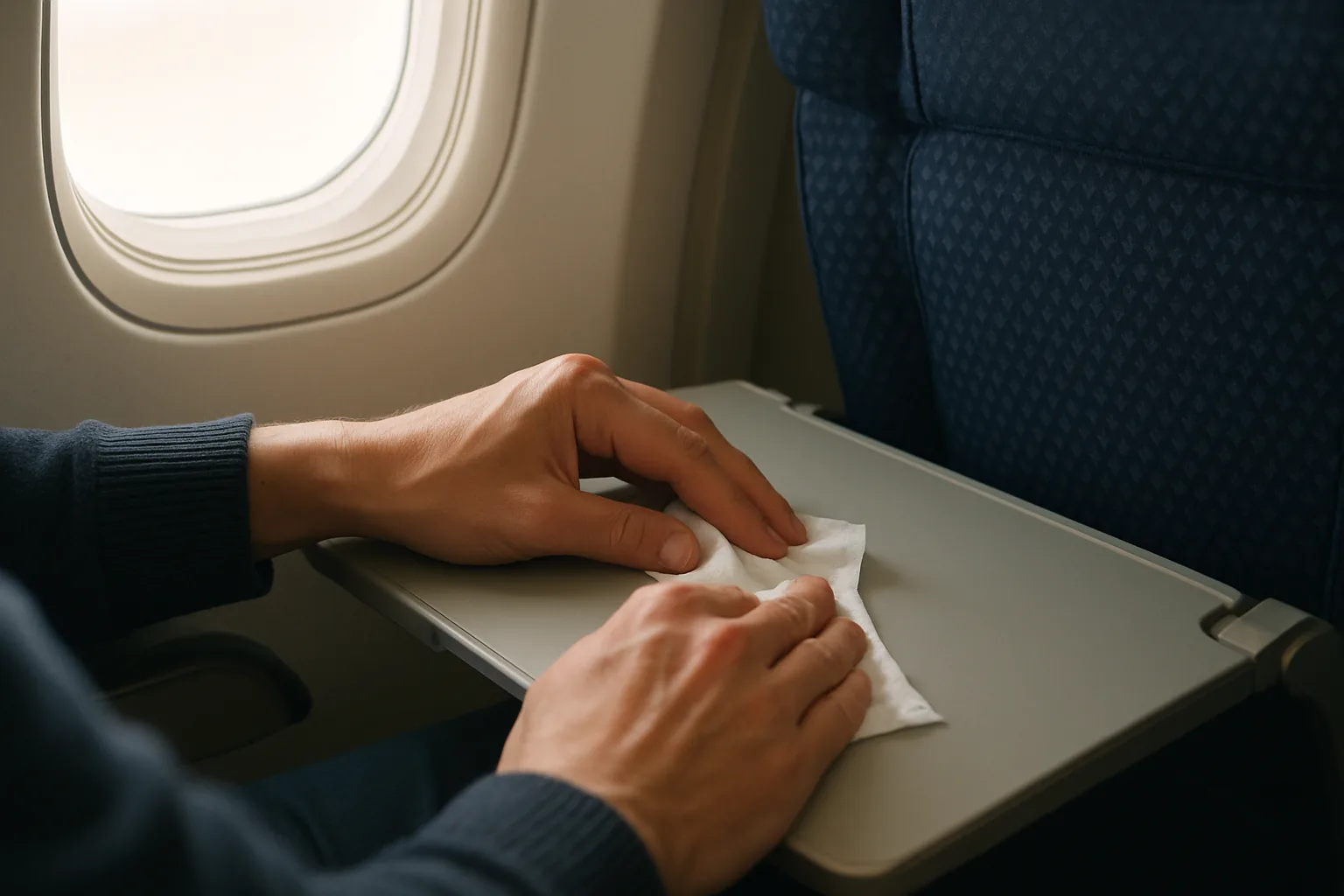
In March 2026 the U.S. Department of Transportation issued Order 2026-3-9, dismissing a long-running complaint against Southwest Airlines that several advocacy groups (among them the Allergy and Asthma Network, the Asthma and Allergy Foundation of America, FAACT, and No Nut Traveler) had filed back in 2022. The case turned on pre-boarding, meaning the right to board early and wipe down your seat, tray table, and armrests before anyone else sits down.
The takeaway for flyers is narrow but important. The DOT upheld pre-boarding as an accommodation for passengers with nut allergies, but declined to extend that same guaranteed right to other food allergies without formal rulemaking. In plain terms, a nut-allergic traveler has the firmest footing to request pre-boarding, while someone with a milk, egg, or shellfish allergy may be offered it as a courtesy but cannot yet count on it as a protected right. The underlying law, the Air Carrier Access Act, still bars airlines from discriminating against disabled passengers, so it is always worth asking.
Whatever your allergen, the practical routine is the same. Call the airline’s disability or special-assistance line ahead of time to request pre-boarding and to ask about their nut-service policy. Many carriers have stopped handing out nut snacks, but cross-contact from what other passengers bring aboard is beyond anyone’s control. Bring all your own food rather than relying on a meal cart. Wipe your seat area down as you board. Keep epinephrine in your carry-on, never in checked luggage where cold and delay can ruin it. The TSA allows auto-injectors through security, and a pharmacy label or your allergist’s letter heads off questions. Once you are settled, tell a flight attendant about your allergy and ask, politely, whether a brief cabin announcement is possible.
Theme Parks: Disney and Universal Set the Bar
Walt Disney World has become the example other destinations get measured against. Its restaurants offer allergy-friendly menus covering the same nine allergens U.S. labeling law recognizes, and the system is built to be used in advance. Book dining through the My Disney Experience app up to sixty days out, flag your allergens on the reservation, and at the restaurant tell a cast member at check-in and again when seated. At table service a chef will typically come out and walk you down the line of what is safe. When you mobile-order quick service, choose from the allergy section in the app and look for the physical allergy marker on the finished plate. For multiple or complex allergies, email Special.Diets@DisneyWorld.com up to fourteen days ahead so the kitchens can prepare.
Universal Orlando runs a similar playbook with a slightly more hands-on, ask-first feel. Email Food.Allergy@universalorlando.com before your visit to plan meals, browse menus online beforehand, and at counter-service spots a team member will call a chef who brings menu cards listing the top allergens and what contains them. Chefs will cook a meal to order when the standard menu does not work. One family’s widely shared account of a Universal trip captured the reality well: the chef interactions were excellent, the experience was not flawless, and you still have to advocate at every stop. Universal is explicit that its kitchens are not allergen-free and that separate preparation areas are not guaranteed, which is the honest version of what is true at every park. Treat an allergy-friendly menu as a starting point and ask the same shared-equipment questions you would at any fryer or breading station.

Hotels, Rentals, and Cruise Galleys
Hotels vary enormously, so put your needs in writing when you book and again on arrival. Ask for a room with a fridge to store safe food and epinephrine backups, and if breakfast is included, ask how the kitchen handles allergens rather than assuming the buffet is safe. A vacation rental or aparthotel with a real kitchen is often the lowest-stress option for a family, because you control the surfaces and the ingredients.
Cruises are a special case, because you are at sea with one set of galleys for days at a time, and that cuts both ways. The major lines handle allergies well when you give them notice. Declare your allergies on the booking’s special-needs or dietary form well before sailing, then find your dining-room head waiter on the first night and confirm the plan. The usual arrangement is that you pre-order the next day’s meals a day ahead so the galley can prepare them away from the rush, and you keep the same serving team each night so nobody has to be briefed twice. Buffets are the riskiest venue onboard thanks to shared serving utensils, so lean on the sit-down dining room where the kitchen can control your plate.
Casual chains on the road can be friendlier than they look. IKEA, for instance, publishes detailed allergen information across its restaurant, bistro, and food market, keeps managers on hand to answer preparation questions, and notes which items can be ordered without specific allergens, while stating plainly that cross-contamination is always possible in a working restaurant. The lesson generalizes. Favor the places that publish real allergen detail and staff who will talk to you, and treat any printed menu as the conversation starter, not the final word.

If a Reaction Happens on the Road
Even a careful trip can go wrong, so plan for it the way you plan everything else. Know the early signs of anaphylaxis (throat tightness, trouble breathing, widespread hives, repeated vomiting, dizziness) and treat fast: epinephrine first, then emergency services. Antihistamines do not stop anaphylaxis. Before you travel, look up the local emergency number for your destination, because it is not 911 everywhere. It is 112 across the European Union, 999 in the UK, and 000 in Australia. Find the nearest hospital to where you are staying too, so you are not searching during a crisis.
Carry your auto-injectors on your person, not in a bag in the overhead bin or the hotel safe, and bring more than the minimum two on a long trip in case one misfires or a second dose is needed before help arrives. After using epinephrine you still need emergency evaluation, because reactions can rebound hours later. If you want to understand how the rescue options and newer treatments fit together before you go, our 2026 guide to the anaphylaxis treatment landscape lays them out. And because a confirmed food allergy is a medical diagnosis rather than a self-reported sensitivity, anyone whose reactions are severe should set their travel rules with an allergist who knows their history.
The Bottom Line
Traveling with a food allergy is mostly a logistics problem you can solve in advance. Get your epinephrine and emergency plan current, make chef cards, pick lodging with a kitchen, and learn each destination’s system before you arrive. None of these settings can promise zero cross-contact, and the 2026 DOT ruling is a reminder that your protections still depend partly on which allergen you carry and how clearly you ask. A household that plans the trip the way it plans dinner at home, deliberately and a little skeptically, can see the world without leaving safety to chance.
Sources
- Allergic Living on the DOT decision that kept allergy pre-boarding for nuts only
- U.S. Department of Transportation for the full Southwest Airlines order
- WDW Magazine with one traveler’s routine for stress-free allergy dining at Disney World
- Universal Orlando covering how its parks handle food allergy requests
Further reading
- Allergic Living on one family’s mixed experience navigating Universal with allergies
- Go Dairy Free for IKEA’s dairy-free and allergen menu across restaurant, bistro, and market