Fish and Shellfish Allergy: The Complete Guide to Finned Fish, Crustaceans, and Mollusks
Published on September 3, 2026
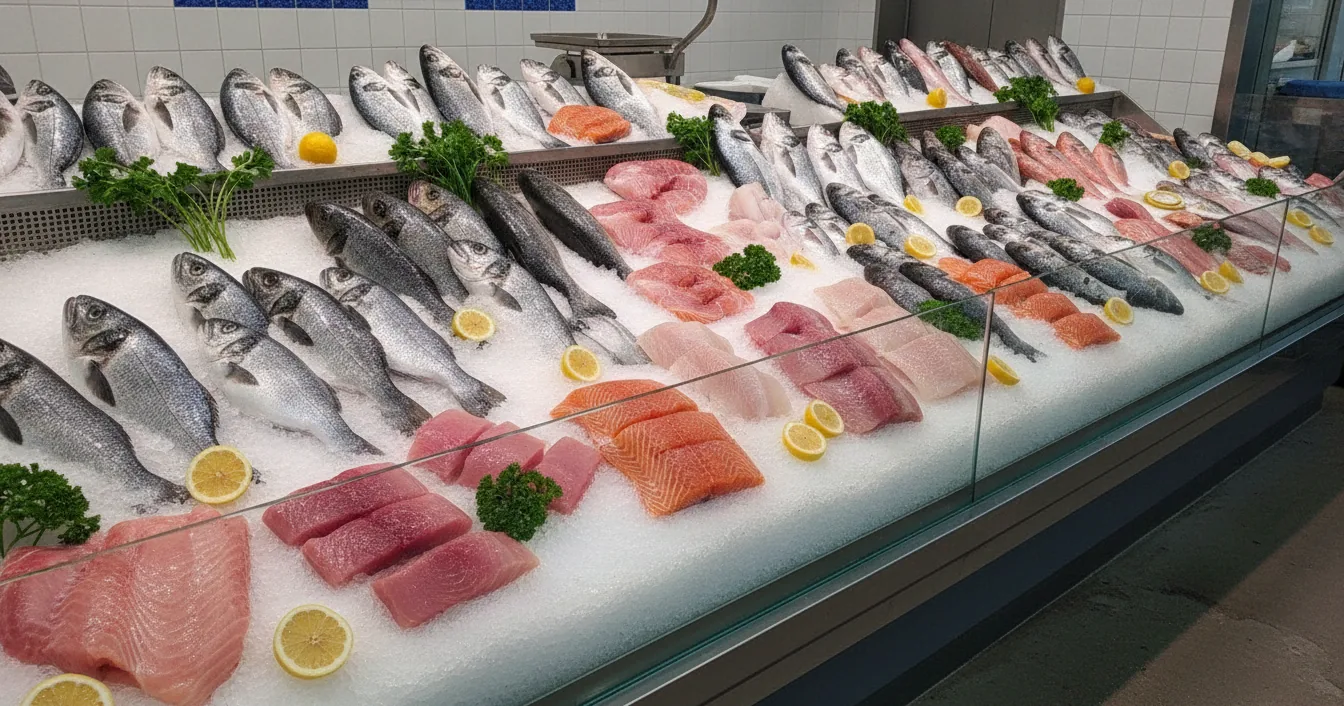
Three Allergies Hiding Behind One Word
“Seafood allergy” is a phrase that causes real harm, because it collapses three separate conditions into one label and then leaves people guessing which of them they actually have. A person who reacted badly to shrimp gets told to avoid all seafood. A child who reacted to cod is warned off scallops. Somewhere along the way an entire food group disappears from the diet, often with no test behind the decision.
The reality is more precise and, for most people, less restrictive. Finned fish, crustacean shellfish, and mollusk shellfish are three groups with three different culprit proteins. Being allergic to one does not mean you are allergic to the others. These are also the two Top 9 allergens most likely to arrive in adulthood: roughly 60 percent of people with shellfish allergy have their first reaction as adults, and about 40 percent of people with fish allergy do. Shellfish allergy affects an estimated 8.4 million people in the United States, more than any other single food, and finned fish affects about 2.7 million. Most of them will have it for life.
This guide covers what the proteins are, which species cluster together, where seafood hides on an ingredient list, why the iodine warning you were given is wrong, and what actually changes in a kitchen that cooks fish.
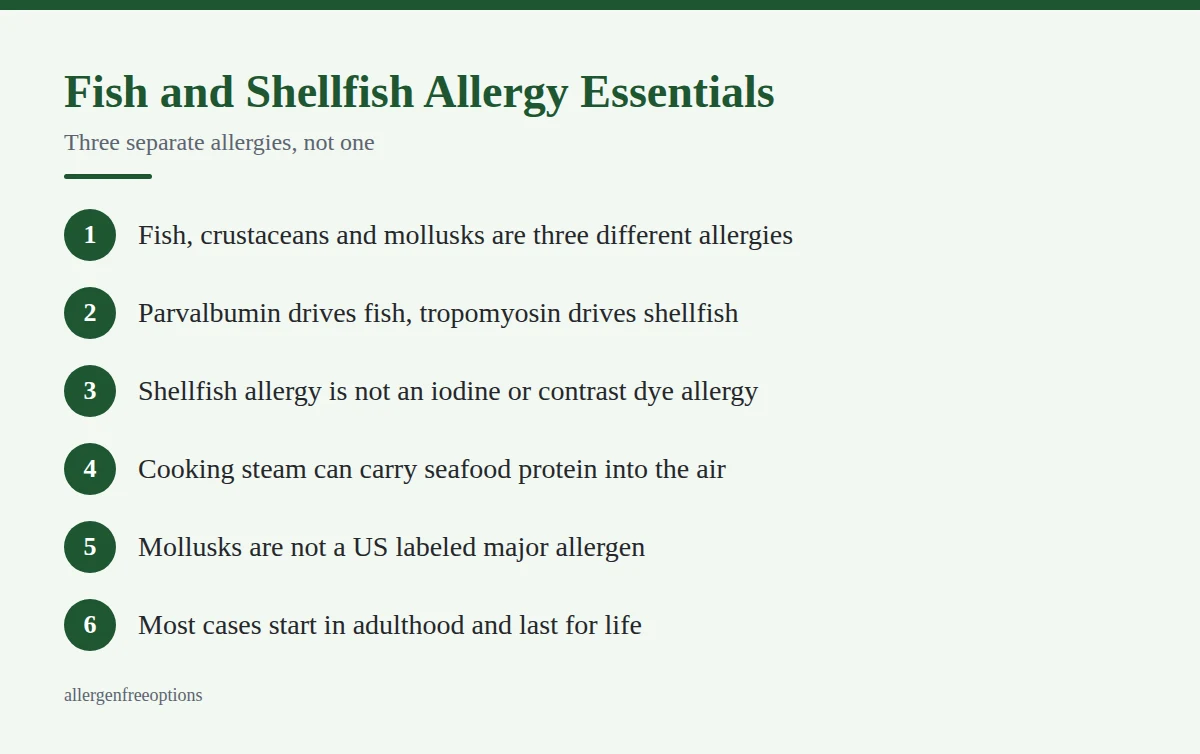
Parvalbumin and Tropomyosin: The Two Proteins That Set the Boundaries
Almost everything in this diagnosis follows from two molecules.
Parvalbumin is the major allergen in finned fish. It is a small calcium-binding protein found in fish muscle, it survives cooking and canning, and it is similar enough from species to species that a person allergic to cod often reacts to bass, carp, and pollock as well. This is why fish allergy tends to travel across the fish counter rather than stopping at one species.
Tropomyosin is the major allergen in shrimp, crab, lobster, and, in a related form, in clams, mussels, oysters, and squid. It is heat-stable and water-soluble, which is a combination worth pausing on. Heat-stable means cooking does not defuse it. Water-soluble means it leaves the animal and enters the cooking liquid, the steam, and the boiling pot. That single property explains most of what makes a seafood kitchen genuinely different from a bakery.
Tropomyosin also has a long-recognized quirk: it closely resembles the tropomyosin in dust mites and cockroaches. Someone with a dust mite allergy can test positive to shrimp without ever having reacted to eating it. A positive test alone is not a diagnosis here, which is why the clinical history matters as much as the number on the panel.
Which Species Cluster Together
Cross-reactivity within each group is common but not absolute, and the pattern is worth knowing before you eliminate a whole aisle.
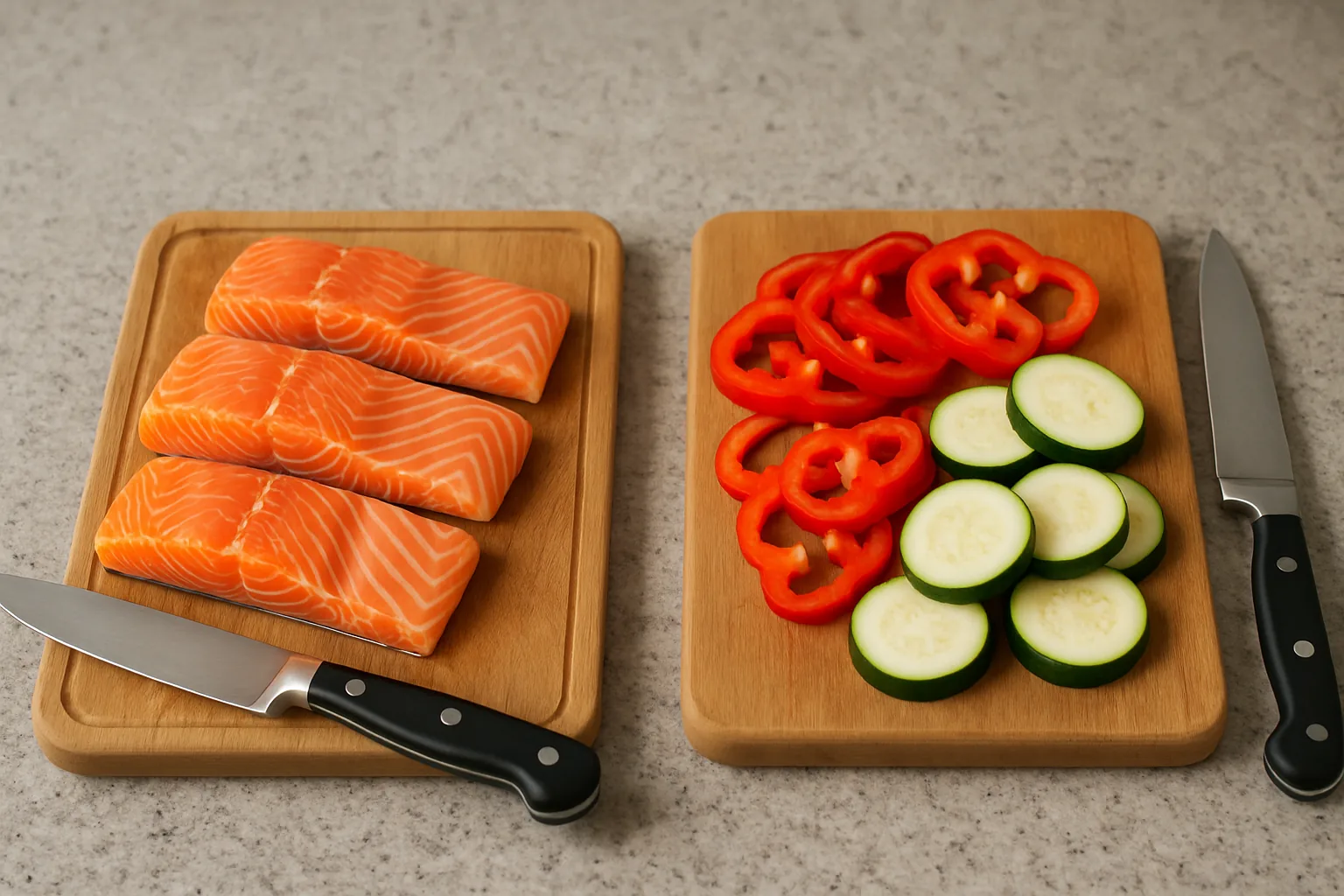
- Among finned fish, the parvalbumin similarity is high. Salmon, tuna, and halibut are the species most often reported as triggers in the United States. Some people tolerate one species and not another, and darker-fleshed fish such as tuna carry less parvalbumin than white-fleshed fish like cod. That is a real difference, but it is not a home experiment. Reintroducing a species belongs in a supervised oral food challenge, not at a restaurant table.
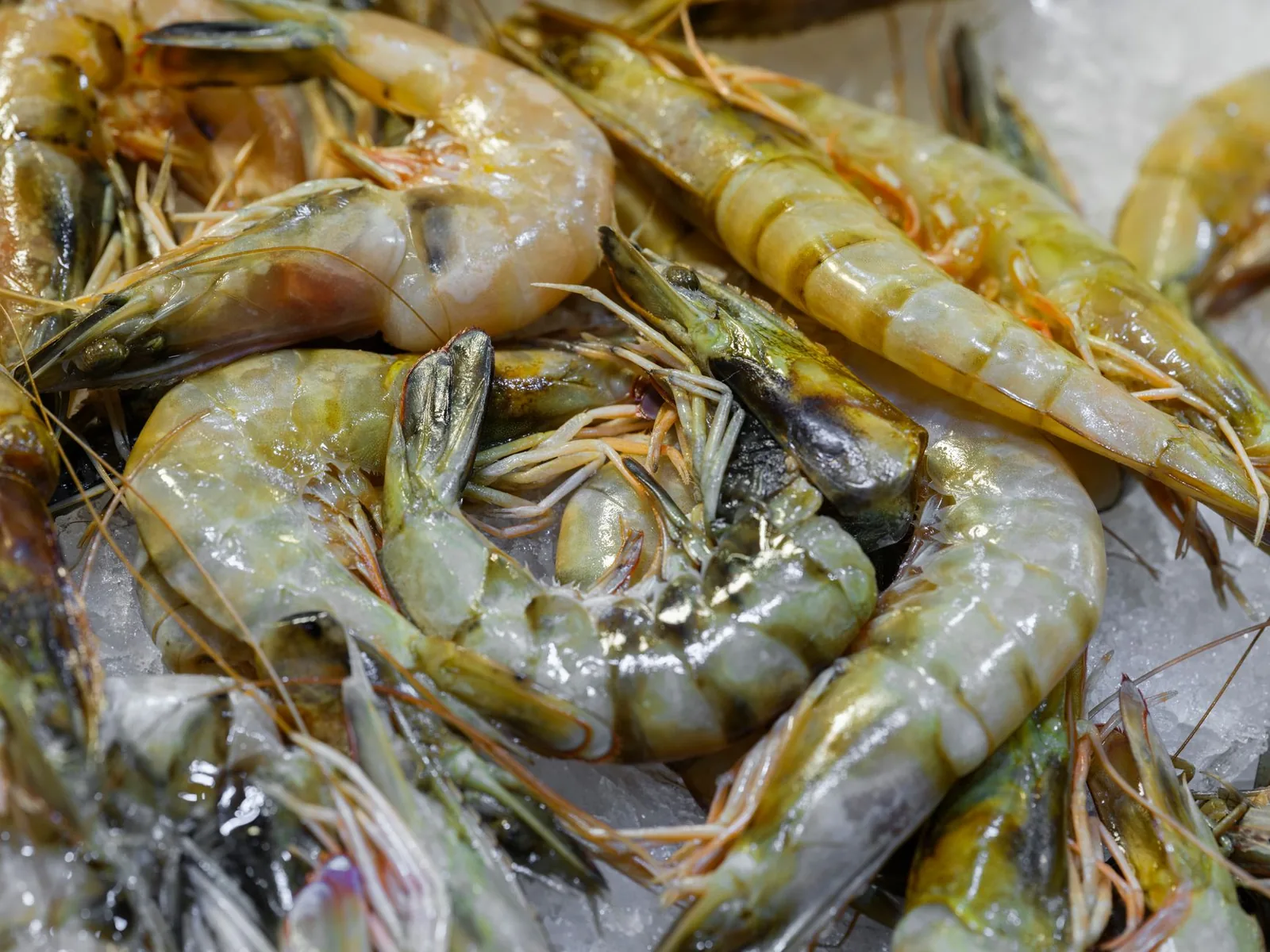
- Among crustaceans, shrimp, prawns, crab, lobster, crayfish, and langoustine share tropomyosin closely. Most people allergic to one are advised to avoid all of them.
- Between crustaceans and mollusks, the overlap is real but weaker. Plenty of people who react to shrimp eat scallops without trouble, and plenty do not. This is the boundary most worth testing properly rather than guessing at.
- Between fish and shellfish, there is no protein relationship at all. Fish and shellfish are not related, and an allergy to one carries no implication for the other. If you were told to avoid both after a single shrimp reaction, that is a conversation to have with an allergist.
The Iodine and Contrast Dye Myth
This one has stayed alive for decades and it still shows up on hospital intake forms.
The belief goes that shellfish allergy is really an iodine allergy, so anyone allergic to shrimp must avoid iodinated contrast dye for CT scans, and povidone-iodine antiseptic before surgery. It is wrong at every step. Shellfish allergy is a reaction to muscle protein, chiefly tropomyosin, not to iodine. Iodine is an element the human body requires and cannot be allergic to in any meaningful sense. Reactions to iodinated contrast media do happen, but they are their own phenomenon and occur in people with no seafood history at all.
Radiology guidance has been clear on this for years: a seafood allergy is not a reason to withhold contrast or to premedicate, and it should not be recorded as an iodine allergy. What does raise your risk of a contrast reaction is a previous reaction to contrast. Say that instead, and if a form asks about iodine, write down what you are actually allergic to.
The practical harm here is not theoretical. A mislabeled “iodine allergy” follows people through their medical records and can delay or complicate imaging they need.
Where Fish and Shellfish Actually Hide
The obvious items are easy to avoid. The dangerous ones are the foods where seafood is a background flavor nobody mentions.
- Anchovies as seasoning. Worcestershire sauce, most Caesar salad dressings, some steak sauces, puttanesca, tapenade, and Sicilian caponata. Worcestershire in particular turns up in cocktails, chili, marinades, and burger blends.
- Fish sauce and shrimp paste. Nam pla, nuoc mam, patis, belacan, and terasi anchor a great deal of Southeast Asian cooking, including many curry pastes, dipping sauces, and papaya salads. Kimchi is frequently made with salted shrimp or anchovy.
- Oyster sauce and XO sauce in Chinese cooking, including stir-fried vegetable dishes that contain no visible seafood.
- Surimi, sold as imitation crab or krab. It is generally made from pulverized white fish, usually pollock, and often carries added crab or shellfish extract for flavor. It appears in California rolls, seafood salads, crab dip, and supermarket sandwich fillings.
- Dashi and bonito flakes. The base of miso soup, many ramen broths, and Japanese sauces is built on dried skipjack tuna.
- Caviar, roe, and fish gelatin, the last of which appears in some capsules, gummy products, and marshmallows.
- Isinglass, a fining agent made from fish swim bladders, used to clarify some beers and wines. It is filtered out and the residual protein is minimal, but people with severe fish allergy sometimes prefer vegan-labeled drinks for this reason.
- Glucosamine supplements, commonly derived from crustacean shells. The allergen lives in the flesh rather than the shell, and studies have generally not found reactions in shellfish-allergic patients, but labels still carry warnings and this is a question for your allergist rather than a shelf decision.
- Calcium supplements made from oyster shell, and some pet foods and fish-based fertilizers that put allergen into a shared home.
Two more places to check: “natural flavoring” on a US label does not have to specify a fish or crustacean source unless the allergen itself is present, and Asian, Caribbean, and Mediterranean restaurant kitchens use fish-based seasoning far more widely than their menus suggest.
Steam Is the Part That Makes Seafood Different
With most food allergens, airborne exposure is heavily overstated. Fish and shellfish are the genuine exception, and the reason is water-solubility again.
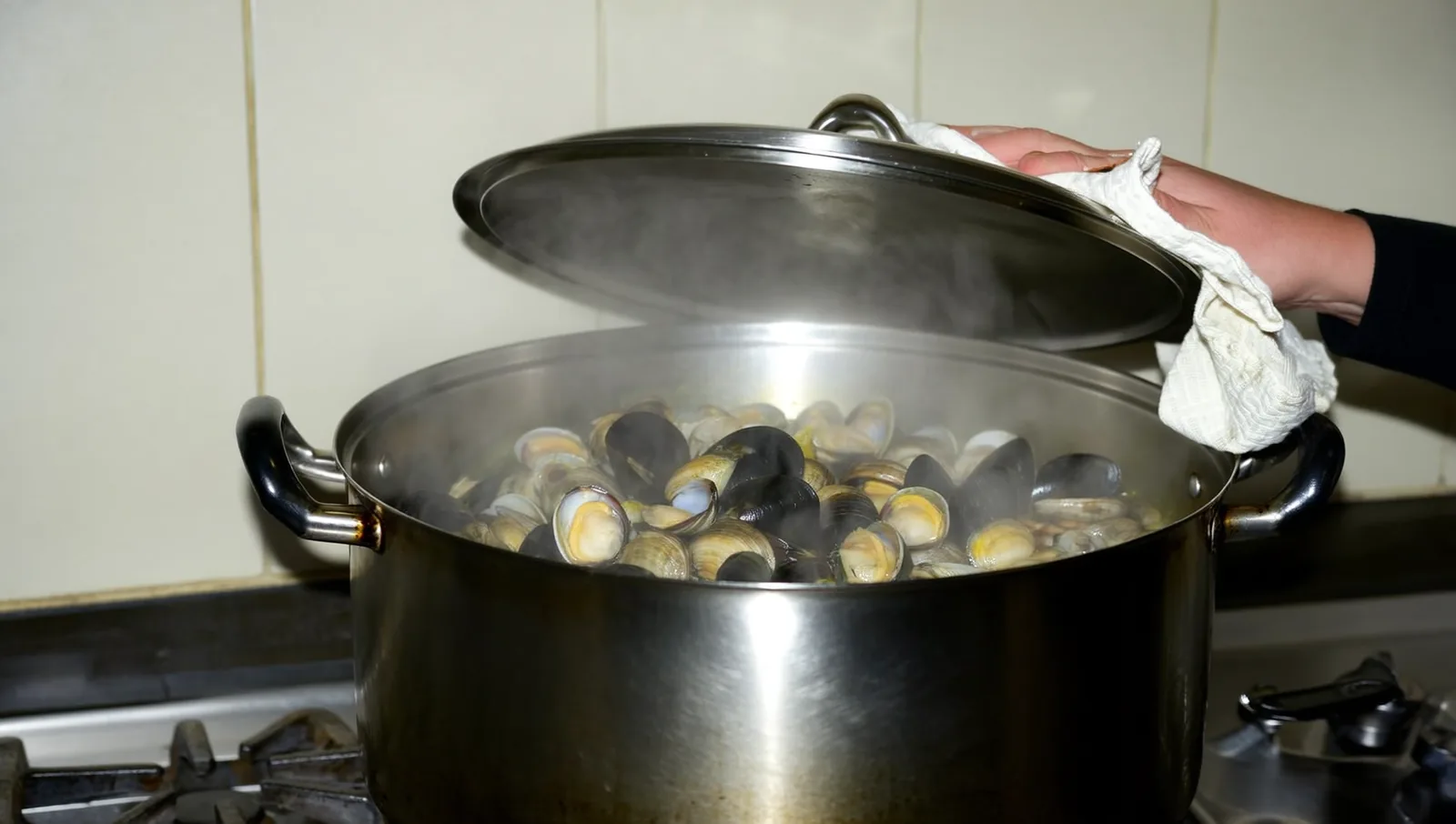
When fish or shellfish is boiled, steamed, or fried, protein enters the vapor. Reactions to cooking fumes are documented in the medical literature, most often as respiratory symptoms in people with severe fish or crustacean allergy, and seafood processing plants have a recognized occupational asthma problem for the same reason. This is not the same as being in a room with a closed jar of peanut butter. A pot of boiling shrimp is actively putting allergen into the air.
What this means in practice:
- A seafood boil, a crab shack, or a fish market can be an exposure risk without anything being eaten.
- An open kitchen or a hibachi grill puts you close to the cooking, not just the plate.
- At home, an extractor fan and an open window matter more than they would for any other allergen, and if a household member is severely allergic, the honest answer is often to stop cooking seafood in the house.
- A reaction to steam does not mean the allergy is more severe than one to ingestion. It means the route of exposure was different. The treatment is the same, and epinephrine is still the first-line response for anaphylaxis.
Shared Fryers, Shared Grills, Shared Water
Cross-contact for seafood follows the equipment, and the equipment in most kitchens is shared.
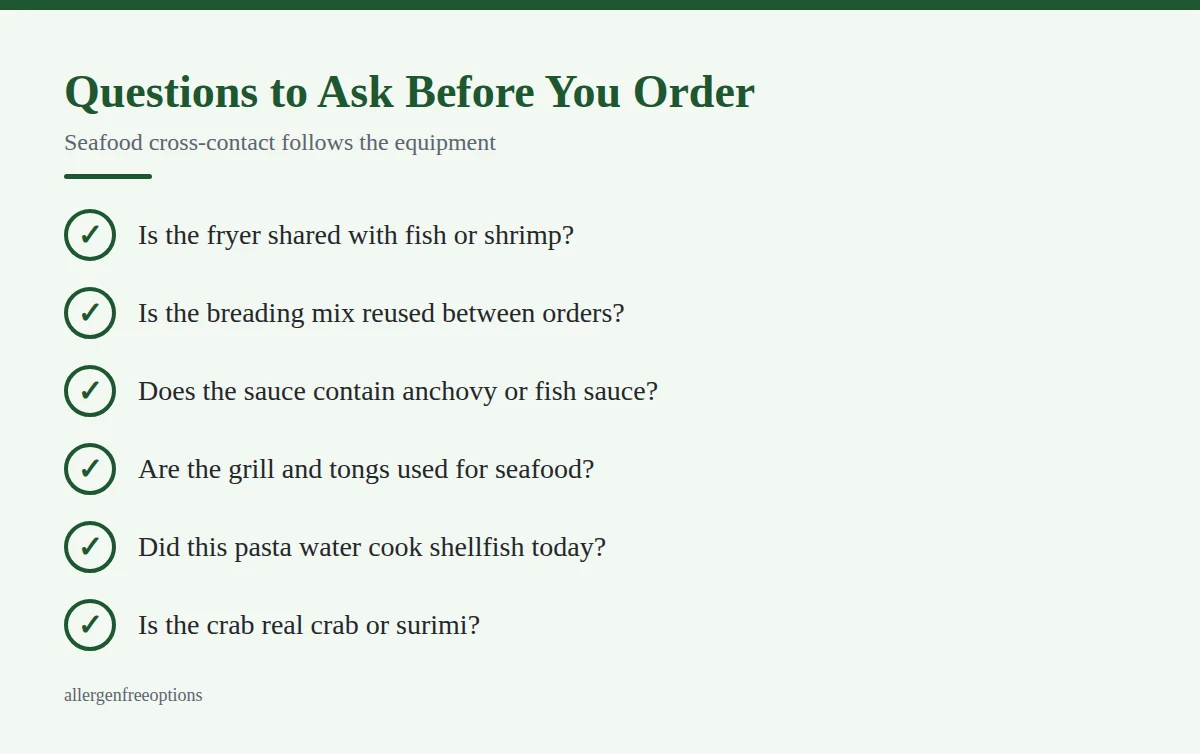
The fryer is the clearest example. FDA researchers published a study in May 2026 measuring how much fish protein moves into other foods through reused breading, and the numbers were startling: after 20 batches of cod, the breading carried enough protein that a single serving of plain breaded chicken or zucchini coated in it exceeded the reference dose used for precautionary labeling. Sieving the breading did not solve it. Our full write-up of what the breading study found and what to ask a fryer kitchen covers the ordering questions in detail.
Beyond the fryer, the recurring risks are the same set every time: grill surfaces used for fish and steak, tongs moved between trays, steamer baskets, pasta water that cooked mussels an hour earlier, a sushi knife and rice-handling station, and the deli slicer. In a sushi restaurant, the shared rice, shared board, and shared hands make a “vegetable roll only” order much less clean than it sounds.
Why These Allergies Usually Stay
Milk and egg allergies are frequently outgrown in childhood. Fish and shellfish allergies usually are not. They tend to be lifelong, and because both commonly begin in adulthood, many people acquire them after decades of eating the food without any problem. Someone who ate shrimp happily until they were 35 can develop a genuine, severe allergy to it, and the previous 35 years offer no protection.
There is no approved oral immunotherapy for fish or shellfish. Treatment is avoidance plus preparedness: two epinephrine auto-injectors carried at all times, a written emergency plan, and the confidence to use the device early rather than waiting to see whether symptoms settle. Our guide to the 2026 anaphylaxis treatment landscape covers device options, including the nasal spray, and where immunotherapy stands across allergens.
The Label Gap Worth Knowing About
Under US law, FALCPA names finned fish and crustacean shellfish as major allergens, so both must be declared in plain language along with the specific species. Mollusks are not on the US list. Clams, mussels, oysters, scallops, squid, octopus, and snails can appear in a US product under a name that does not flag them as an allergen at all, and no “Contains” statement is required.
The European Union treats molluscs as one of its 14 mandatory allergens, so an imported product may carry clearer mollusk information than a domestic one. Our comparison of how allergen labeling differs by country sets out which systems cover what.
For families, this gap needs to be written into the school paperwork explicitly rather than left to a generic “seafood” note, since staff reading a label will not find mollusks flagged. Our guide to building and updating a 504 plan covers how to word an allergy that the label law does not fully cover.
Your First Month After a Diagnosis
- Get the allergy named precisely. Fish, crustacean, or mollusk, and which species were tested. A board-certified allergist can use component testing and, where the picture is unclear, a supervised oral food challenge.
- Do not eliminate more than the evidence supports. Fish and shellfish are separate. Crustaceans and mollusks are separate enough to be worth testing.
- Fill two epinephrine devices and carry them. Antihistamines do not treat anaphylaxis and must not delay epinephrine.
- Correct any “iodine allergy” entry in your medical records, and tell radiology what you are actually allergic to.
- Learn the hidden-source list above, and treat Worcestershire, Caesar dressing, fish sauce, and surimi as the four that catch people most often.
- Decide the household rule on cooking seafood at home, especially if steam has caused symptoms before.
- Build the fundamentals. Our complete food allergy guide for 2026 covers labels, cross-contact, and emergency planning across all nine major allergens.
Fish and shellfish allergies are unusual in how often they arrive without warning in adulthood and how rarely they leave. The upside is that the avoidance rules are learnable and mostly concrete: know your group, read past the obvious ingredients, ask about the fryer and the steam, and keep the device in your pocket rather than the glovebox.
Further reading (sources)
- Food Allergy Research and Education on how fish and shellfish allergies differ and how often each begins in adulthood
- Food Allergy Research and Education for how many Americans are allergic to shellfish and finned fish
- Critical Reviews in Food Science and Nutrition with a review of crustacean allergens and why processing does not remove them
- American College of Radiology on why a seafood allergy is not a reason to withhold iodinated contrast
- U.S. Food and Drug Administration covering which allergens the law requires to be declared