Egg in Your Cheese: The Whole Foods Cabricharme Recall and the Allergens Hiding in the Dairy Case
Published on October 1, 2026

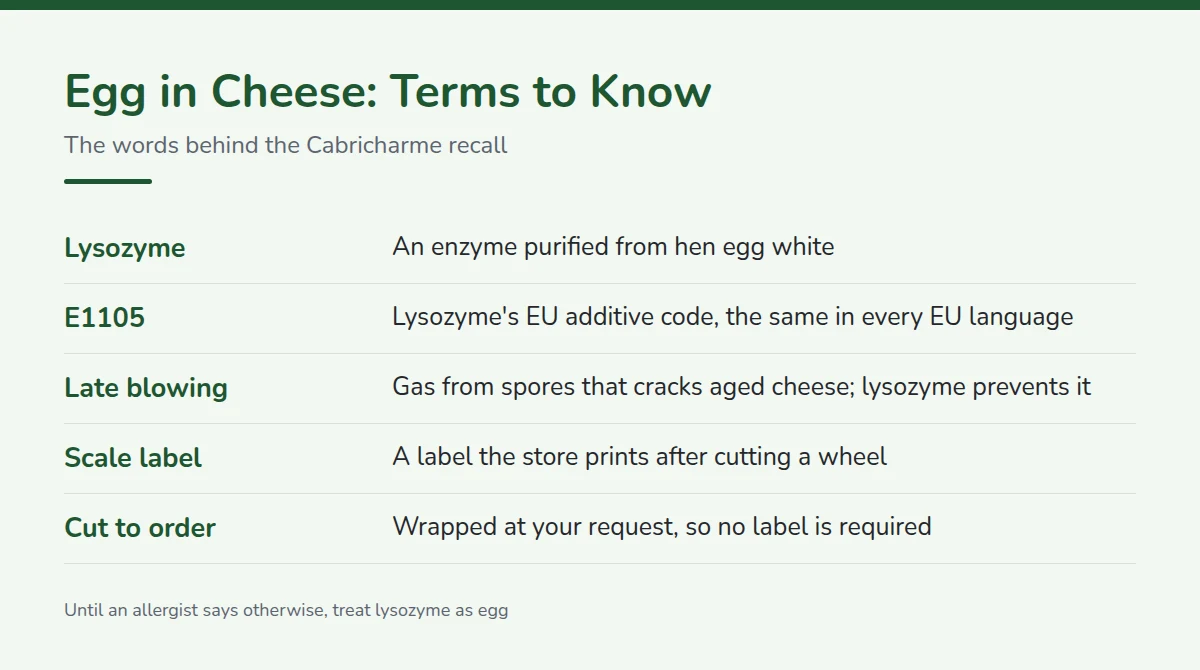
Most people shop the cheese case as if it were a single-ingredient aisle. Cheese is milk, salt, cultures, rennet, and time, so the label hardly seems worth turning over. In a household managing egg allergy, that habit deserves a second look. On September 11, 2026, Whole Foods Market recalled a Belgian raw milk cheese called Cabricharme from 18 stores because it contained egg white lysozyme, a protein from egg, and the labels shoppers carried home never mentioned egg.
Nobody slipped egg into that cheese by mistake. Lysozyme is a deliberate ingredient in some European cheeses, and the rules on both sides of the Atlantic agree that it has to be declared. What failed was the last step: the label printed after the cheese was cut and wrapped. The gap between what went into the wheel and what the wedge in your hand says is the real lesson of this recall, and it reaches well beyond one Belgian cheese.
What the Recall Notice Says
The company announcement, posted by the FDA, covers Fromagerie Coop de Mean Cabricharme sold from the specialty cheese department at 18 stores in Arizona, California, Connecticut, Massachusetts, New Jersey, New York, and Rhode Island.
The cheese was cut and wrapped in plastic by the pound and sold under the store’s own scale labels, in two versions: one labeled as a raw milk cheese aged 60 days (PLU 57953) and one labeled “Belgian Cabricharme” (PLU 54670). Best-by dates run through October 7, 2026, so wedges bought in September may still be sitting in home refrigerators. A store team member caught the problem, no illnesses had been reported when the notice was issued, and the cheese has been pulled from shelves. Customers are told to destroy it rather than return it, and a receipt earns a full refund.
If you find either PLU in your refrigerator and anyone in your home is allergic to egg, throw it away without tasting it. With the shelves already cleared, the remaining risk sits in home kitchens, the same pattern our guide to decoding FDA and FSIS allergen notices describes for products that sell through before a warning lands.
Why Is There Egg in Cheese?
Lysozyme is an enzyme that breaks down the cell walls of certain bacteria. Hen egg white is the standard commercial source: the enzyme makes up about 3.5 percent of egg white protein, and the preparations sold to cheesemakers are purified from it.
Cheesemakers use it against a defect called late blowing. Spores of Clostridium tyrobutyricum, a bacterium that can reach milk by way of cattle feed such as silage, survive cheesemaking and grow during months of aging. As they grow they give off gas and butyric acid, which crack the wheel and spoil the flavor. Long-ripened hard cheeses suffer most. Italian dairy researchers list Grana Padano, Provolone, and Comté among the cheeses at risk, and they describe lysozyme as still the most widely used fix for Grana Padano and similar hard cheeses, even as the legal duty to declare it as an egg allergen pushes producers toward alternatives.
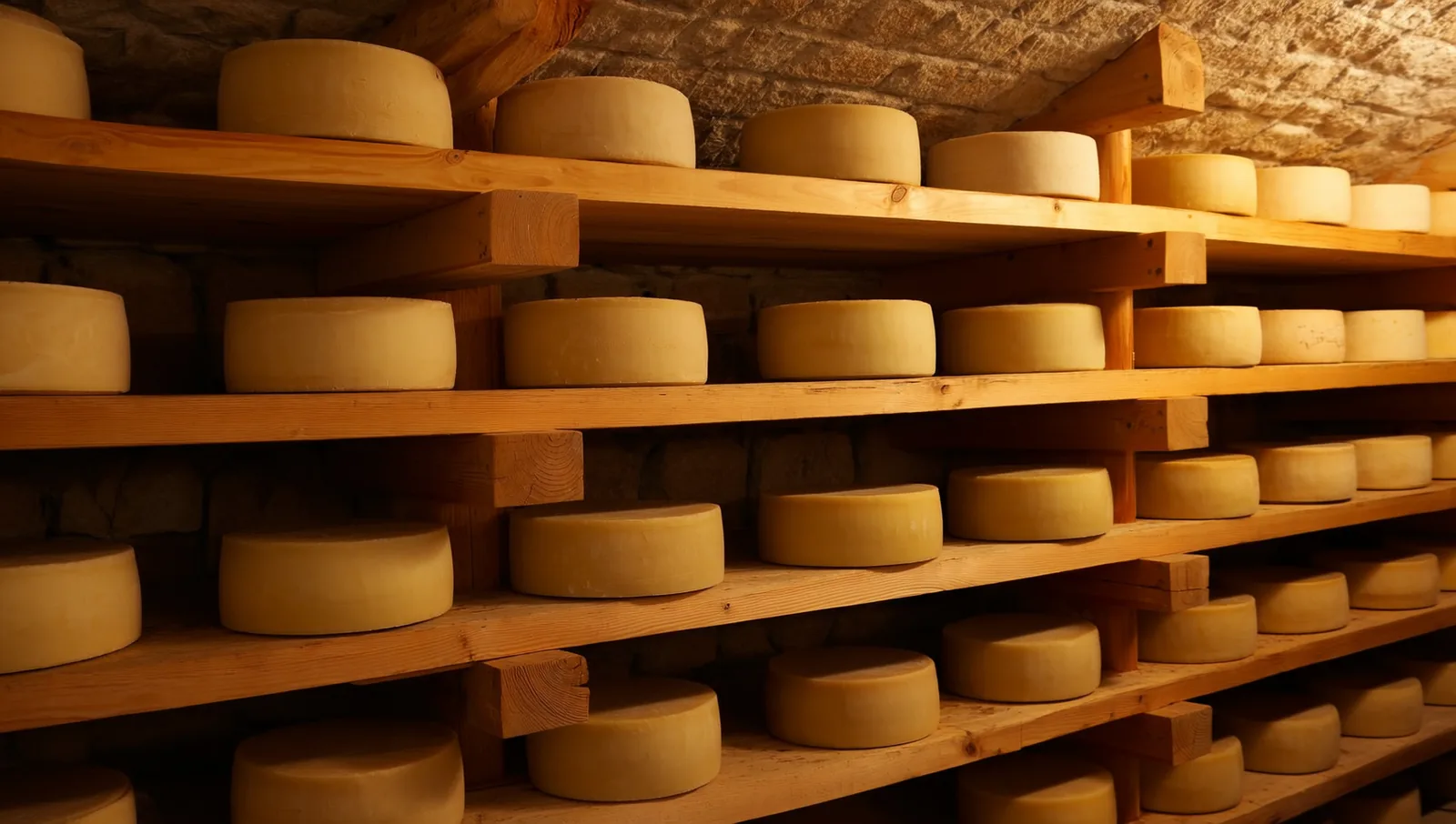
Europe lists lysozyme as food additive E1105, approved to prevent late blowing in ripened cheese. It is not a rarity. When German food chemists screened 46 commercial cheeses with a validated laboratory method, they found lysozyme in 30 of them, at concentrations between roughly 31 and 386 milligrams per kilogram.
Not every hard cheese uses it. The production rules for Parmigiano Reggiano, published in Italy’s Official Gazette, bar additives of any kind, so a cheese sold under that protected name should not contain lysozyme. Those rules cover only the protected name, though, not every wedge labeled “parmesan.” Lysozyme also turns up outside the cheese case, including in some medicines, where the labeling rules are different again. Our guide to allergens in medicine covers that territory.
On paper, the label is supposed to catch all of this. When the FDA reviewed lysozyme for cheesemaking in 1998, it proposed treating the enzyme as safe only if the ingredient statement on bulk and packaged food containing the treated cheese said “egg white lysozyme,” precisely so that people allergic to egg would be warned. European rules likewise require it to be declared as an egg allergen.
How Much Egg Is in a Treated Cheese?
Less than an egg, and more than a trace. In that 1998 review, the FDA noted that cheese made with lysozyme contains at most about 400 parts per million of the enzyme, against roughly 3,300 in whole egg. It estimated that a cheese eater takes in about 16 milligrams of lysozyme per eating occasion, compared with about 264 milligrams for someone eating eggs, and it noted that commercial preparations may also carry small amounts of other egg white proteins. That is an intentional ingredient measured in milligrams, not the stray cross-contact a “may contain” warning describes.
Whether those milligrams cause reactions is a more mixed story. Lysozyme is a minor egg allergen. Most egg-allergic people react mainly to ovomucoid and ovalbumin, the proteins our egg allergy guide walks through, but some are also sensitized to lysozyme itself, and that sensitization is what decides the risk here. The cheese studies so far all used Grana Padano:
- Adults, no reactions. Iaconelli and colleagues gave lysozyme-treated Grana Padano, measured at 155 milligrams of lysozyme per kilogram, in portions up to 60 grams to 20 egg-allergic patients and saw no clinical reactions. Rossi and colleagues gave 30 gram portions of treated and lysozyme-free grana to 25 egg-sensitive adults, with the same result.
- Children, real reactions. Marseglia and colleagues challenged egg-allergic children who were sensitized to lysozyme. After cheese aged 12 months, 5 of 21 reacted, with symptoms ranging from itching and hives to vomiting, asthma, and angioedema (deep swelling of the skin). After cheese aged 24 months, one child did. The worst symptoms, including vomiting, abdominal pain, and low blood pressure, came in children whose lysozyme-specific IgE antibodies were above 7 kU/L.
- Lysozyme alone can cause anaphylaxis. Pediatric allergists have reported a 9-year-old with egg allergy who went into anaphylaxis after taking an over-the-counter sore throat tablet containing 20 milligrams of lysozyme.
These are small studies built around one style of cheese, and longer aging is not a strategy you can use at a store counter, where a wedge rarely tells you its age. The practical reading is narrower. Whether lysozyme cheese is a problem for you depends on whether your immune system recognizes lysozyme specifically, which blood testing can measure. That is a question for your allergist, not a taste test. Until you have an answer, do what the law does and treat lysozyme as egg.
Where the Label Gets Lost: The Cut-and-Wrap Counter
A whole wheel arrives from the producer carrying the producer’s label. In the European Union that label must emphasize allergens within the ingredient list, the system our guide to allergen labels around the world explains. Once the store cuts the wheel into wedges, that label stays behind on the rind or in the shipping box. What goes home with you is a scale label printed in the store from the store’s own product record, and if that record leaves something out, every wedge cut from the wheel inherits the gap. The FDA notice does not explain how egg went missing from the Cabricharme labels, only that the store’s scale labels did not declare it.
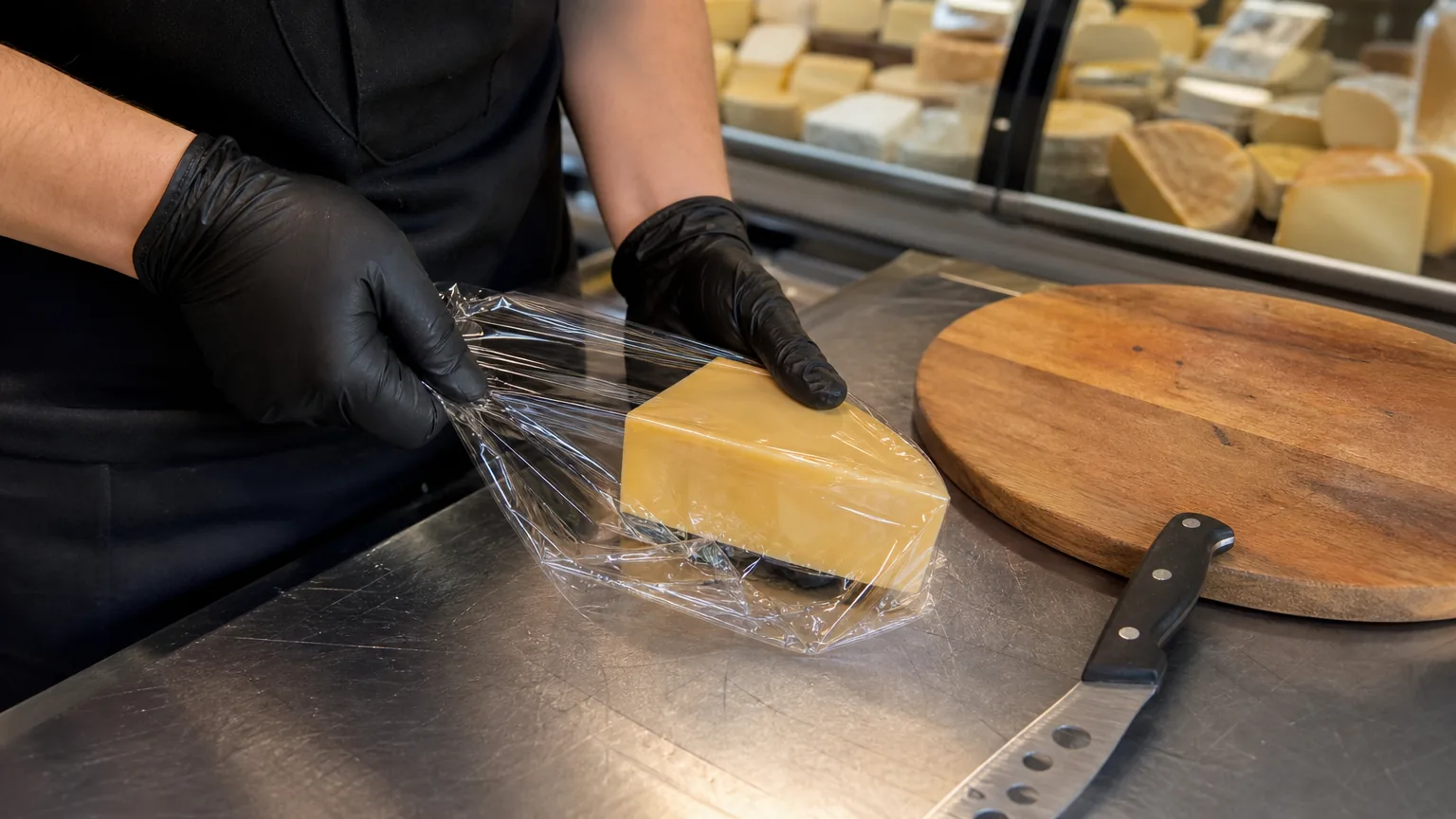
The rules draw their line at the wrapper. The FDA’s model Food Code, the template that state and local health departments adopt for grocery stores and restaurants on their own schedules, says food packaged in a store must be labeled like any other packaged food, including the food source of each major allergen. A wedge cut and wrapped ahead of time and set out in the case is packaged food, so its label must say egg. A piece cut and wrapped while you wait is not. The code’s definition of packaged food excludes food an employee wraps at a customer’s request, so that wedge needs no label at all. For unpackaged food, the 2022 edition asks stores to tell customers in writing which major allergens it contains, on a sign at the case, a placard, a brochure, or something similar, and it expects staff to be trained in food allergy awareness. How much of that applies at your store depends on which edition your state or county has adopted.
Labels are only half of the counter’s risk. The same knife, wire, board, and gloves can move from a walnut-crusted goat cheese log to a plain wedge in seconds, and many counters share a slicer across products. The National Celiac Association’s advice to celiac shoppers works for every allergen: ask for a clean slicer and surface, and fresh gloves. A “free from” sign on the case describes the recipe, not the knife.
Notice, too, who caught the Cabricharme error: a store team member. The people behind the counter are the best allergen safeguard the cheese case has, provided someone asks them.
Egg Is Not the Only Surprise
The same single-ingredient assumption trips up other allergies in the cheese case:
- Goat cheese is not a workaround for cow’s milk allergy. In a double-blind challenge study, 24 of 26 children with IgE-mediated cow’s milk allergy also reacted to goat’s milk, because the two milks’ proteins are similar enough for the immune system to confuse.
- Lactose-free cheese is still milk. It contains the same milk proteins that trigger an allergic reaction. Lactose intolerance is a digestive problem, not an allergy, a distinction our dairy-free living guide unpacks.
- Gluten can arrive in what is added. The National Celiac Association flags processed cheese, spreads, dips, and shredded cheese, where starches, thickeners, and anti-caking agents can come into play.
- Crusts and coatings show on the piece itself. Nuts, seeds, pesto, and herb rubs are easy to spot. The next wedge cut with the same knife is not.
How to Shop the Cheese Case With an Egg Allergy
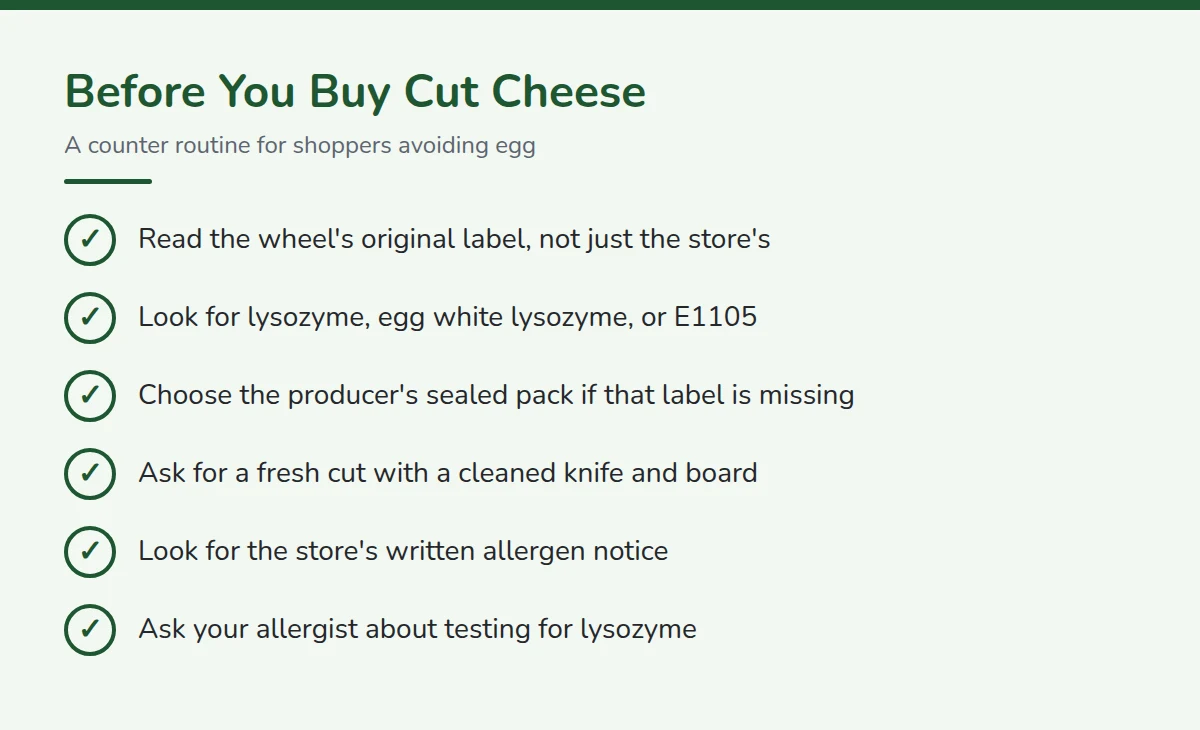
- Read the producer’s label, not just the store’s. Ask to see the original label on the wheel or the box it shipped in, and read the full ingredient list rather than hunting for a “Contains” line. Look for “lysozyme,” “egg white lysozyme,” and E1105, which is the same in every EU language.
- When the source label is not available, buy the producer’s own sealed package instead of a store-cut wedge.
- Check aged hard cheeses first. That is where late blowing is a problem and where lysozyme is used. Do not assume by name: “parmesan” and Parmigiano Reggiano are not the same thing.
- For cut-to-order cheese, ask for a fresh cut with a cleaned knife and board, and ask what the knife cut last.
- Look for the store’s written allergen notice for unpackaged food, and ask for it if none is posted.
- Ask your allergist about lysozyme specifically. If testing shows you are not sensitized to it, some lysozyme cheeses may be fine for you. That is a decision to make with an allergist, never by trial at the dinner table.
Cheese looks like the simplest food in the store, and much of it is. But a wedge’s label is only as good as the store record behind it, and the rules stop requiring a label the moment a wedge is wrapped at your request. If a reaction starts after eating cheese, treat it like any other: use epinephrine and call 911. Then report the product, the way one store employee’s catch started this recall.
Further reading (sources)
- FDA on the Cabricharme recall notice, with PLUs, states, and best-by dates
- Federal Register with FDA’s 1998 review tying lysozyme in cheese to an “egg white lysozyme” label
- FDA Food Code 2022 for the labeling rules for store-packaged and unpackaged food
- Khorshidian and colleagues on how lysozyme works in cheese and where it is approved
- Carminati and colleagues for late blowing in grana-type cheese and the push for lysozyme-free methods
- Schneider and colleagues with lysozyme measured in 30 of 46 commercial cheeses
- Gazzetta Ufficiale on the Parmigiano Reggiano production rules that bar additives (in Italian)
- Iaconelli and colleagues for egg-allergic patients eating lysozyme-treated Grana Padano
- Rossi and colleagues on a cheese challenge in 25 egg-sensitive adults
- Marseglia and colleagues with reactions to lysozyme cheese in sensitized children
- Elbany and colleagues on anaphylaxis to a lysozyme tablet in an egg-allergic child
- Bellioni-Businco and colleagues for goat’s milk challenges in children with cow’s milk allergy
- National Celiac Association on where gluten can get into cheese and what to ask at the deli