The 2026 Complete Dairy-Free Living Guide: Pantry, Aisle, Restaurant, and Travel
Published on August 2, 2026
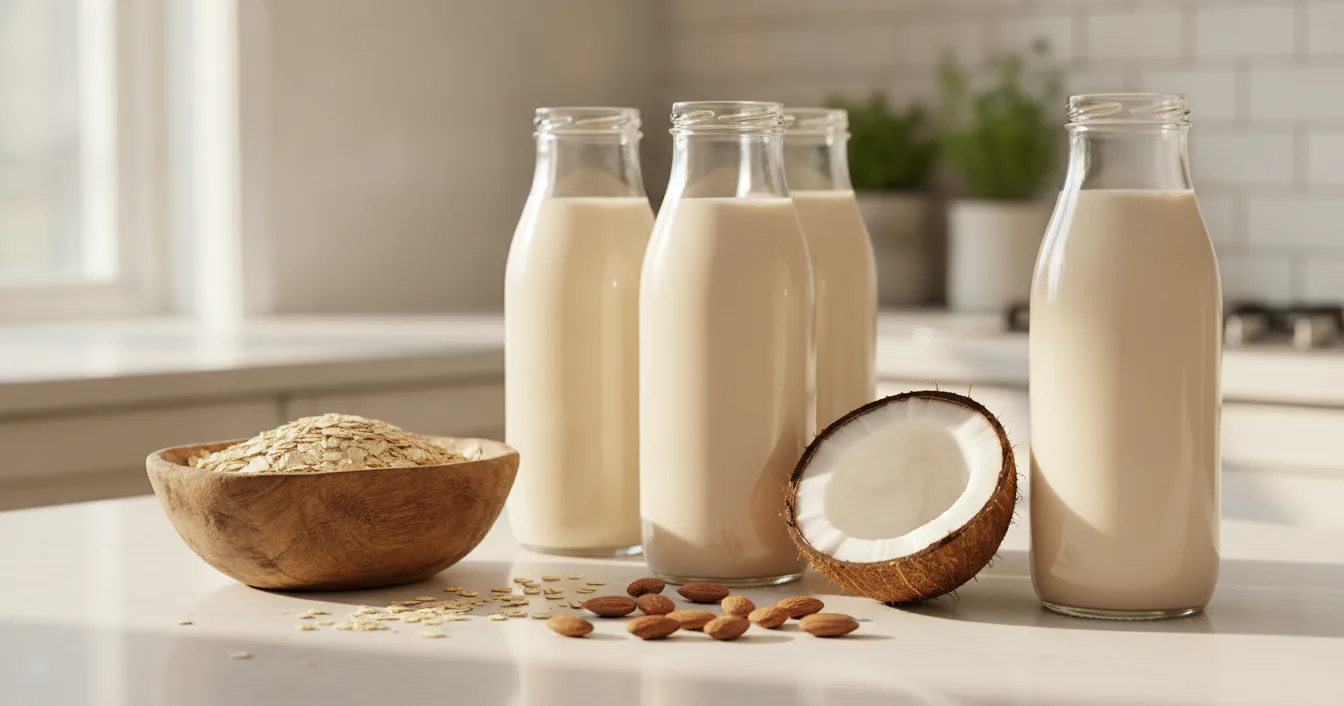
A milk allergy diagnosis rearranges a kitchen faster than almost any other restriction. Milk hides in the bun, in the fry oil, on the grill, and in the chocolate bar whose front panel says dairy-free. It is also the most frequently undeclared allergen in American food recalls, accounting for more than a third of allergen-related recalls over the past decade, which is a blunt way of saying that the label is not always the last word.
This guide pulls together a year of dairy-free reporting into one reference: how to stock a pantry, how to decode a label, what the FDA actually found when it tested dairy-free chocolate, and how to order at the chains you are most likely to end up at on a Tuesday night. It is written for people who are newly diagnosed and for lapsed dairy-free shoppers who want to check whether what they learned three years ago still holds.
Milk Allergy Is Not Lactose Intolerance
The two get used interchangeably and they are not close to the same thing. A milk allergy is an immune response to milk proteins, mainly casein and whey. It affects roughly 2 percent of the US population according to the national survey data the FDA cites, and its symptoms run from hives and vomiting to anaphylaxis. Lactose intolerance is a digestive issue caused by low levels of the lactase enzyme. It is genuinely miserable and it is dose dependent, but it does not put anyone in an ambulance.
That distinction has a practical consequence in the aisle. Lactose-free milk is still milk. It has had the lactose broken down and it contains every protein that triggers an allergic reaction. If you are shopping for an allergy, “lactose-free” is not a synonym for what you need. For the wider picture on how allergies, intolerances, and sensitivities differ, our complete food allergy guide for 2026 covers the ground properly.
What a “Dairy-Free” Label Legally Means
Less than you would hope. Under FALCPA, manufacturers must declare milk when it is an ingredient, either in the ingredient list or in a “Contains” statement. That part is law. But “dairy-free” itself has no regulatory definition. Gluten-free is the only free-from claim with a number behind it (below 20 parts per million). Everything else, including dairy-free, is a voluntary claim that simply has to be truthful and not misleading. The FDA’s position is that a dairy-free claim means no milk from any source, and the agency will investigate when testing says otherwise, but there is no defined threshold sitting underneath the words.
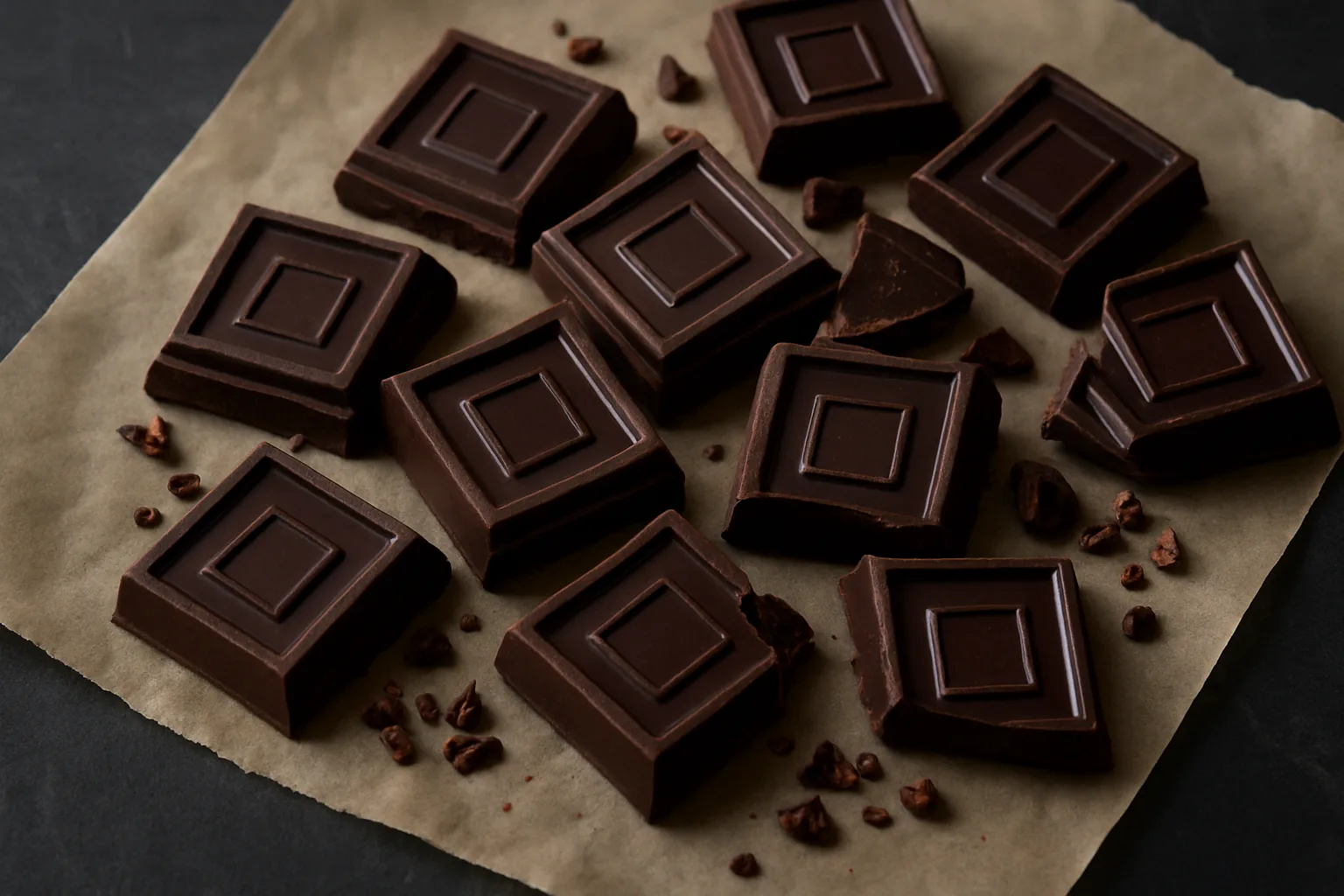
Learn the words that mean milk without saying milk: casein, sodium and calcium caseinate, whey, whey protein concentrate, lactalbumin, lactoglobulin, curds, ghee, milk solids, and milk fat. “Non-dairy” is the trap that catches the most people, because a coffee creamer can carry that phrase and still list sodium caseinate.
Advisory statements are the other half of the puzzle. “May contain milk” and “made on equipment shared with milk” are voluntary, unregulated, and inconsistently applied, which is exactly why the FDA held a public meeting on allergen thresholds and what advisory labels should mean. The combination worth treating as a red flag is a package that carries a dairy-free claim and a milk advisory statement. The FDA has said outright that pairing the two gives consumers inconsistent information and should be avoided.
Building the Pantry: Dedicated Facilities
The strongest signal available to a shopper is a manufacturer that runs a facility where milk never enters the building. Go Dairy Free maintains a running list of roughly 90 brands producing in dedicated dairy-free facilities, covering categories where cross-contact is otherwise common: baking mixes (1-2-3 Gluten Free), snack and protein bars (88 Acres, Amrita Health Foods), nut butters (Barney Butter), and breads (Base Culture).
Three caveats matter more than the list itself. Being on it is not a certification, it is a company statement to a publisher. Processes and co-packers change without announcement. And absence from the list says nothing at all, since plenty of careful companies use dedicated lines, strict changeover protocols, and finished-product testing without owning a dairy-free plant. The honest framing, which Go Dairy Free states plainly, is that there is no such thing as 100 percent allergen-free.
Start with ten staples from dedicated-facility brands, then expand outward as you verify others. Cross-referencing habits carry over between diets, so if you are also avoiding gluten, our pantry reference on which everyday foods are gluten-free uses the same “plain form versus the version with additions” logic that works for milk.
The Dark Chocolate Problem, in Three Rounds of FDA Data
Dark chocolate deserves its own section because the FDA has now tested it three times and the results are genuinely instructive about how cross-contact behaves.
The first survey, of 94 dark chocolate products bought between 2013 and 2014, established the core problem: most dark chocolate is produced on equipment that also runs milk chocolate, so milk can end up in a bar nobody intended to put it in.
The FY2018-2019 assignment narrowed to 52 domestically manufactured products that carried dairy-free or similar claims, across 119 samples. Four products, all bars, held potentially hazardous levels of milk ranging from 600 to 3,100 ppm. All four were recalled.
The FY2022-2023 round, run with the Pennsylvania and Michigan state agriculture departments, widened the net to chocolate-containing products such as cookies, syrups, and baking chips: 210 samples from about 50 firms. Thirteen samples tested positive, traced to three firms. Twelve of those came in under 80 ppm and one bar hit 1,083 ppm. Investigations pointed at the suppliers of the dark chocolate ingredients rather than the finished-product makers, and all three firms either removed their dairy-free claims or agreed to.
Here is the detail worth carrying to the store: every single one of the 13 positives carried an advisory statement alongside its dairy-free claim. The FDA describes the trend from 2018 to 2023 as downward while cautioning that the two efforts were not designed for statistical comparison. Chocolate remains the highest-yield category for calling a manufacturer directly, and the three questions to ask are whether the product is made on dairy-free dedicated equipment, whether the incoming ingredients are dairy-free, and whether the finished product is tested to confirm the claim.
Fast Food: Four Questions That Do Most of the Work
Chain allergen charts are long, inconsistent, and updated on their own schedule. Four questions get you most of the way at almost any counter.
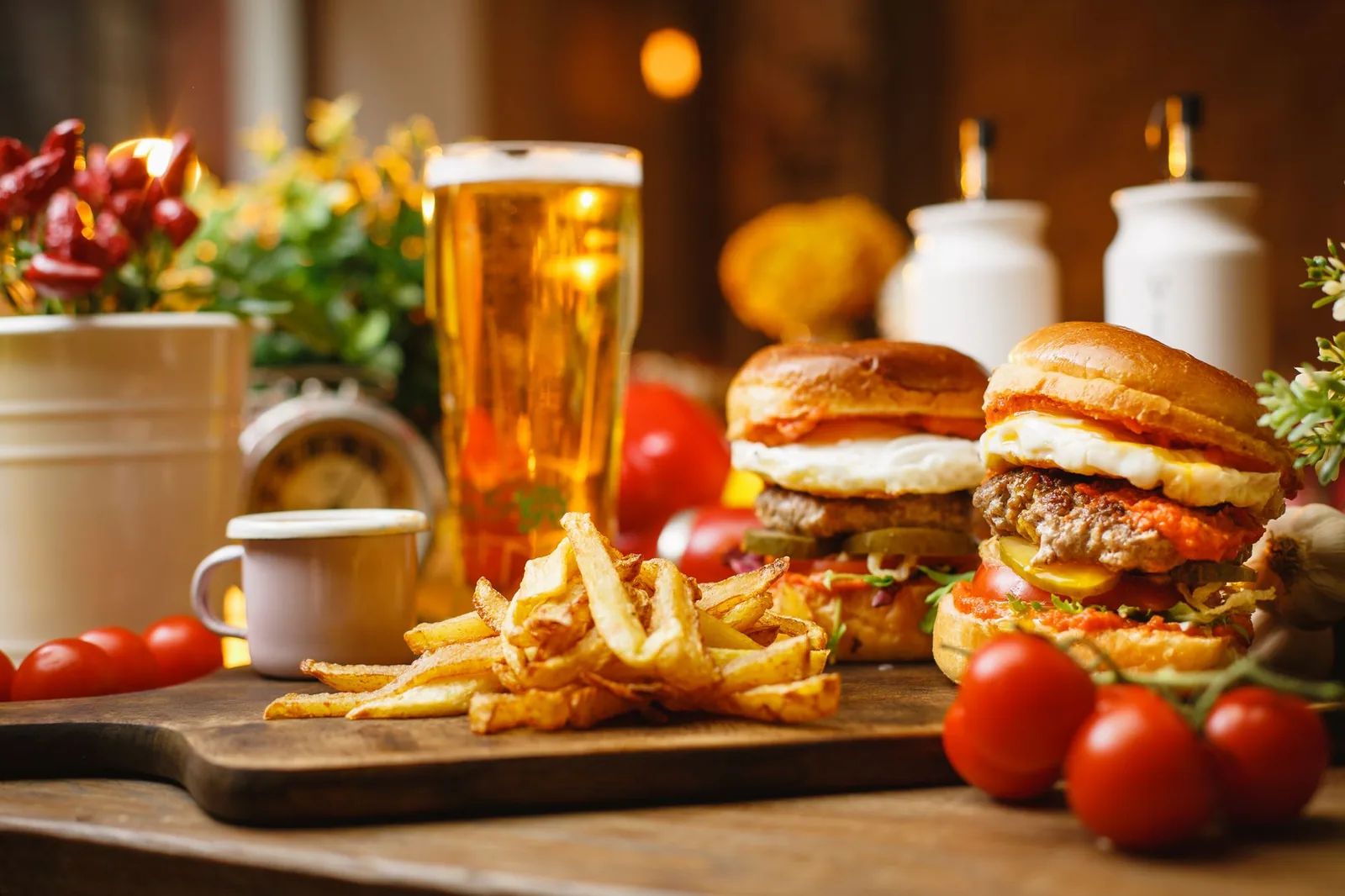
Is the fryer shared, and does anything with milk go into it? In the United States, McDonald’s french fries and hashbrowns contain milk as an ingredient, which surprises people every single time (in Canada and the UK the hashbrowns are dairy-free by ingredients). Chick-fil-A fries chicken in peanut oil and waffle fries in canola at locations that keep them separate, though corporate confirms that is not universal. Burger King, Wendy’s, and Jack in the Box all run shared fryers. Fryer cross-contact is not hypothetical: an FDA study on reused breading in restaurant kitchens found measurable allergen transfer between orders.
Is the “butter” real butter? McDonald’s uses actual dairy butter and may apply it to buns or the grill depending on the location, so “no butter” belongs in every order. Five Guys, A&W in the US, and Jack in the Box use butter-flavored oil that contains no milk. Chick-fil-A states that its butter oil and natural butter type flavor are dairy-free.
Which bun? Wendy’s potato buns contain milk while their sandwich buns do not, and every bun goes through a shared toaster.
What else touched the grill? Burger patties share a griddle with cheeseburgers at essentially every burger chain, so a “no cheese” order is not the same as a milk-free cooking surface.
One quirk to be aware of: some chains over-label. Wendy’s flags certain items as containing milk purely because of potential cross-contact, then leaves other items made on the same surfaces with only a warning or nothing at all. That makes their chart confusing rather than conservative, and it is a good argument for asking staff directly instead of reading the poster.
Sit-Down, Superstore, and City Guides
Full-service restaurants can be better than fast food, not worse, because a person is involved. The Keg Steakhouse is a butter-heavy menu that nonetheless has a good reputation with allergic diners: flag the allergy and a manager comes to the table to work through the order. Shared fryers still apply.
IKEA is worth knowing about as a combination restaurant, bistro, and grocery run, with dairy-free options now spread across all three including plant-based bowls and the food market shelves. And regional guides organized by city, like the running Ontario list, are the fastest way to find dedicated dairy-free bakeries and ice cream shops that will never appear in a national chain roundup.
For flights, hotels, theme parks, and anywhere your own kitchen is not available, our 2026 travel playbook for food allergies covers chef cards, airline requests, and reacting away from home.
What Is Coming to the Shelf: Rice Protein Cheese
Plant-based cheese has leaned on cashew, soy, and coconut, which is unhelpful if you are avoiding tree nuts or soy alongside milk. Research published in Future Foods by a University of Arkansas team led by Mahfuzur Rahman points at a different base: rice proteins pulled from milling byproducts, which are naturally free of dairy, gluten, and nut allergens.
The team extracted protein from brown rice, rice bran, and broken kernels and made three cheese-alternative prototypes at around 12 percent protein, high for a category where many products carry almost none. Each fraction did something different, with brown rice protein giving the best solubility and emulsion stability, bran protein adding water-holding and foaming capacity, and broken kernel protein producing a softer texture with better melt. US rice milling generates an estimated 14.3 million tonnes of bran and 24.8 million tonnes of broken kernels annually, which is a large supply of a protein currently imported. Sensory testing, shelf life, and consumer acceptance work still lie ahead, so this is a category to watch rather than a product to shop for.
Your First Two Weeks Dairy-Free
- Confirm the diagnosis with an allergist. If it is an IgE-mediated milk allergy, get an epinephrine prescription and a written anaphylaxis action plan before anything else on this list.
- Memorize the hidden words: casein, caseinate, whey, lactalbumin, ghee, and milk solids.
- Pick ten staples from dedicated dairy-free facility brands and build outward from there.
- Treat dark chocolate, baked goods, and granola bars as call-the-manufacturer categories rather than read-the-label categories.
- Keep the four restaurant questions (fryer, butter, bun, grill) in your phone notes.
- Distrust any package that claims dairy-free and warns about milk in the same breath.
A dairy-free diet gets easier fast, mostly because the failure modes repeat. Once you know that shared fryers, buttered buns, and shared chocolate lines cause most of the trouble, the rest is habit. Anyone with a severe milk allergy should build that habit alongside an allergist rather than a search result.
Further reading (sources)
- U.S. Food and Drug Administration on what retail testing found in dairy-free chocolate in 2022 and 2023
- U.S. Food and Drug Administration for the earlier round that ended in four recalls
- Go Dairy Free on brands producing in dedicated dairy-free facilities
- Go Dairy Free for the milk in McDonald’s fries and hashbrowns
- New Food Magazine for rice proteins as a base for allergen-free cheese