The First Fully Gluten-Free Ocean Cruise: Why Whole Destinations Are Now Competing for Celiac Travelers
Published on September 23, 2026
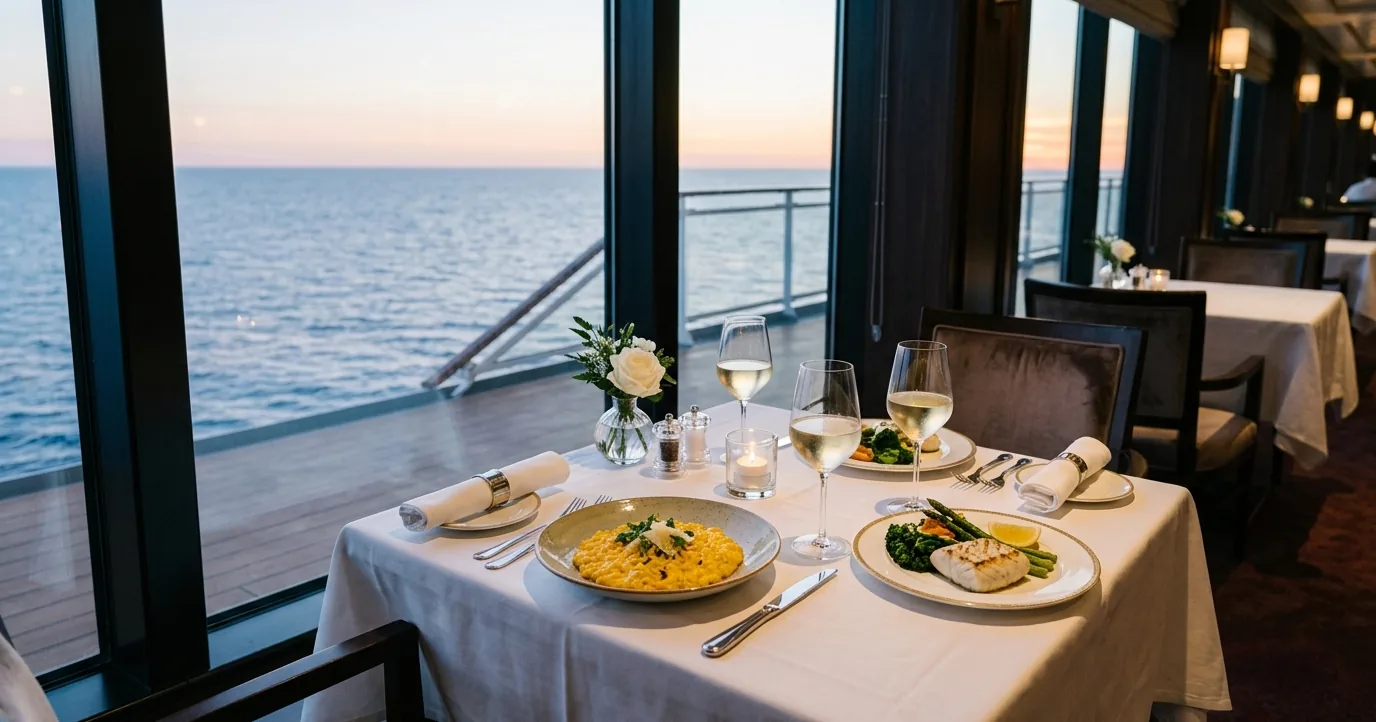
For most of the last two decades, a celiac traveler’s research came down to one small question: will this restaurant make me a safe meal? In 2026 the question got bigger. Oceania Cruises announced a 2028 sailing on which every one of the ship’s eleven dining venues will be gluten-free. San Francisco gained what local press called its first gluten-free, celiac-safe Italian restaurant. CBS reported on the Philadelphia area turning into a gluten-free destination, with dedicated bakeries and an expo that draws more than 100 vendors. And Rome keeps being named one of the best places in the world to eat without gluten, which still surprises anyone who thinks of Italy as the land of bread and pasta.
Taken together, these stories describe a single trend: whole venues, and in some cases whole places, competing for celiac travelers instead of offering them one substitution. That is good news. But “gluten-free” at the scale of a ship or a city can mean very different things, and the differences decide whether you come home healthy. This guide explains what a fully gluten-free promise commits an operator to, how Italy’s national celiac system differs from an American restaurant’s good intentions, and the questions to ask before you pay a deposit.
Why Celiac Travelers Became a Market Worth Winning
The demand was always there. It just had nowhere to go. In Celiac Canada’s State of Celiac survey, 90.6 percent of respondents said they at least sometimes struggle to find safe restaurants when they travel, 62.7 percent at least sometimes limit their travel plans because of the diet, and only 30.1 percent often or very often find traveling enjoyable. Nearly four in five carry their own gluten-free food at least some of the time. That is a large group of people who want to travel and mostly do not enjoy doing it.
There is a multiplier, too. Most trips and most meals are shared. A partner, a family, or a group of friends usually goes wherever the celiac diner can eat safely, so a venue that solves the problem for one person often wins the whole table. The organizers of the Philadelphia expo summed it up for CBS in three words: “Eating is social.”
Many of the new venues were built by people who learned that at their own table. The San Francisco restaurant began as a pop-up after its owners discovered their daughter has celiac disease, and its chef has two daughters with the condition. Lived experience tends to produce more careful protocols than a marketing plan does. It is still a claim, though, and the questions at the end of this guide are how you test it.
What “Fully Gluten-Free” Commits an Operator To
The 2028 voyage is a 12-night round trip from Southampton to ports in England, Ireland, and Scotland aboard the 1,200-passenger Oceania Vista. It is being developed with Celiac Cruise, a company that has organized trips for travelers with celiac disease for years. On its usual sailings, one restaurant or kitchen is set aside for the group. This time the entire food operation switches over for the voyage, from the main dining room to the poolside grill and the patisserie. Oceania is calling it the industry’s first entirely gluten-free ocean cruise. With fares starting above $7,000 per person, it is a niche luxury product rather than a new industry standard, but it is a useful model of what “fully gluten-free” demands.
Moving from a gluten-free menu to a gluten-free venue changes where the risk lives. In a shared kitchen, the main danger is the kitchen itself, and laboratory studies have found that some shared habits matter far more than others. Shared pasta water was the one kitchen practice that failed testing badly, while rinsed utensils and even a crumb-filled toaster stayed under the limit. Take every gluten ingredient off the premises and most of that risk disappears.
What remains is the supply chain. A dedicated kitchen is only as safe as the flour, sauces, and packaged foods it buys. When Health Canada researchers tested 640 samples of naturally gluten-free flours and starches, 9.5 percent exceeded the 20 parts per million limit, while those carrying a gluten-free label rarely did. A venue with no wheat in the building can still be undone by a sack of unlabeled buckwheat.
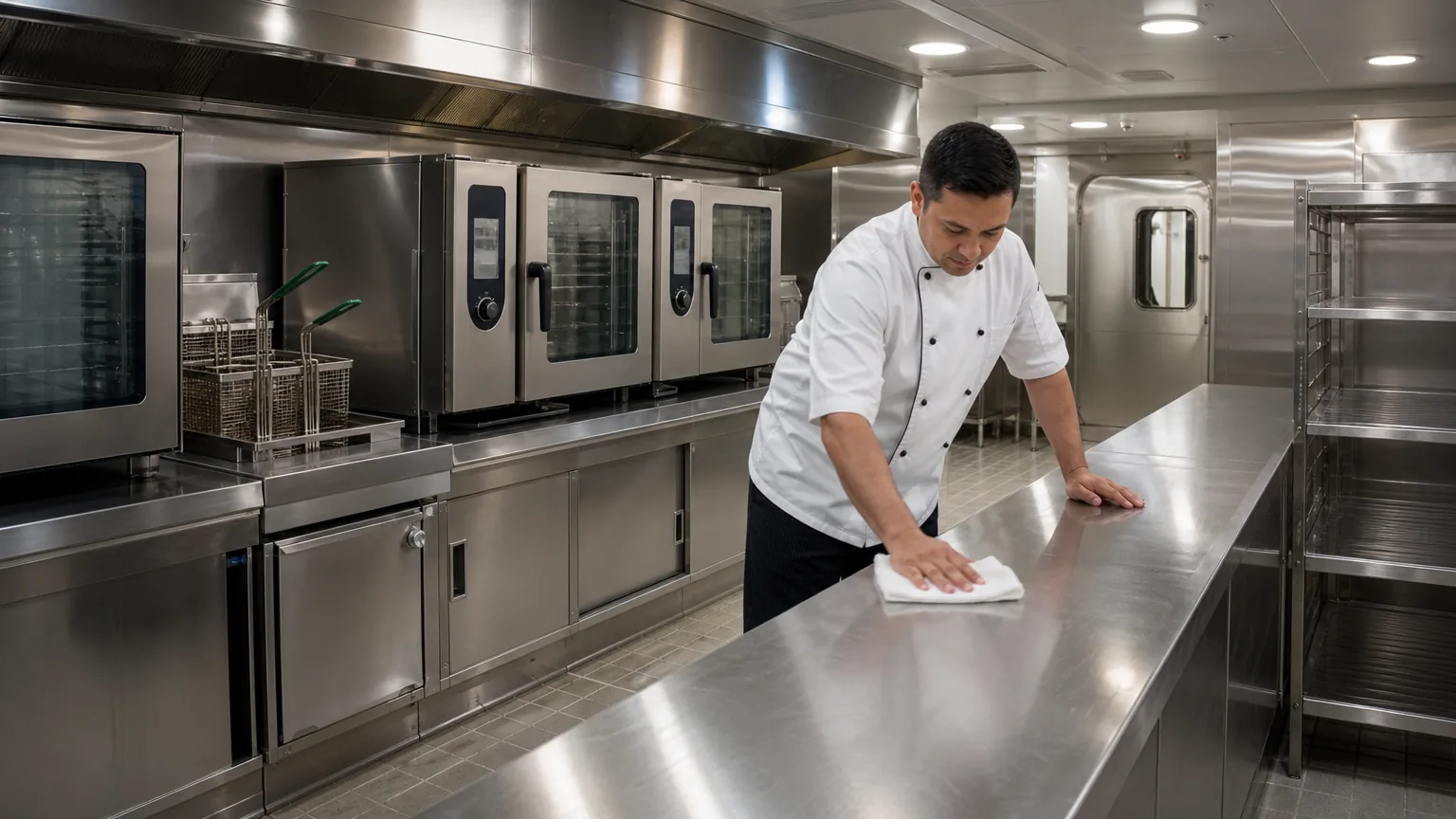
That is why the organizers’ stated plan has the right shape. They say they will train crew ahead of the sailing, review every food label against the menus, walk through the galleys, evaluate each venue, and offer pre-vetted gluten-free excursions in port. Label review covers the supply chain. The galley walkthroughs cover the changeover, a problem a permanently dedicated restaurant never faces: this is a single sailing on a ship that serves ordinary menus the rest of the year, so fryers, pasta cookers, bakery equipment, and storerooms have to be cleared and cleaned before the celiac passengers board.
Two limits remain. The bubble ends at the gangway: flights, the hotel night before embarkation, and any meal ashore outside a vetted excursion are back under ordinary rules. And gluten-free is not allergen-free. A ship without gluten will still serve milk, eggs, fish, shellfish, and nuts, and a food made gluten-free with processed wheat starch still contains wheat, which matters if you have a wheat allergy rather than celiac disease.
Italy’s System: A National Floor Under Every Kitchen
Rome’s reputation rests on something no single restaurant could build. In 2005, Italy’s parliament passed a law defining celiac disease as a permanent intolerance to gluten and recognizing it as a “social disease.” The law gives diagnosed patients the right to free gluten-free foods, up to a spending cap set by the health ministry. It requires school, hospital, and public canteens to serve gluten-free meals on request, obliges medicine package leaflets to state clearly whether a product is safe for people with celiac disease, and directs the regions to build celiac modules into the professional training offered to restaurant and hotel operators. In 2023 parliament went further, passing a law that sets up a national screening program for celiac disease and type 1 diabetes in children.
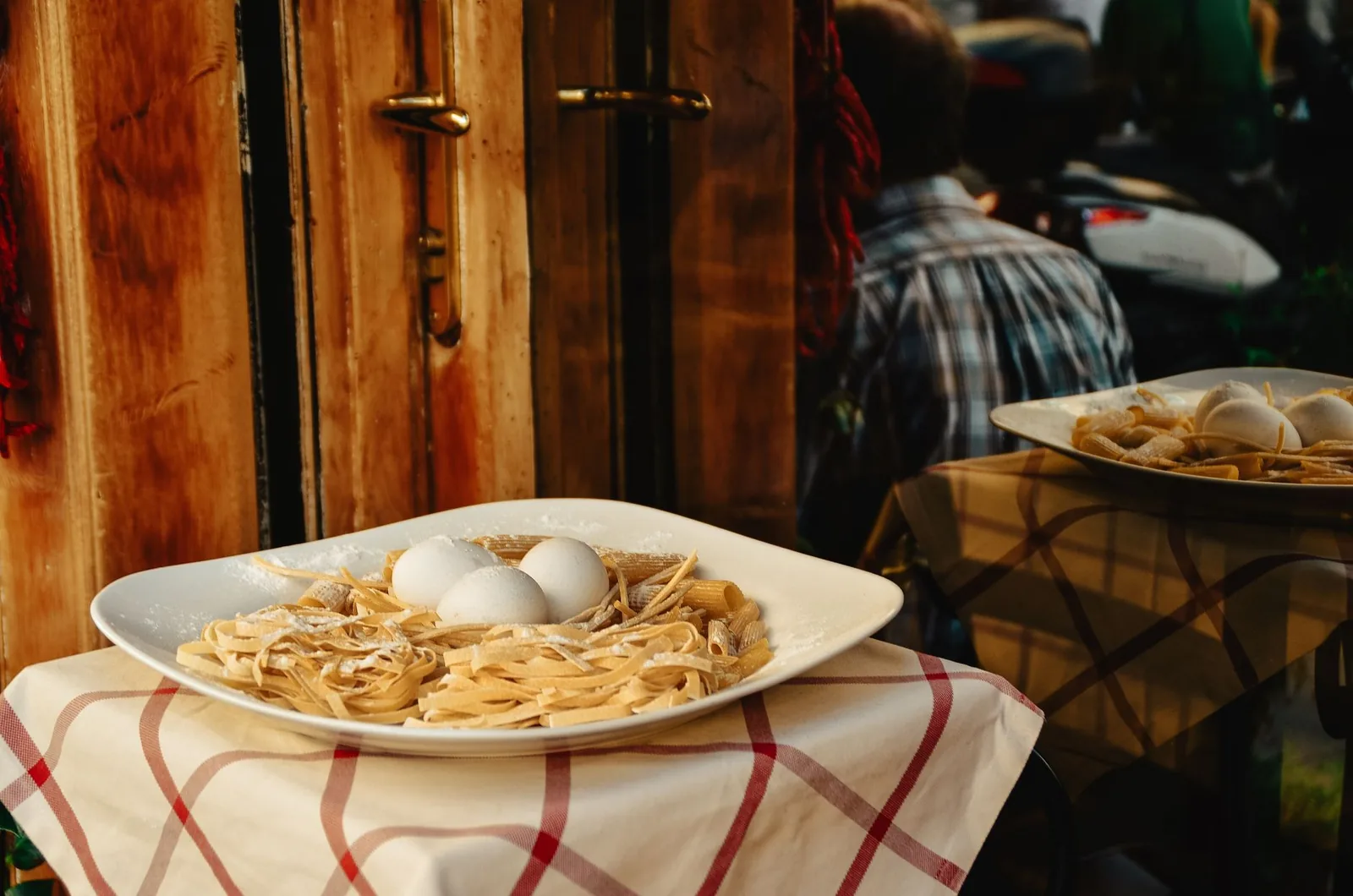
On top of the law sits the Associazione Italiana Celiachia (AIC), Italy’s national celiac association, and its network for eating out. To join, a restaurant, pizzeria, hotel, or gelateria has to send its people through a celiac course, finish training on its own premises, use only gluten-free ingredients for its gluten-free service, follow the association’s preparation rules, sign an agreement, and accept periodic checks that include at least one in-depth inspection a year. The network includes both fully gluten-free venues and ordinary restaurants that have completed the training, and the association publishes a searchable list along with an app for travelers.
The effect shows up at the table. A Condé Nast Traveler writer whose wife has celiac disease described Roman restaurants where, even outside dedicated gluten-free establishments, precautions at the level celiac disease requires were the baseline for gluten-free dishes rather than the exception. One server greeted the couple with the news that, because of a note on the reservation, the kitchen had already started a separate pot of water for gluten-free pasta. Fried rice balls were fried apart from everything else, one pizzeria baked gluten-free pies in separate ovens, and one gelateria made everything on site gluten-free, cones included.
Compare that with the default in the United States, where, the same writer observed, servers often ask whether cross-contamination is an issue. The FDA’s gluten-free rule, which caps gluten at 20 parts per million, applies to packaged food. For restaurant menus, the agency says gluten-free claims should be consistent with its definition and points to the role state and local governments play in overseeing restaurants. Third-party programs exist, such as the Gluten Intolerance Group’s food-service validation, which sends auditors on site and awards a “Validated Gluten Free Safe Spot” mark, but a restaurant takes part only if it chooses to. In practice an American gluten-free menu is a statement of good intentions, and its reliability depends on the cook working that night. Our guide to what restaurant certification marks actually verify explains how to read the ones you do find.
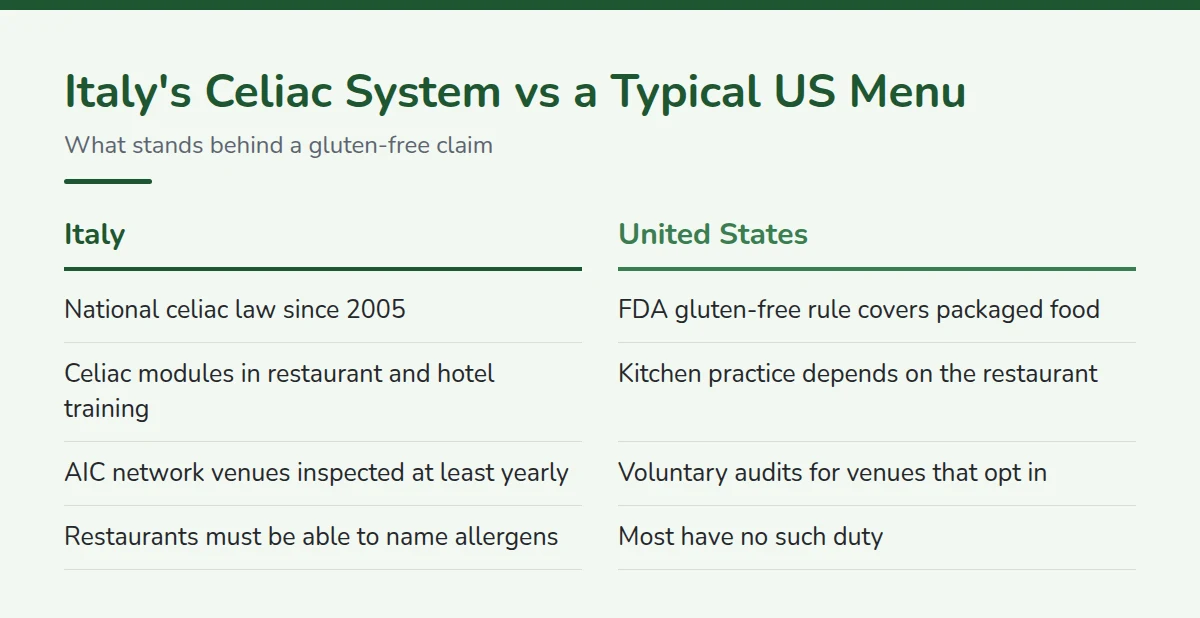
Italy is not a guarantee either. The AIC list is not exhaustive, as the Condé Nast writer noted, so a restaurant missing from it is not necessarily unsafe, and one on it still deserves questions: AIC’s own advice to celiac diners using its network is never to lower their guard. European allergen rules help, because restaurants there must be able to tell you which major allergens, including cereals containing gluten, are in a dish, a duty most American restaurants do not have. Our guide to allergen labels around the world explains how that differs from the US.
The bigger catch is for wheat allergy. Some Italian gluten-free products and flours are made with deglutinated wheat starch (amido di frumento deglutinato), which AIC accepts for celiac diets because the finished products contain less than 20 ppm of gluten. It is still wheat. The Condé Nast writer flagged a gluten-free pizza flour made with it as unsafe for people allergic to wheat, and noted that some celiacs are wary of it too. If yours is a wheat allergy, ask about it by name.
The American Answer: Dedicated Venues, One at a Time
Without a national floor, America’s celiac destinations are being built venue by venue. The San Francisco restaurant serves an entirely gluten-free Italian menu: pasta made from chickpea and brown rice flours, pizza with a crisp rice flour crust, and gluten-free focaccia. Around Philadelphia, one dedicated gluten-free bakery has built a loyal following for doughnuts, kiffles, and elaborate wedding cakes, a restaurant chain in the area runs a dedicated gluten-free menu down to freshly made gluten-free bread, and the region’s expo has grown into one of the largest gluten-free festivals in the country. “We’re in the normalcy business,” the bakery’s co-founder told CBS. “Really, the inclusion business.”

A dedicated venue removes the biggest variable in restaurant dining, the shared kitchen. It does not remove the supply chain, and it does not come with an inspector unless the owner has chosen to invite one. The strength of the American model is the commitment of the people running it. The weakness is that you have to verify that commitment yourself, one venue at a time.
Questions to Ask Before You Book
Whether the promise comes from a ship, a restaurant, or a whole country’s reputation, the same short list separates a real commitment from a marketing line.
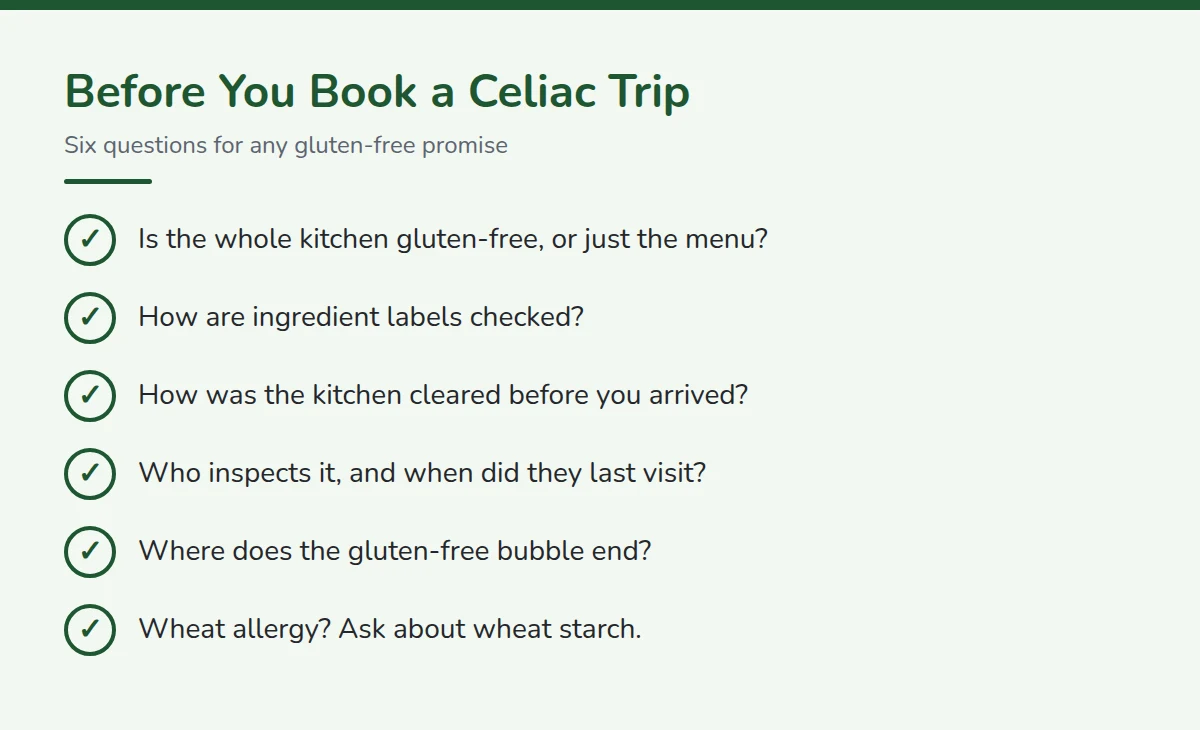
- Is the whole kitchen gluten-free, or just the menu? On a ship or at a resort, ask whether the promise covers every outlet: room service, bars, afternoon tea, and snacks, not only the restaurants.
- How are ingredients checked? Look for labels reviewed against each recipe, certified gluten-free products, or supplier documentation. “We buy gluten-free” is not an answer.
- What happened before you arrived? For a one-off sailing or a converted kitchen, ask how fryers, pasta cookers, bakery equipment, and storerooms were cleared.
- Who checks, and when? A named body you can look up, such as AIC in Italy or a food-service validation program in the US, beats an unnamed “certified” sticker. Ask when the last inspection happened.
- Where does the bubble end? Plan meals for flights, transfer days, and excursions, and pack safe food for the gaps.
- Is it wheat-free, too? If you have a wheat allergy, ask whether any gluten-free product uses wheat starch, and carry your epinephrine.
Then do the ordinary things anyway. Tell every server you have celiac disease, not a preference, and carry a dining card in the local language. The ordering basics in our guide to gluten-free options and the airline, hotel, and cruise planning in our 2026 travel playbook still apply.
The Bottom Line
The fully gluten-free cruise is a real milestone and a signal of where celiac travel is heading: away from single safe meals and toward whole safe places. The best of those places change where the risk lives rather than erasing it. A dedicated venue moves it from the kitchen to the supply chain, and a national system like Italy’s raises the floor everywhere without turning any one restaurant into a sure thing. Judge each promise by what it commits the operator to, ask the questions above before you book, and review your plans with your gastroenterologist before you go, or with your allergist if what you have is a wheat allergy.
Further reading (sources)
- AFAR on the entirely gluten-free British Isles sailing planned for 2028
- TravelHost for the organizers’ plan for label vetting, galley walkthroughs, and crew training
- Celiac Canada with State of Celiac survey findings on traveling with the disease
- Koerner and colleagues on gluten contamination in naturally gluten-free flours and starches
- Normattiva for the text of Italy’s 2005 law protecting people with celiac disease (in Italian)
- Istituto Superiore di Sanità on the 2023 law creating pediatric screening for celiac disease and type 1 diabetes
- Associazione Italiana Celiachia with the rules a restaurant accepts to join its eating-out network (in Italian)
- Associazione Italiana Celiachia, answering whether deglutinated wheat starch suits a celiac diet (in Italian)
- Condé Nast Traveler on eating gluten-free in Rome after a celiac diagnosis
- U.S. Food and Drug Administration for its questions and answers on the gluten-free labeling rule and its note on gluten-free claims in restaurants
- Gluten-Free Food Service, explaining how its validation program audits restaurants on site
- SFist on San Francisco’s first celiac-safe Italian restaurant
- CBS News Philadelphia with the region’s growing gluten-free scene