How Much Gluten Is Too Much? What Cross-Contact Studies Actually Measured in Real Kitchens
Published on September 18, 2026

Almost every gluten-free diet guide tells you to buy a separate toaster. Very few of them tell you how much gluten a shared toaster actually transfers, because until recently nobody had weighed it. That gap between confident rules and measured numbers is the reason so many people with celiac disease end up in one of two bad places: scrubbing a kitchen into a clean room and eating almost nothing outside it, or shrugging at exposures that genuinely do matter. Over the last decade researchers have finally started putting milligrams on the question, running toasters, pots, knives, flour bags, and restaurant meals through laboratory assays. The results are not what the diet guides predicted, and they are worth knowing in detail.
First, What Counts as a Dose
Before any kitchen experiment makes sense, you need the yardstick.
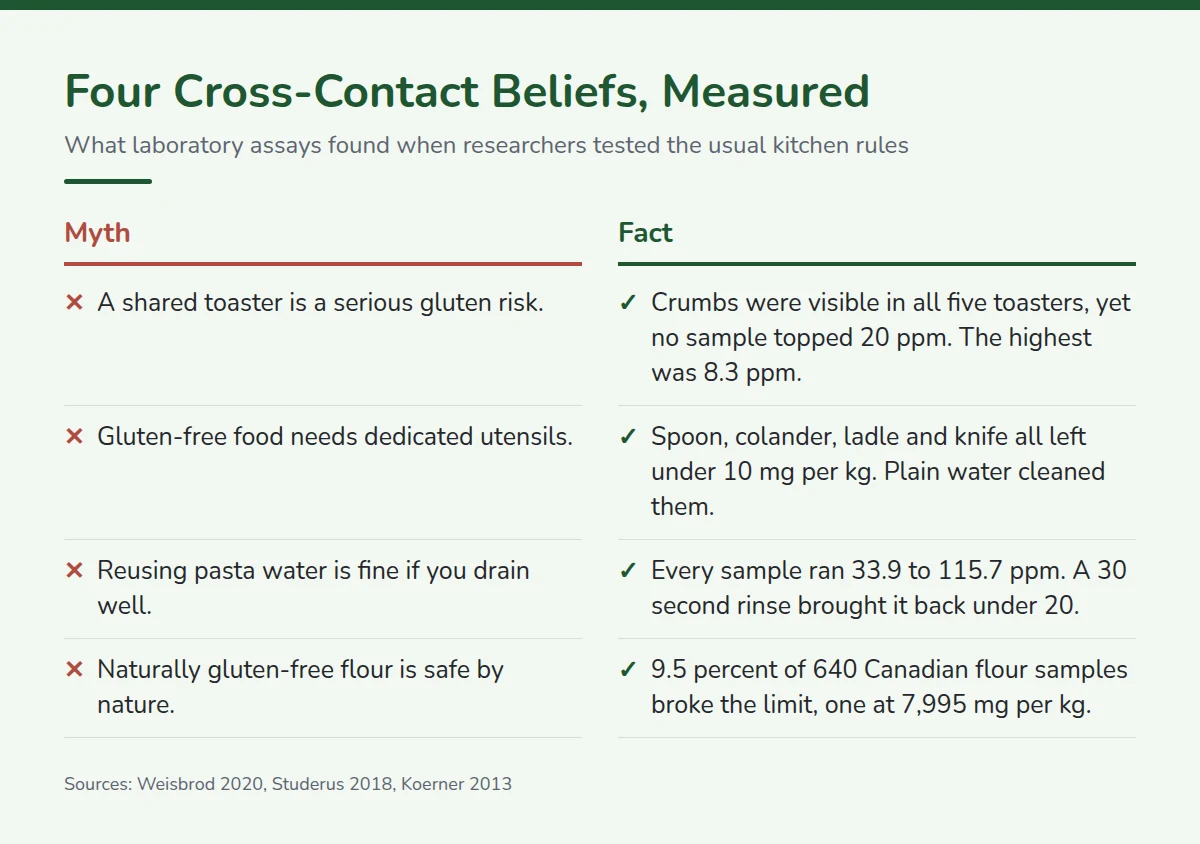
The number most often quoted comes from a multicenter trial led by Carlo Catassi and colleagues, which gave 49 adults with biopsy-confirmed celiac disease a daily capsule containing 0, 10, or 50 milligrams of gluten for 90 days. The 50 milligram group lost about 20 percent of their villous height to crypt depth ratio, a direct measure of intestinal damage. The 10 milligram group essentially held steady on average, though one patient in that group relapsed clinically. The authors concluded that contaminating gluten should stay below 50 milligrams a day, and most clinicians have since adopted 10 milligrams as the safer working ceiling.
That is a daily budget, not a per-bite limit, and it is the key to reading everything below. The familiar 20 parts per million threshold is a concentration, not a dose. A 100 gram serving of food sitting right at 20 ppm delivers 2 milligrams of gluten. You would need to eat several such servings in a day before approaching the trial’s danger zone. Our explainer on what the FDA’s 2026 threshold meeting could change covers why regulators are now trying to translate between these two units.
A 2026 Australian dose-response trial complicates the picture in an interesting way. James Daveson and colleagues challenged 51 treated celiac adults with gluten doses from 1 to 1000 milligrams and measured interleukin-2 in the blood, an immune signal that spikes within hours of exposure. The dose that produced a measurable immune response in half of participants was 111 milligrams. But the dose that triggered 10 percent of them was only 2.4 milligrams, and a few responded at 3 and 8 milligrams. Just as striking, symptom scores did not rise above placebo at any dose below 1000 milligrams. In other words, the immune system registers gluten well below the labeling thresholds, and how you feel is an unreliable guide to whether you were exposed.
The Shared Toaster, Finally Weighed
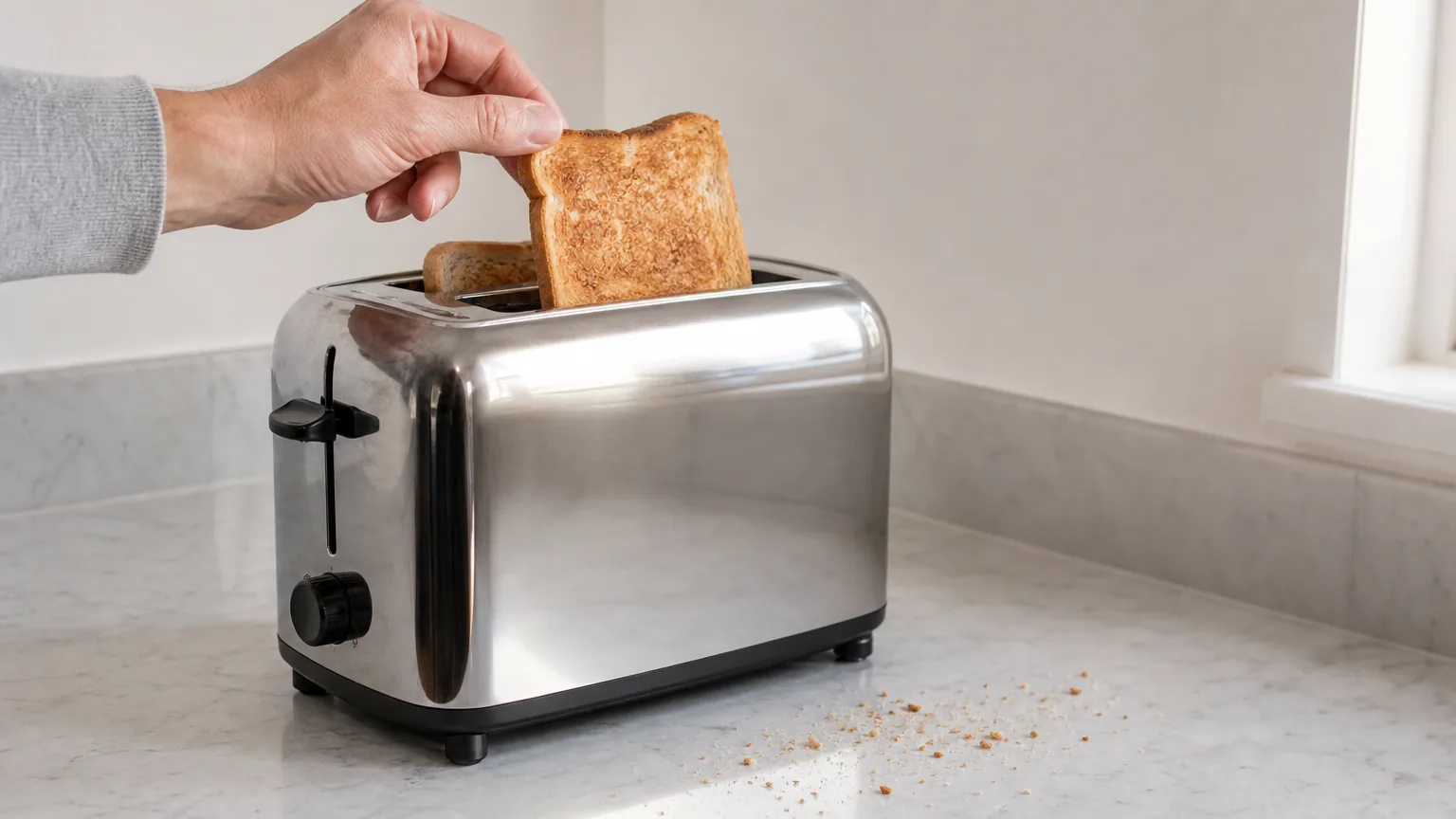
In 2020, a team at Children’s National Health System led by Vanessa Weisbrod published the study that gluten-free households had been waiting for. They toasted gluten-free bread in five shared toasters, including two conveyor toasters running in a busy hospital cafeteria and three pop-up toasters used immediately after gluten-containing bread. Crumbs were visible in every one of them. No toaster was cleaned first.
Not a single sample exceeded 20 ppm. Only four samples had any detectable gluten at all, and those ranged from 5.1 to 8.3 ppm. On a normal slice of bread, that is a fraction of a milligram.
The same team sliced frosted gluten-containing cupcakes with a knife, then reused the knife on a gluten-free cupcake. Here the news was mixed but still reassuring: 28 of 30 cupcake samples had detectable gluten, but only 2 of those 28 rose above 20 ppm. Washing the knife with soap and water, rinsing it under running water, or wiping it with an antibacterial wipe all worked equally well.
A Swiss group led by Diana Studerus had reached a similar verdict two years earlier, in a paper bluntly titled “Cross-Contamination with Gluten by Using Kitchen Utensils: Fact or Fiction?” They used a wooden spoon, colander, ladle, and knife on gluten-containing food, then reused them on gluten-free bread and pasta. Every sample came in under 10 milligrams per kilogram, and the cleaning method made no measurable difference. One detail is worth keeping: a DNA assay found the highest wheat signal on the ladle used to serve gluten-free pasta, which suggests that a serving utensil moving through wet food carries more than a dry one does.
The One Habit That Failed the Test
The same Weisbrod study found one scenario that flunked badly, and it is the one almost nobody worries about.
Gluten-free pasta cooked in water previously used for wheat pasta picked up gluten in every single sample tested, at 33.9 to 115.7 ppm. A 100 gram portion at the top of that range delivers roughly 11 milligrams of gluten, which lands squarely in the range the Catassi trial flagged. Shared pasta water is not a theoretical risk. It is the measurable one.
The fix took 30 seconds. Rinsing the cooked pasta under cold running tap water dropped it below 20 ppm, with only two samples showing any gluten at all, at 5.1 and 17.5 ppm. Rinsing the pot with plain water before cooking gluten-free pasta in fresh water worked just as well as scrubbing with soap. A 2024 Brazilian mini-review by Renata Damasceno and colleagues, which pooled the handful of controlled food-handling experiments published to date, reached the same split conclusion: shared ovens, fryers, toasters, and utensils did not push samples over the limit when protocols were followed, while shared cooking water did.
The Bag of Flour Is Riskier Than the Toaster
If you want to know where gluten is actually getting into a careful celiac household, look in the pantry rather than at the appliances.
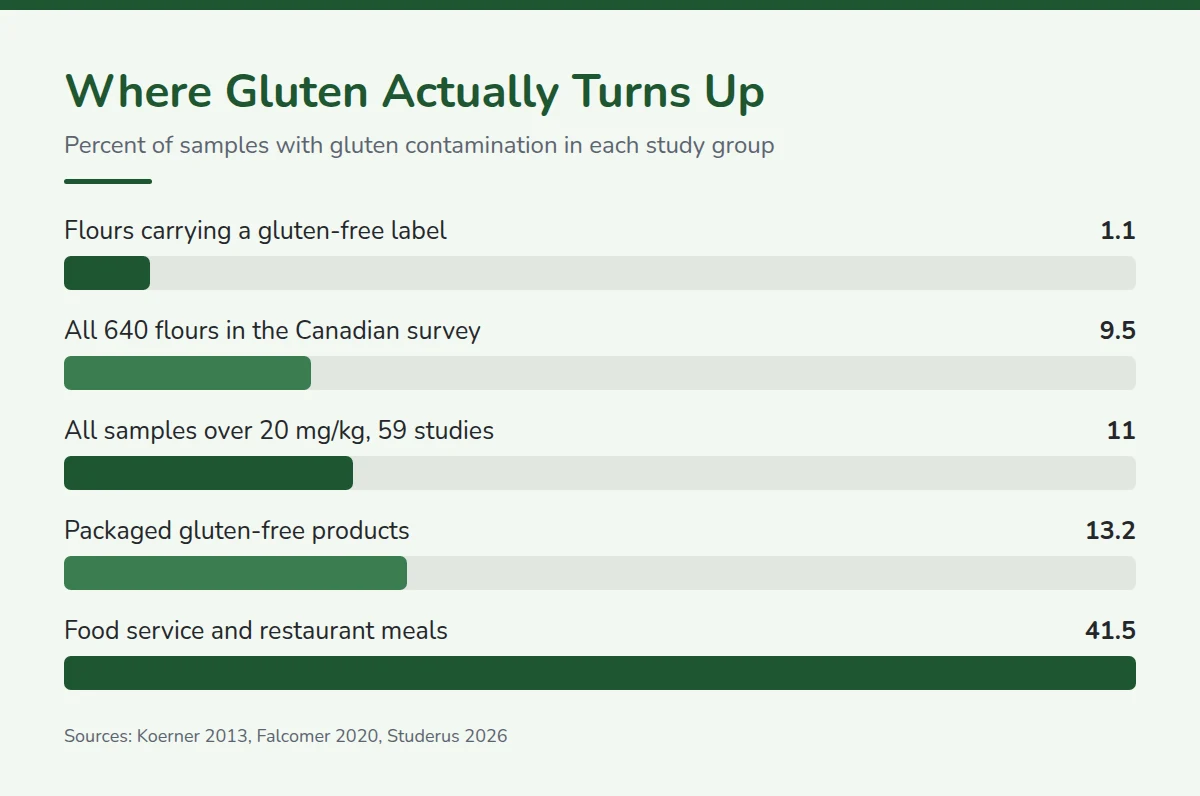
Health Canada researchers led by Terry Koerner bought 640 samples of naturally gluten-free flours and starches from eight Canadian cities and online between 2010 and 2012, then tested every one. Sixty-one of them, 9.5 percent, exceeded the Codex limit of 20 milligrams per kilogram. The contamination range went from 5 all the way to 7,995 milligrams per kilogram. A single 30 gram scoop of flour at the high end of that range carries about 240 milligrams of gluten, dozens of times the daily ceiling, from an ingredient with no wheat in it.
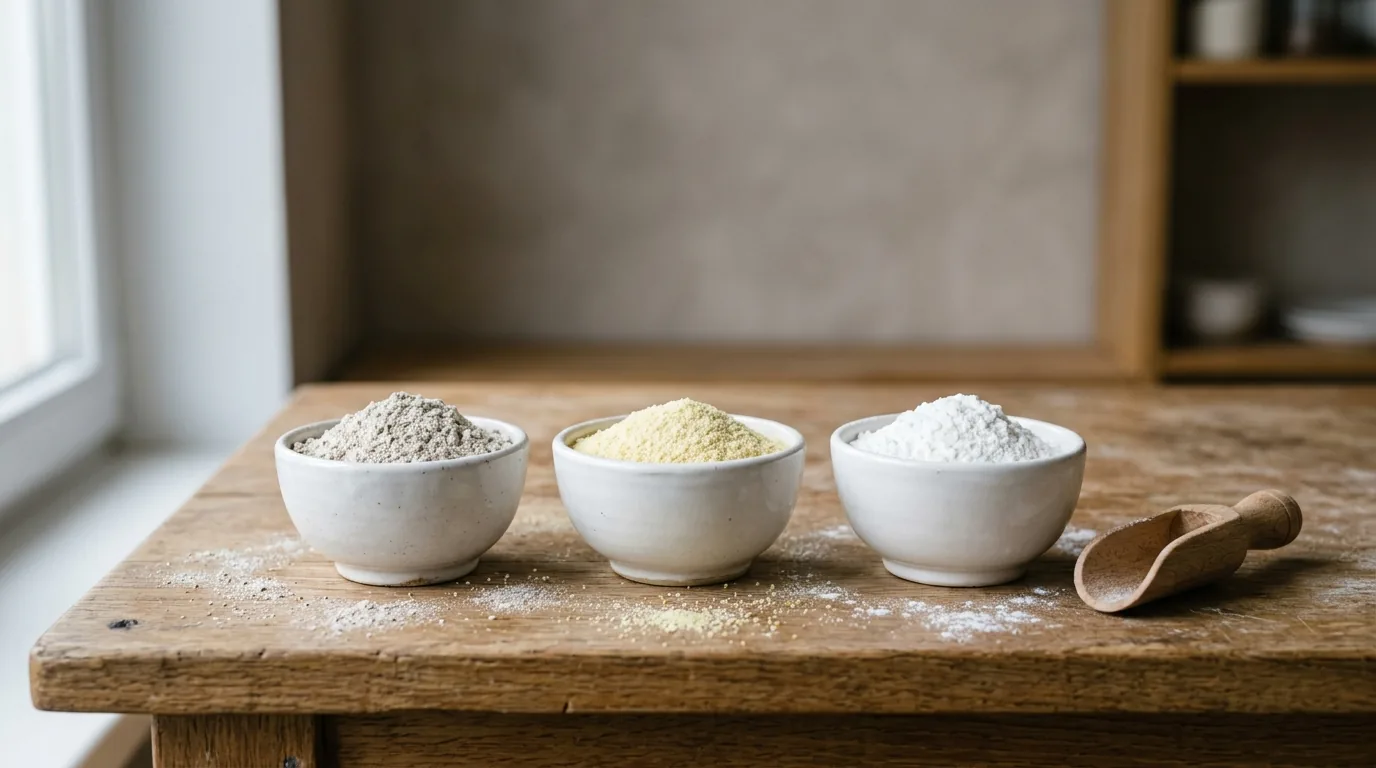
The pattern was not random. High-fiber ingredients were the worst offenders, with mean contamination of 902 milligrams per kilogram for soy flour, 272 for millet, and 153 for buckwheat. And the labeling mattered enormously: among ingredients that carried a gluten-free label, only 3 of 268 samples were over the limit, and the worst of those reached 141 rather than 7,995. Buying the labeled version of a naturally gluten-free flour is not paranoia. It is the single highest-yield precaution in this entire body of research, and it is the reason our pantry reference on naturally gluten-free staples keeps pushing you toward certified bags.
Eating Out Is Where the Numbers Get Worse
A systematic review by Ana Luisa Falcomer and colleagues at the University of Brasília pooled 24 cross-sectional studies of gluten contamination and found positive results in 23 of them. Industrial products labeled gluten-free showed a pooled contamination prevalence of 13.2 percent. Non-industrial products, the category that includes restaurant and food-service meals, came in at 41.5 percent. The gap did not reach statistical significance, largely because the food-service estimate carried a very wide confidence interval, which itself tells you something: kitchens vary enormously.
That inconsistency is the finding to carry into a restaurant. The problem is not that every gluten-free menu item is contaminated. It is that you cannot tell from the outside which kitchen is which, and the spread between the careful ones and the careless ones is far wider than anything you would encounter at home.
What 27,806 Samples Add Up To
The most complete picture arrived in early 2026, when Studerus and a team including Anne Lee of Columbia published a scoping review in Clinical Nutrition ESPEN that deliberately asked a different question from previous reviews. Earlier work asked whether contamination happens. This one asked how much.
Screening 4,044 studies down to 59 spanning 28 countries and 1993 to 2024, they assembled 27,806 individual food samples. Of those, 11 percent exceeded 20 milligrams per kilogram. Only 1.3 percent exceeded 80, and 0.51 percent exceeded 200. After excluding two studies they judged potentially biased, a conservative pooling of 15,467 samples put the over-limit rate at 20 percent.
Their framing of the risk is the most useful sentence in the literature. Clinically relevant levels, which they define as above 200 milligrams per kilogram, appear in roughly 0.9 percent of samples. A normal 100 to 300 gram portion of a food at that level could exceed the 10 milligram daily threshold. Everything below it mostly cannot, at least not from a single serving.
Two categories stood out as genuinely problematic. Oats showed both the highest average cross-contamination and the highest variability, which is the statistical signature of the batch-to-batch lottery we described in our piece on why gluten-free Cheerios still make some celiacs sick. Restaurant meals showed the greatest inconsistency of any source.
The authors then said something you rarely see in a celiac paper: that strict avoidance of all cross-contact could be reconsidered, and that a nuanced approach naming the sources that matter while identifying the ones that do not could prevent maladaptive eating behaviors without compromising safety. That is not permission to relax. It is a recognition that hypervigilance carries its own cost, and that spending it on toasters leaves less of it for flour bags.
Can Your Personal Threshold Be Worked Out? Not Yet
The obvious next question is whether some people simply tolerate more than others, and whether a doctor could tell you which kind you are. A 2025 review in Current Nutrition Reports by Jessica Stout and colleagues at the University of Utah went looking for exactly that and came back empty-handed. There is evidence that susceptibility to intestinal injury varies between patients, and the microbiome and individual cytokine responses may be part of why, but no current study offers a reliable way for a clinician to stratify patients or prescribe a personal gluten allowance. Their conclusion is that the strict gluten-free diet remains the correct advice until better evidence exists.
That sits uneasily beside the Australian dose-response data, and it should. Some people mount an immune response at 3 milligrams. Others show nothing at 90. Nobody can currently tell you which you are, which is why the population-level thresholds have to be set conservatively and why none of the numbers above should be treated as a personal allowance. Persistent symptoms or persistent damage on follow-up biopsy are a matter for a gastroenterologist, not for recalculating your own limit, and no drug in the celiac pipeline is yet approved to give you headroom.
Where to Spend Your Vigilance
Read across all of this and a rough ranking emerges, from the exposures the measurements support worrying about down to the ones they largely do not.
Worth real attention: unlabeled naturally gluten-free flours and starches, especially high-fiber ones like soy, millet, and buckwheat; oats of any kind; shared cooking water; and restaurant meals, where the variance between kitchens is the actual hazard. Worth basic hygiene but not anxiety: shared toasters, shared ovens, shared fryers with controlled protocols, and utensils that have been rinsed. The cleaning step that repeatedly proved sufficient in these studies was plain running water, not a special regime.
None of this replaces the general discipline of reading every label and asking every question. It redirects it.
The Bottom Line
The measurements are consistent and they are counterintuitive. A shared toaster full of visible wheat crumbs transferred less than 10 ppm. A shared pot of pasta water transferred up to 115 ppm. A bag of unlabeled soy flour averaged 902 parts per million. The rules most gluten-free guides emphasize hardest turn out to be the ones with the least measured risk behind them, while the pantry and the restaurant, which get far less airtime, are where the numbers actually go wrong.
Two cautions belong with every sentence above. These figures describe populations and averages, and individual sensitivity varies more than any threshold can capture. And a number that is safe as a single serving is not safe repeated three times a day, because the limit that matters is a daily total. If you are following a careful gluten-free diet and still having symptoms or still showing damage on follow-up testing, that is a conversation for your gastroenterologist or a celiac-experienced dietitian, who can review your actual intake against these numbers rather than leaving you to guess.
Further reading (sources)
- Catassi and colleagues on the 90-day trial that set the 50 milligram daily ceiling
- Weisbrod and colleagues for what shared toasters, pots, and knives actually transferred
- Daveson and colleagues with an immune dose-response curve running from 1 to 1000 milligrams
- Studerus and colleagues on whether shared kitchen utensils are fact or fiction
- Studerus, Lee and colleagues for the scoping review that pooled 27,806 measured food samples
- Koerner and colleagues on the Canadian survey of 640 naturally gluten-free flours and starches
- Falcomer and colleagues with pooled contamination rates in food service and industry
- Damasceno and colleagues on how food handling practices change the risk
- Stout and colleagues for whether tolerance can be individualised yet
- Vargas and colleagues for strategies for removing gluten in food environments
- U.S. Food and Drug Administration on how the gluten-free labeling rule defines its limit