Grandparents and Food Allergies: How to Brief the Relatives Who Babysit, Host, and Grew Up Before Labels
Published on October 11, 2026
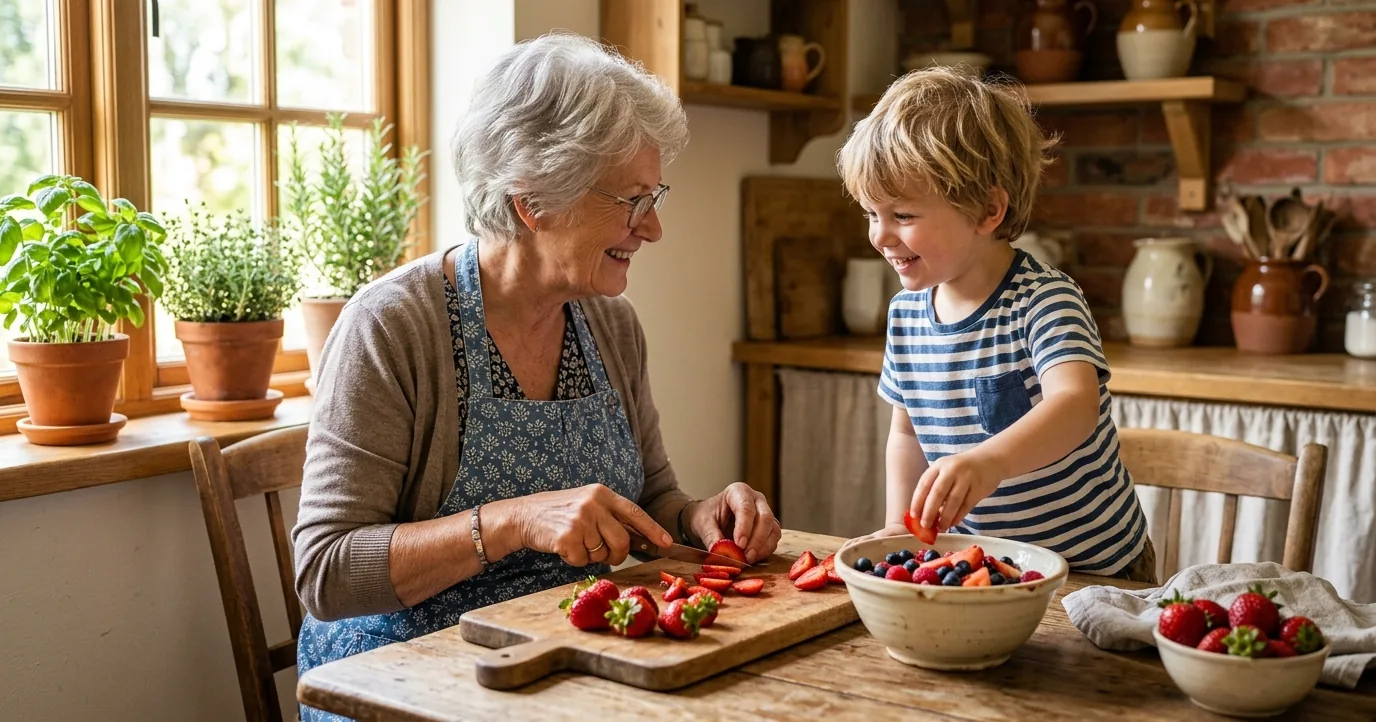
Ask an allergy parent who covers the sick days, the late meetings, and the date nights, and the answer is very often a grandparent. Nearly half of American children under five spend time in a grandparent’s care while a parent is working, in school, or otherwise unavailable, according to a 2026 Roosevelt Institute analysis of Census Bureau survey data. That puts grandparents among the adults most often alone with a food-allergic child, and many of them raised their own families in a food world with no allergen statements, no trainer pens, and far fewer allergic children in it.
Food Allergy Research and Education (FARE) built a September 2026 webinar around exactly this group: grandparents, plus the honorary grandparents and close family friends it calls “grandfriends.” It paired a panel of grandparents who manage food allergies alongside their own families with a 15-minute Food Allergy 101 on label reading and emergency readiness. This guide covers the same ground for the parents doing the handing over, and for the grandparents who want to get it right. It is about ongoing care, the weekly afternoons and the overnights, rather than a single holiday meal.
Why the Grandparent Briefing Is the Hard One
None of this is about grandparents caring less. It is about history. When today’s grandparents were raising children, food allergy really was rarer. The CDC’s National Center for Health Statistics found that the share of US children with a food allergy rose from 3.4 percent in 1997 through 1999 to 5.1 percent in 2009 through 2011. A grandparent who says nobody had all these allergies in their day is remembering correctly. They are just applying the memory to the wrong child.
The labels are newer still. The federal law that makes packaged food name the major allergens in plain words passed in 2004, and sesame only joined the list in 2023. Anyone who did most of their family shopping before then never needed to hunt for a “Contains” line, and shopping habits built over decades do not update themselves.
Then there is the whiplash. In 2008 the American Academy of Pediatrics replaced its earlier allergy prevention feeding advice, concluding there was little evidence that holding solid foods back past four to six months of age prevented allergic disease. In 2017 an expert panel sponsored by the National Institute of Allergy and Infectious Diseases went further and issued guidelines for introducing peanut foods in infancy. Grandparents watched the experts swing from “wait” to “start early,” and some reasonably assume today’s rules will swing again.
Research on grandparents themselves is thin, but what exists is revealing. Cetinkaya and colleagues surveyed 300 grandmothers in Istanbul and found that they most often associated food allergy with skin symptoms, that most believed goat’s milk could be given to a child with cow’s milk allergy, and that many judged foods containing milk or egg, especially products made with wheat flour, to be fine for children allergic to them. The study is Turkish, but those three gaps will sound familiar to plenty of American families. A grandparent watching only for hives can miss a reaction that starts with coughing or vomiting. And goat’s milk is no workaround: in a double-blind challenge study, 24 of 26 children with IgE-mediated cow’s milk allergy reacted to goat’s milk as well.
There is also a quieter reason for resistance. For many grandparents, food is how affection gets expressed: the cookie jar, the pancakes on a sleepover morning, the dish nobody else makes. An allergy can feel like it takes that role away, and pushback often comes from there rather than from any real doubt about the diagnosis. The briefings that work give the role back instead of only taking things off the menu.
What the Handoff Should Include
A 2026 study of 280 parents of food-allergic children, by Çalışkan and colleagues, measured how confident parents felt managing the condition. Their lowest scores were for school safety, cross-contamination, and travel, which are the situations where someone else’s kitchen or judgment is in charge. Carrying an epinephrine auto-injector was linked to higher confidence, and parents of children with cow’s milk allergy scored lower across every part of the scale, which makes sense when you consider how much butter, milk, and cheese moves through an ordinary family kitchen. A grandparent’s house combines those weak spots at once. The answer is to hand over a kit, not a speech.
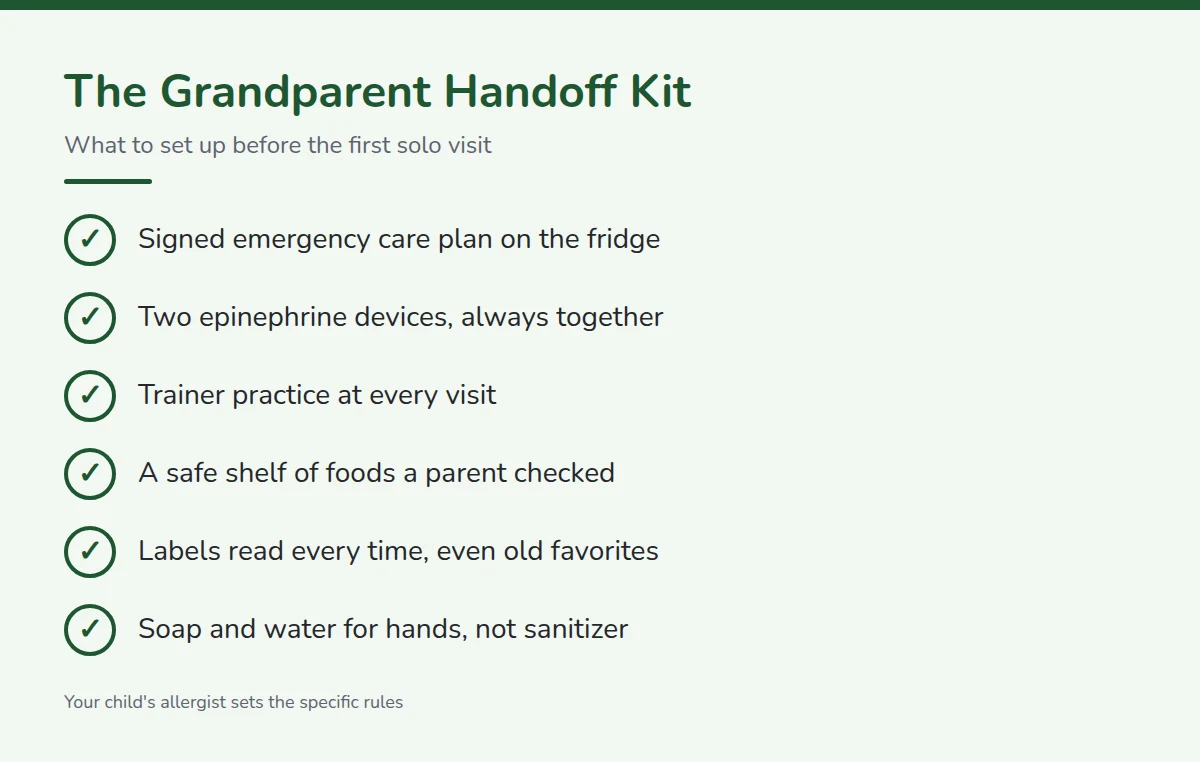
- The signed emergency care plan, on paper. The one your allergist completed, with the child’s photo, allergens, and dose. One copy goes on the fridge and one in the medication bag.
- Two epinephrine devices that travel together. Every visit, both of them, kept with the child rather than in the car. If grandparents provide regular care, ask the allergist whether a second set can live at their house so that nobody has to remember the pouch at drop-off.
- The trainer, and practice until it is boring. A trainer device has no needle and no medicine. Have the grandparent fire it against their own thigh at every visit for the first month. If arthritis, a tremor, or a weak grip makes it hard to activate, find that out now rather than during a reaction, and ask the allergist about other device styles, including the needle-free nasal spray covered in our guide to the 2026 anaphylaxis treatment landscape.
- A safe-food list with photos. The specific products you have checked, photographed front and back, plus a short list of foods that are never allowed.
- Contacts and the address. Both parents’ numbers, a backup, the allergist and pediatrician, a copy of the insurance card, a signed note authorizing them to consent to medical care for the child, and the house’s own street address written next to the phone. Under stress, even a familiar address can go blank.
Then rehearse once with you in the room. Make the first handoff a visit where you stay: let the grandparent read the labels and cook the meal, then ask them to explain the emergency plan back to you in their own words. Health educators call this teach-back, and it catches the misunderstandings that a polite nod hides. The ninety-second version for a doorstep handover, when someone new is taking over for an evening, is in our piece on why children don’t always get epinephrine in time. A grandparent who has the child every Tuesday needs the long version.
Kitchen and Pantry Rules for Overnight Stays
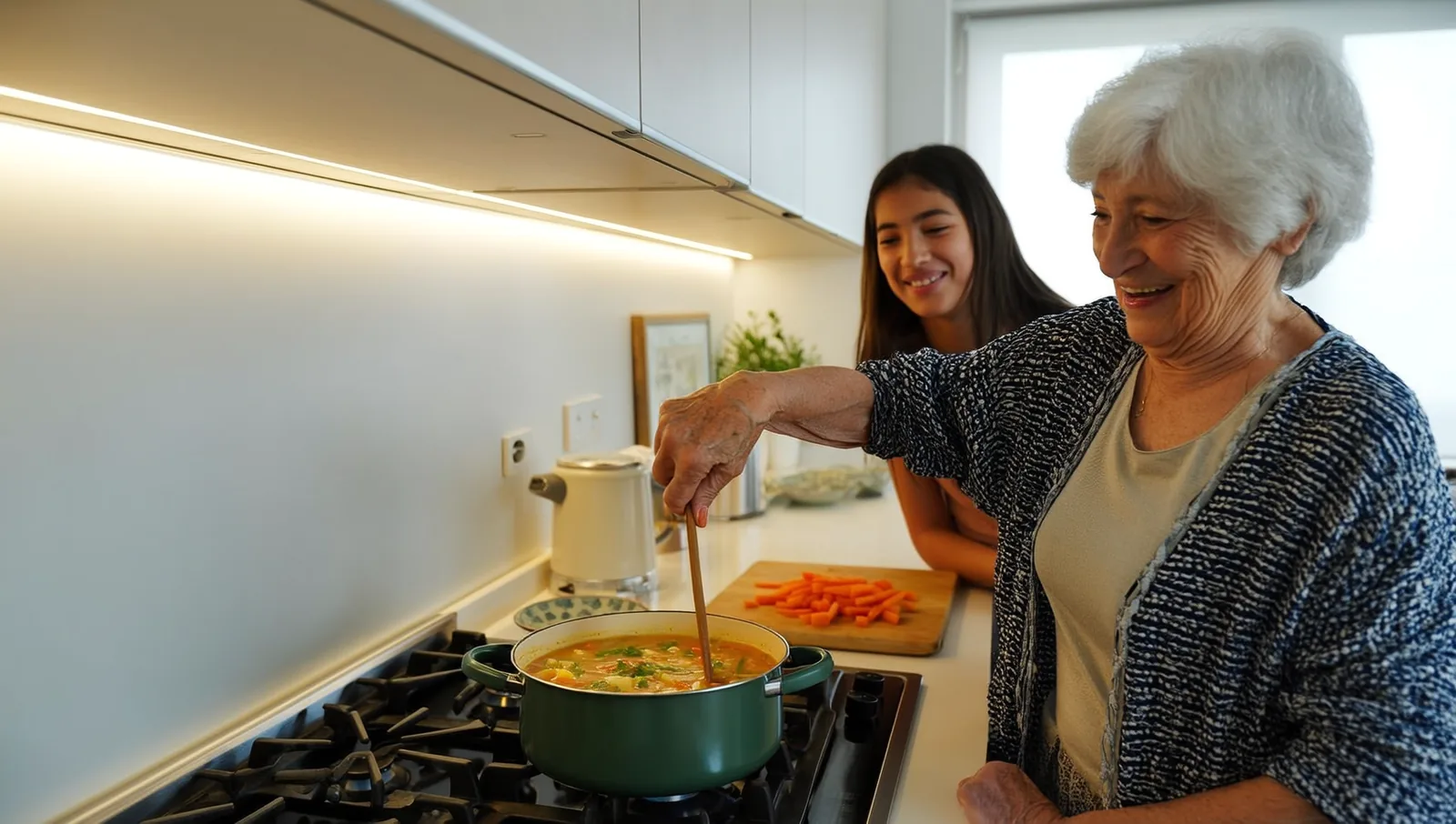
A meal or two is easy to manage. An overnight is where house habits take over, so the rules have to be simple enough to follow at seven in the morning without thinking.
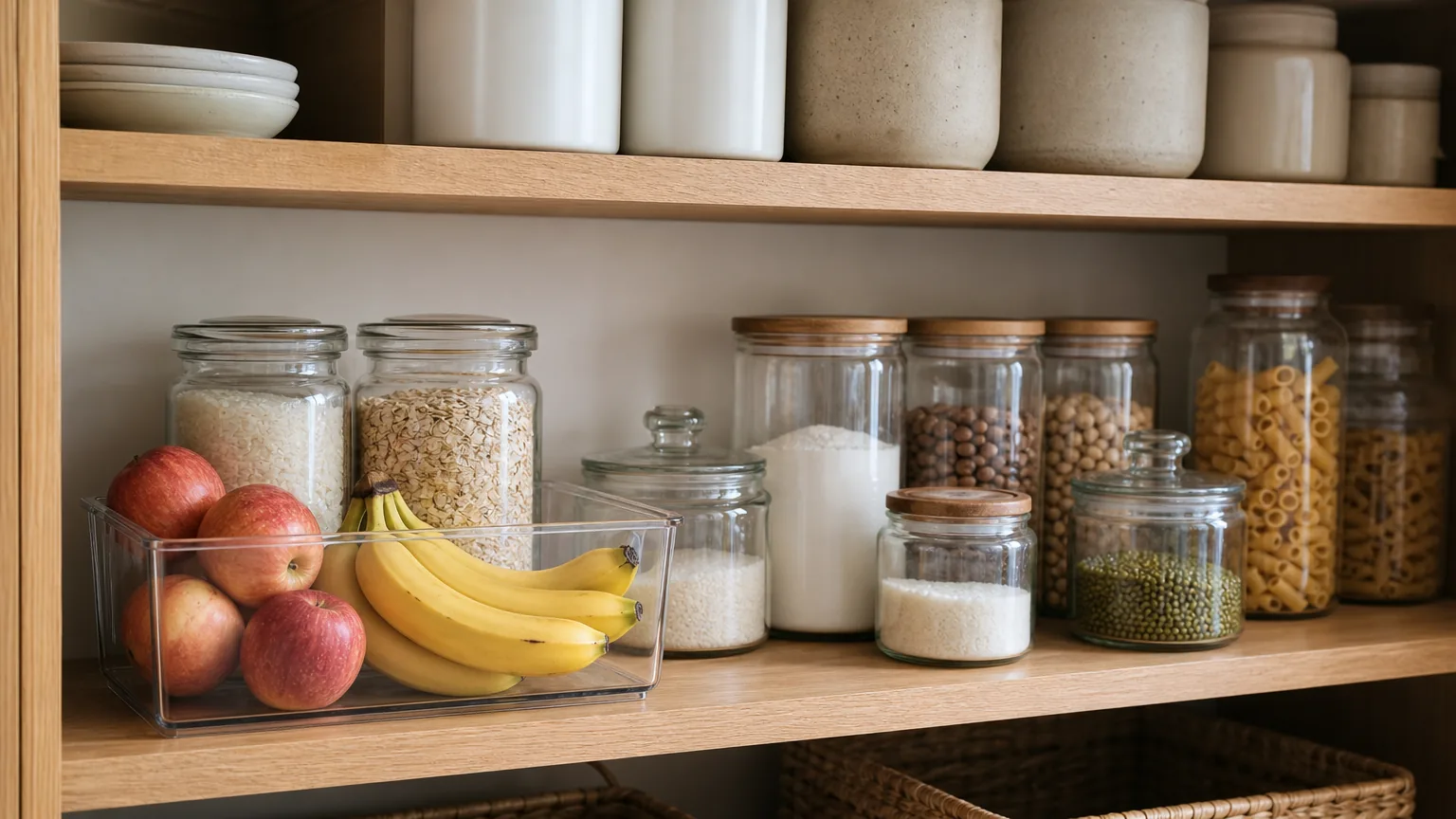
- One safe shelf. A bin or shelf holding only foods a parent bought or checked. Grandparents do not need to audit their whole pantry. The child eats from the bin.
- Nothing new, ever. Any food the child has not already eaten safely at home stays off the menu, whatever its label says. First tastes happen with a parent.
- Read the label every time, especially on the old favorites. The FDA advises checking the label every time you buy a product, even one you have eaten before, because ingredients can change at any time. After sesame labeling took effect in 2023, the agency warned that some manufacturers had changed their recipes, so products that never contained sesame now had small amounts of it. The crackers a grandparent has bought for thirty years are exactly the box to read again.
- Treat the bakery counter as off limits. The FDA notes that allergen labeling for unpackaged foods, like bakery goods displayed on trays, may vary. Those are often the treats grandparents most like to bring home, so the rule is none unless a parent has approved that specific item.
- Soap and water, not sanitizer. In a Johns Hopkins study, Perry and colleagues found that liquid soap, bar soap, or commercial wipes removed peanut allergen from hands, while plain water left it on 3 of 12 hands and antibacterial hand sanitizer on 6 of 12. Household cleaners cleared it from tabletops, but dishwashing liquid left traces on 4 of 12 tables. Wash hands with soap before cooking and after eating, and wipe the table with a household cleaner.
- Cook the safe meal first. Clean pans and utensils, the child’s food made before anything else, covered, and served first.
- Watch the family recipes. Old dishes carry allergens that never appear in their names: the butter stirred into plain rice, the egg wash on a bread crust, the ground nuts in a pie crust. FARE points out that fish is sometimes dipped in milk to soften its smell, an old kitchen trick a milk-allergic child would never see coming.
- Sweep the rest of the house. The candy dish, the bowl of mixed nuts, the trail mix in the car console, the peanut suet for the bird feeder, and the peanut butter dog treats all count as food, even if nobody eats them at the table.
- Make bedtime part of the plan. FARE notes that symptoms can take up to two hours to appear, and that a second wave can arrive hours after the first. An evening snack can mean a reaction after lights out, so the epinephrine bag sleeps in the child’s room, not in the car or in a bag by the front door.
Scripts for “A Little Bit Won’t Hurt”
The hardest part of the briefing is rarely the device. It is the conversation with someone who loves your child, raised children of their own, and suspects you are overdoing it. Three moves help before any script: start with thanks, make the allergist the authority (it is the doctor’s rule, not yours), and invite the grandparent to the next allergy appointment to hear it firsthand. Then keep a few answers ready.
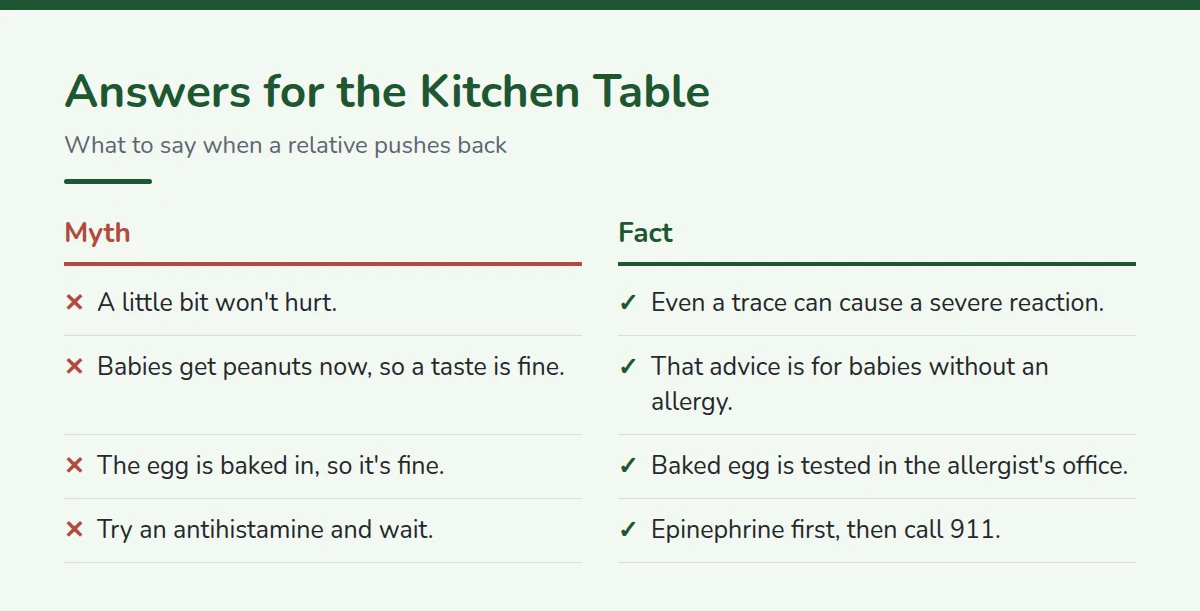
“A little bit won’t hurt.” “For her, a little bit is the problem. Even a trace can cause a severe reaction in some allergic people, so the rule is none, not less.”
“Last time it was just a few hives.” “That’s the tricky part. Reactions are unpredictable, and a mild one tells us nothing about how the next one will go.”
“Milk upsets my stomach too.” “That’s an intolerance, which is about digestion. His milk allergy is his immune system, and it can affect his breathing.” Intolerance can be miserable, but it is not life-threatening, and our Food Allergy 101 guide covers the difference in more depth.
“We never had all these allergies in my day.” “You’re right, they were rarer. They’ve become more common since, and he happens to be one of the kids who has one.”
“The news says to give babies peanuts now.” “That advice is about preventing allergy in babies who don’t have one. She already does, so for her, eating it is the danger, not the cure.” The treatment that does use tiny doses, oral immunotherapy, happens under an allergist’s supervision with carefully measured amounts, never at a kitchen table.
“It’s baked in, the egg is cooked.” “Some kids with egg allergy can eat baked egg, but her allergist tests for that in the office. We don’t find out at your house.” Our egg allergy guide explains how that baked egg ladder works.
“He’ll grow out of it.” “We hope so. Plenty of kids outgrow a milk or egg allergy, though peanut and tree nut allergies are outgrown less often. His allergist will tell us when it’s time to test, and you’ll get the first call.” When that day comes, our guide to which allergies children outgrow and when to ask for a food challenge covers what the testing involves.
“I’ll just pick the nuts off.” “The protein stays on whatever it touched. Picking them off doesn’t make it safe.”
“I’d give her an antihistamine first and see.” “Antihistamines can calm an itch, but they don’t stop anaphylaxis. Her plan says epinephrine first, then 911.”
If a relative keeps testing the rule after all of that, the visits change shape until trust is rebuilt: at your house, or without food. That is not a punishment. It is the standard you would hold any babysitter to, and saying so plainly is kinder than quietly cancelling visits.
If You Are the Grandparent
If you are reading this as the grandparent, a few habits will make you the person the parents trust most.
- Ask for the plan before they offer it, and practice with the trainer until your hands know it.
- Read every label, every time, including the ones you think you know. Allergen statements are small print, so keep reading glasses in the kitchen.
- Ask before offering any food, including at church suppers, restaurants, and other relatives’ houses.
- Never take a label question personally. Parents double-check because the stakes are high, not because they doubt you.

You will be in good company. One of the panelists on FARE’s grandparent webinar is a grandfather of two boys with peanut, egg, and tree nut allergies whose recent advocacy has focused on state laws for emergency access to epinephrine, including putting epinephrine in police vehicles. Learning this well is how a grandparent becomes an ally instead of a worry.
Give Them a Job, Not Just a List
The grandparents who keep allergic grandchildren safe are not the ones who were warned the loudest. They are the ones who were handed a plan, practiced with the trainer until it was routine, and given a real job in the kitchen instead of a list of forbidden things. Bake from a safe recipe together. Let them be the one who tracks down the safe birthday cake. Because every child’s allergy is different, build the specific rules with a board-certified allergist, and bring the grandparents along to hear them.
Further reading (sources)
- Food Allergy Research and Education on its September 2026 webinar for grandparents and grandfriends
- Food Allergy Research and Education with the myths about trace amounts, antihistamines, and outgrowing an allergy
- Roosevelt Institute for how many young children spend time in grandparent care
- National Center for Health Statistics on the rise in childhood food allergy between 1997 and 2011
- U.S. Food and Drug Administration covering why sesame turned up in foods that never had it
- U.S. Food and Drug Administration with checking the label on every purchase and the limits of labeling on bakery trays
- Cetinkaya and colleagues on what 300 grandmothers knew about food allergy in children
- Çalışkan and colleagues for where parents of food-allergic children feel least confident
- Perry and colleagues on which cleaning methods removed peanut allergen from hands and tables
- Bellioni-Businco and colleagues with goat’s milk challenges in children with cow’s milk allergy
- Greer and colleagues for the 2008 pediatric report that found little support for delaying solid foods
- Togias and colleagues on the 2017 guidelines for introducing peanut foods in infancy