Deli, Bakery, and Salad Bar: How Allergen Labeling Rules Apply to Food Packaged at the Grocery Store
Published on October 28, 2026
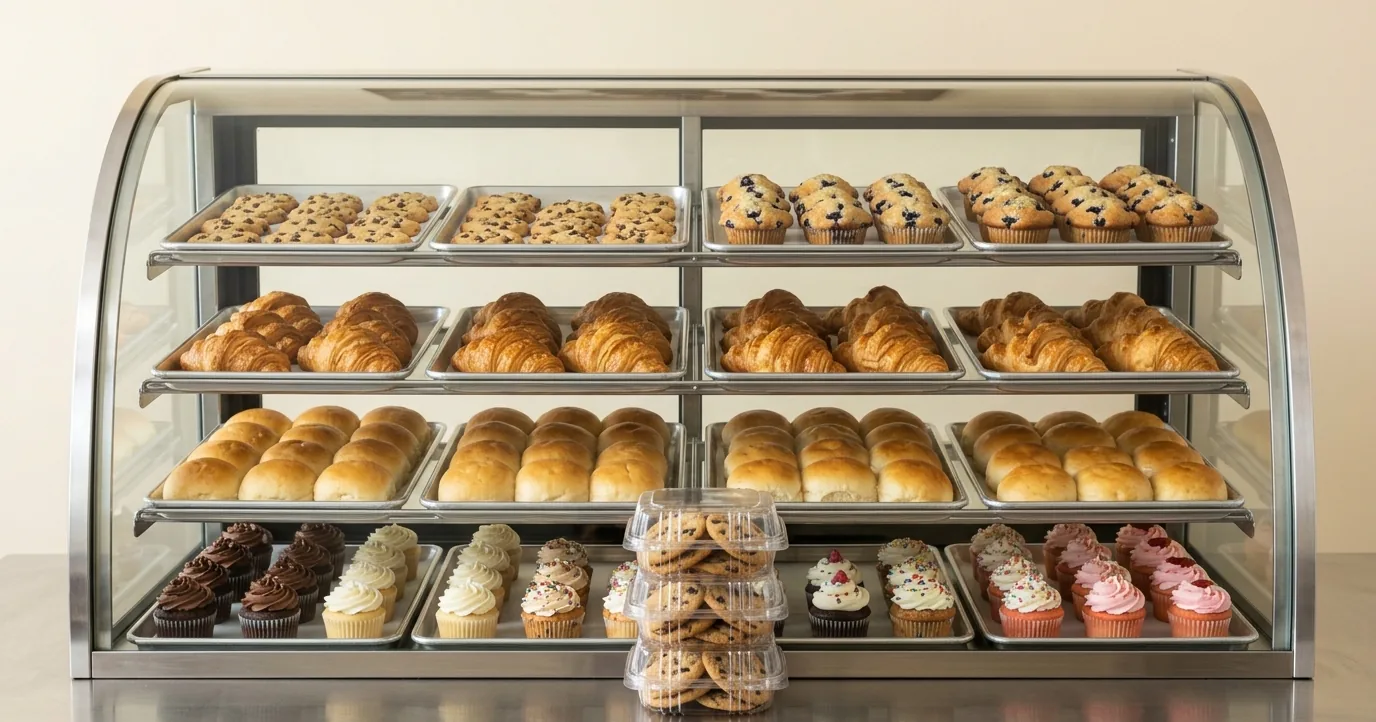
Most allergy households learned to read labels on boxes that came out of a factory. A supermarket, though, is also a kitchen. The deli mixes chicken salad and slices cheese, the bakery frosts cupcakes and packs cookies into clamshells, and the prepared foods team fills containers of grain bowls and soup. Those foods leave the building with labels printed in the store, or with no label at all, and the rules behind them are far less familiar than the ones on a cereal box.
Here is the short version. Federal allergen law treats food a store packages for sale like any other packaged food, so its label must name every major allergen. That duty stops at food wrapped while you wait, and self-serve bars and loose bakery items follow rules of their own. Store-printed labels are also where mistakes cluster: in December 2020, the FDA sent a warning letter to a national grocery chain after 32 recalls for undeclared allergens in just over a year. This guide covers what each kind of store food has to tell you, how its labels go wrong, and what to ask before you buy.
Store-Packed Food Gets the Same Allergen Label as a Factory Box
The Food Allergen Labeling and Consumer Protection Act of 2004, known as FALCPA, requires packaged food to name the food source of every major allergen it contains. The list started with eight: milk, egg, fish, crustacean shellfish, tree nuts, wheat, peanuts, and soybeans. Sesame became the ninth on January 1, 2023. A label can declare them in one of two ways: a “Contains” line printed right after the ingredient list (“Contains: milk, egg, wheat”), or the source in parentheses inside the list, as in “whey (milk).” For tree nuts, fish, and shellfish, the law asks for the specific kind, so the label should say “almonds” or “cod,” not just “tree nuts” or “fish.”
Nothing in that rule exempts a store’s own kitchen. The FDA Food Code, the model rulebook that state and local health departments adopt for grocery stores and restaurants, spells it out: food packaged in a food establishment must be labeled as federal law requires, with the common name of the food, its ingredients and sub-ingredients, the net quantity, the name of the business, and the food source of each major allergen. The FDA has enforced it that way, too. Its 2020 warning letter to that grocery chain treated store-labeled rolls, soup, and sliced cheese as misbranded under the federal allergen provision, the same charge a manufacturer would face.
One recent change matters at the bakery case. Since January 2025, the FDA no longer counts coconut as a major food allergen, so coconut will not appear in a “Contains” line even when it is in the macaroons. It still has to be listed among the ingredients, which is where coconut-allergic shoppers now need to look. Our article on the shortened tree nut list covers that change in detail.
Packed Ahead, Wrapped to Order, or Self-Serve: Which Rule Applies
Where the food sits, and who wrapped it, decides what the store owes you.
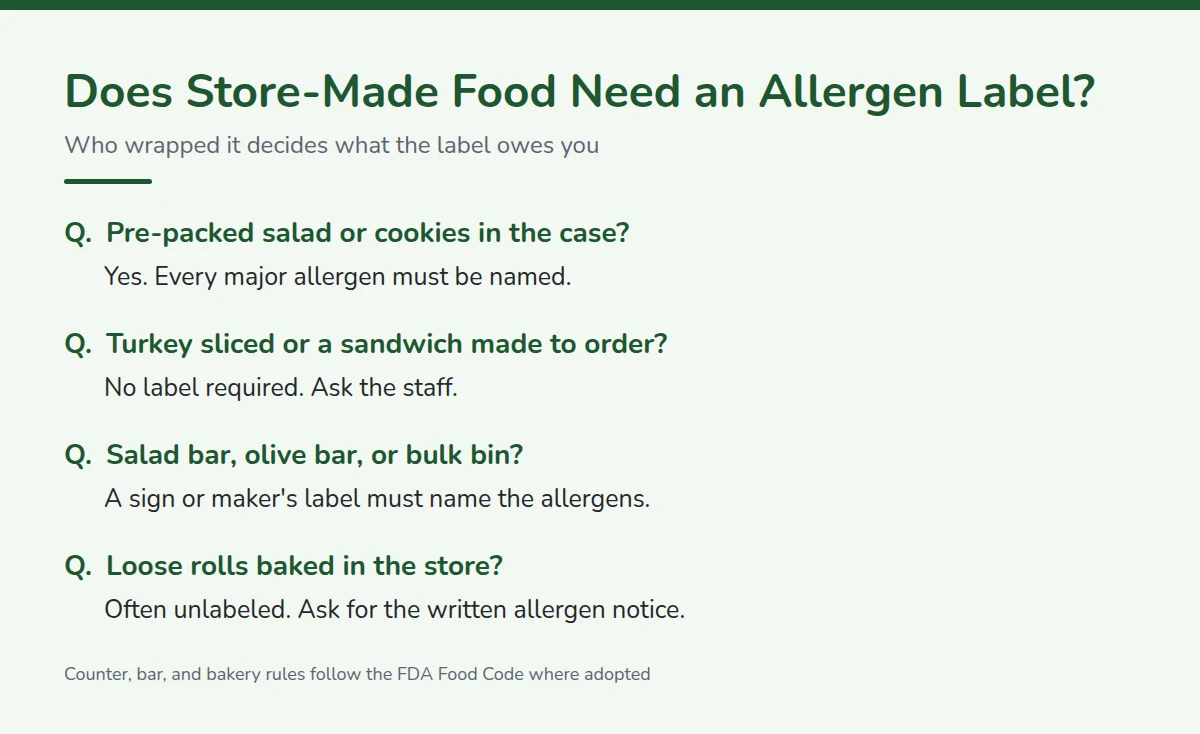
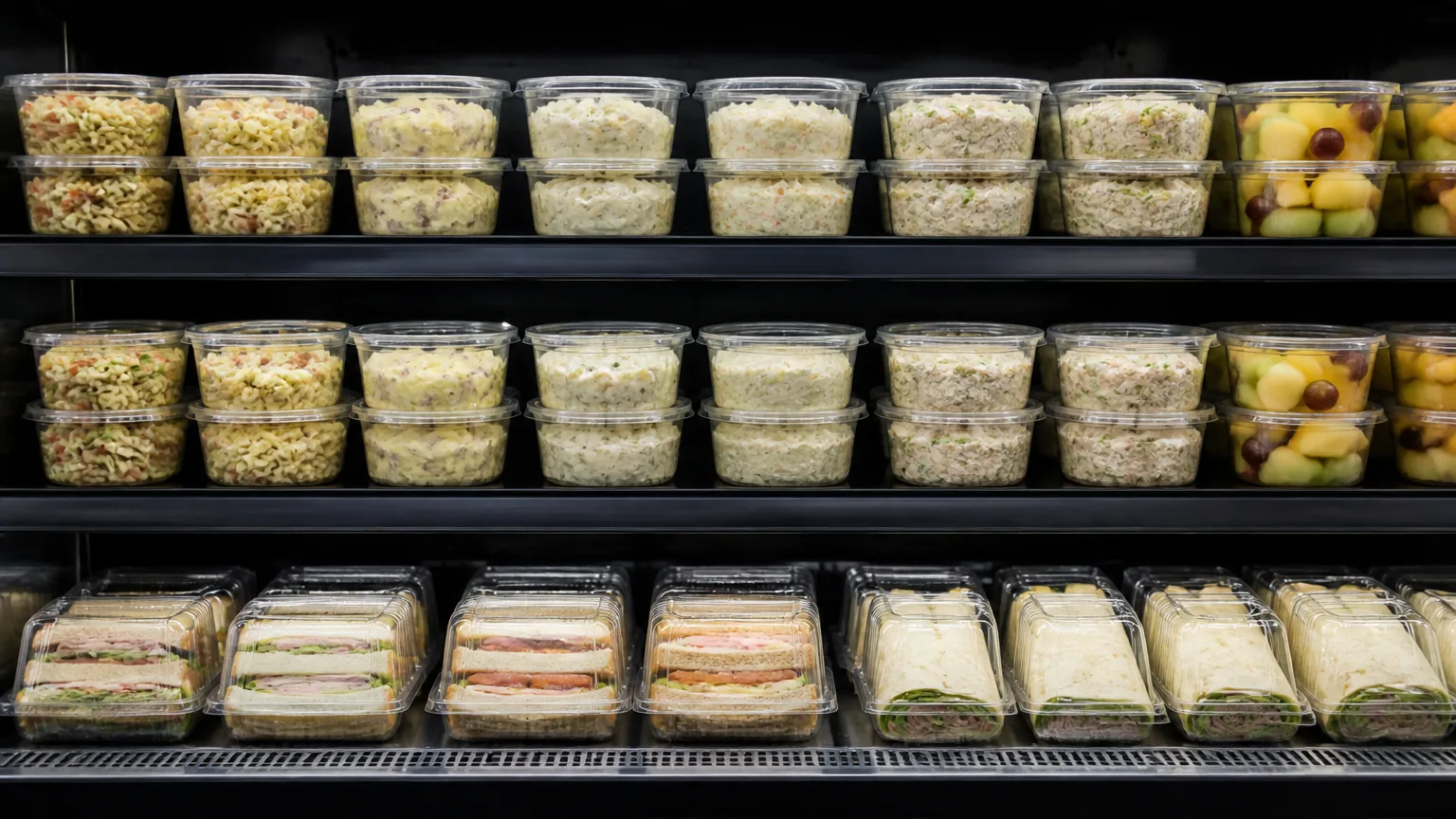
Packed ahead and set out for you to pick up. Containers of deli salad, sandwiches in the cooler, cookies in a clamshell, trays of sliced meat and cheese, and sushi in the grab-and-go case all count as packaged food. Each one needs a full label with every major allergen named. If a pre-packed item carries only a name, a weight, and a price, its label is incomplete, so ask before you buy it.
Wrapped while you wait. The Food Code’s definition of “packaged” leaves out food that an employee wraps or puts in a carry-out container at your request. A half pound of turkey sliced to order, a sandwich made at the counter, or a slice of cake boxed for you needs no label. The code’s own explanation says why: when you order from an employee, you have the chance to ask about ingredients and allergens. The exemption assumes you will ask, so do.
Loose bakery items made on site. The code also lets a store sell unpackaged foods “such as bakery products” with no label, as long as no health or nutrient claim is made, no state or local law requires one, and the food was made on the premises or by another store with the same owner. The rolls in the bread bin and the scones under the glass may legitimately carry no ingredient information at all.
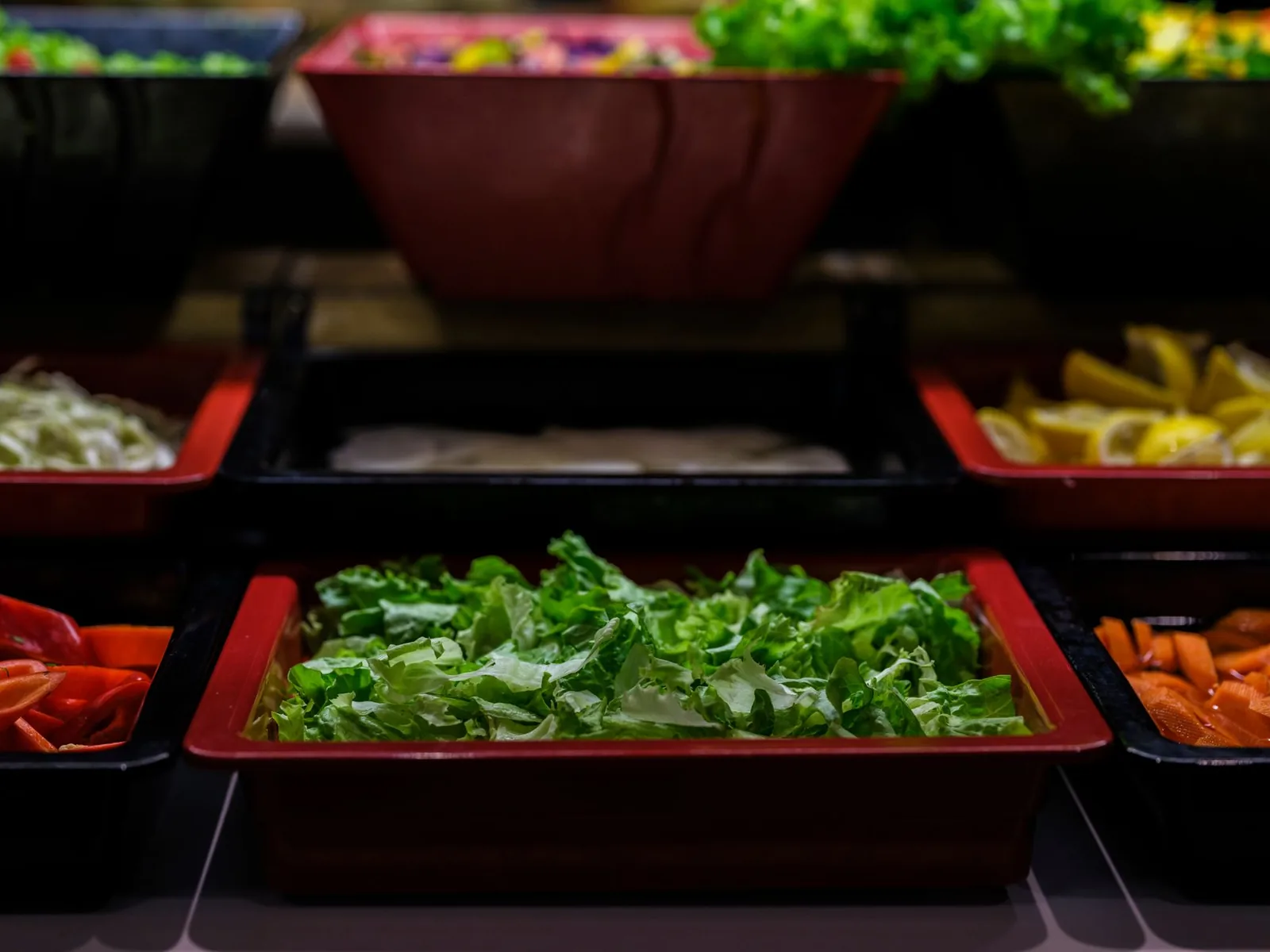
Self-serve bars and bulk bins. Food you dish up yourself, from a salad bar, olive bar, hot bar, or bulk bin, must be labeled in plain view, either with the manufacturer’s label or with a card or sign giving the food’s name, its ingredients, and its major allergens. The sign covers only part of the risk, though. Tongs migrate between bins, dressing drips, and croutons end up in the chickpeas. No label can track what the shoppers before you did.
For unpackaged food in general, the 2022 Food Code added a provision that the 2026 edition keeps: the store must tell customers in writing which major allergens are ingredients in the unpackaged items it serves or sells. The code lists brochures, deli case or menu notices, label statements, table tents, and placards as acceptable ways to do it. It also expects employees to be trained in food allergy awareness for their duties, which means knowing the major allergens and the symptoms they can cause.
The catch is that the Food Code is a model. It becomes law only where a state, county, or city adopts it, and each adopts a new edition on its own schedule, so the written notice rule may not apply yet where you shop. The federal labeling duty for packaged food applies everywhere. Some states add rules of their own: since July 1, 2026, California has required food businesses in chains of 20 or more locations that fall under federal menu labeling to give written notice of the major allergens in each menu item.
How Store Labels Go Wrong: What One Warning Letter Shows
In December 2020, the FDA warned Whole Foods Market after the chain recalled 32 foods for undeclared allergens between October 2019 and November 2020, and it noted similar patterns of recalls in earlier years. The letter gave the company 15 working days to explain its corrections and warned that failing to fix the problems could lead to seizure or an injunction. The cases it describes read like a field guide to how in-store labels fail:
- The recipe changed and the label system did not. A minestrone soup repackaged in the store contained milk that its label never mentioned, because the internal labeling system had not been updated to the current ingredient list.
- The store’s label did not match the supplier’s. Employees labeled dinner rolls with a label that did not reflect the manufacturer’s ingredients, leaving out milk and eggs.
- Ingredients got lost in copying. The almond flour in a batch of key lime tartlets was listed on the master carton but never fully transferred to the scale label.
- A fix reached some stores and not others. Several cheeses made with egg had their scale labels corrected in some regions but not all of them.
- The supplier used the wrong label. A contract manufacturer packed one gelato in another flavor’s label, so its egg went undeclared.
The common thread is that a store label is usually a copy. The real ingredient information lives in a recipe, a supplier’s specification sheet, or the label on the case a product arrived in, and every time someone retypes it into a scale printer or a database, an allergen can drop out. Our article on egg in cheese traces a 2026 recall where store scale labels left egg off a cut cheese in exactly this way.
Bakery foods deserve the most suspicion. An analysis of 1,471 allergen and gluten recalls of FDA-regulated foods from fiscal years 2013 to 2019 found that bakery products, doughs, mixes, and icings were involved in more recalls than any other category, 367 of them, far ahead of second-place chocolate products at 120. Where the root cause was known, labeling errors explained 71 percent of the major allergen recalls. The weakness is old. When Congress passed FALCPA in 2004, it cited a 1999 FDA review that found a quarter of the sampled baked goods, ice cream, and candy from randomly chosen manufacturers in Minnesota and Wisconsin failed to list peanuts or eggs. Later FDA laboratory surveys of packaged bakery products found egg protein in up to 6 percent of 363 samples whose labels mentioned no egg and carried no warning, depending on the test kit. Four of those products held more egg per serving than the dose expected to trigger a reaction in about 1 in 10 egg-allergic people.
Red Flags on a Store-Printed Label
A store label can look official and still be incomplete. These signs mean it deserves a second look, or a question for the staff:
- No ingredient list on a pre-packed item. A name, a weight, and a price are not enough for food packed ahead of time.
- Compound ingredients with nothing inside them. “Dressing,” “frosting,” “pesto,” “crust,” or “seasoning” listed as a single word hides its own ingredients. The Food Code expects sub-ingredients to be declared, as in “bread (wheat flour, water, yeast, salt, honey).”
- Technical names without a source. Whey, casein, albumin, semolina, and tahini should come with “(milk),” “(egg),” “(wheat),” or “(sesame),” or the allergen should appear in a “Contains” line. A “Contains” line that names some allergens but not others is incomplete.
- “Tree nuts” or “fish” with no name. The law asks for the specific nut or species.
- A sticker over a sticker, or a handwritten label on a packed item. Neither is automatically wrong, but both suggest the item was relabeled or repurposed. Ask what it is and where its ingredient information came from.
- A label that does not match what you see. Visible nuts on a cookie whose label mentions none, or seeds on a “plain” roll, mean the label belongs to a different product. Believe the food, not the sticker.
- “May contain” or “made in a kitchen that also uses” wording. These advisory statements are voluntary and follow no legal standard, so they say little about actual risk, as our guide to the FDA’s allergen threshold work explains. Their absence does not mean a food from a shared kitchen is free of cross-contact.
What to Ask at the Deli, Bakery, and Salad Bar
The people behind the counter can usually reach information the label does not show. Ask specific questions, and pay attention to how they answer.
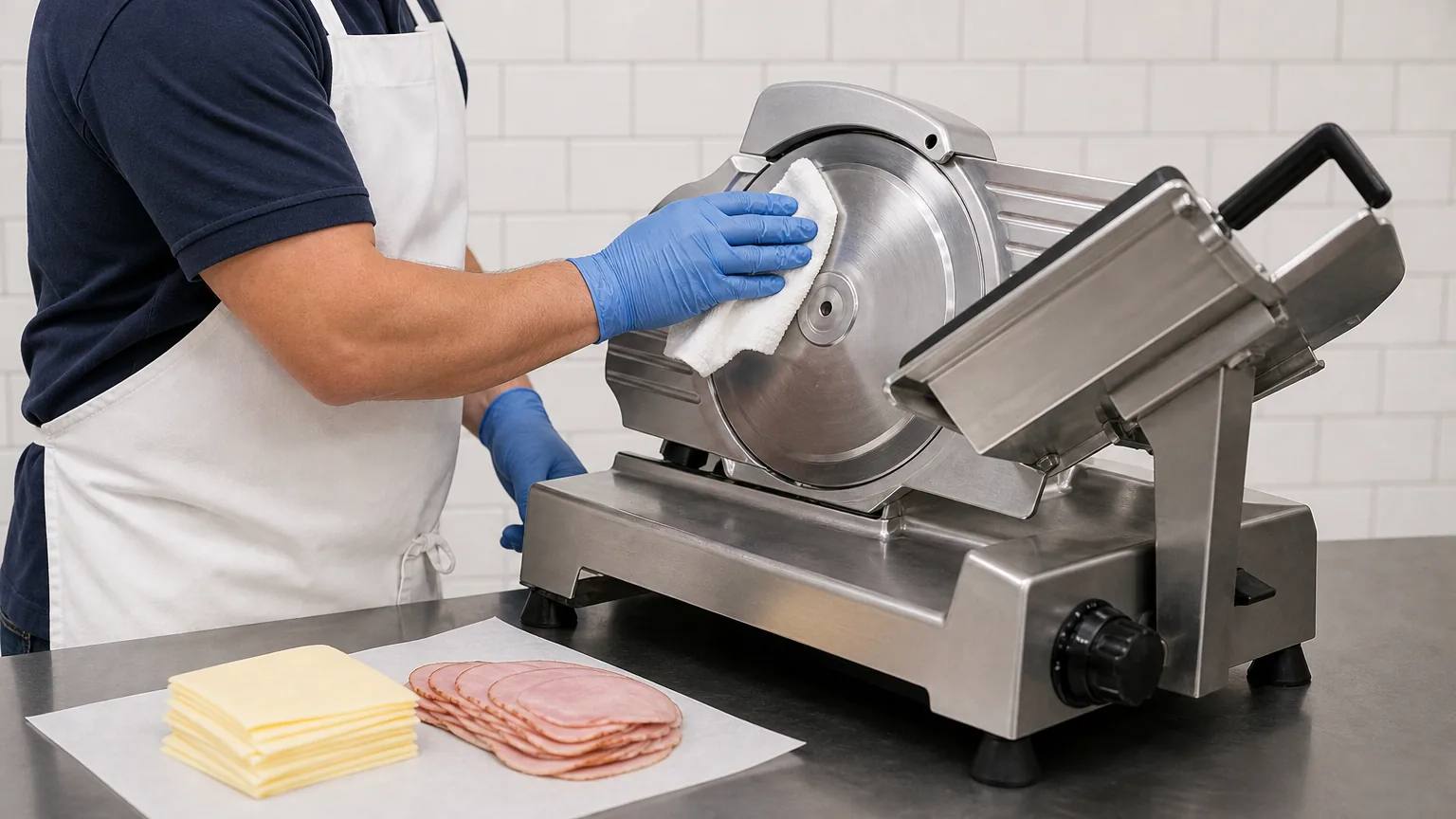
At the deli. Ask to see the ingredient information for anything sliced or scooped to order. Staff can often pull it up in the scale system or show you the supplier’s original package. Ask what else runs on the slicer. Cheese and meats commonly share one, and you can ask for it to be cleaned and for fresh gloves and clean paper. For a severe allergy, the supplier’s own sealed package is the safer buy.
At the bakery. Ask whether an item was baked in the store or brought in. Products from an outside bakery usually arrive with the supplier’s label on the case or box, which staff can show you. Ask which of the bakery’s products contain nuts, sesame, or egg, and whether they share pans, mixers, and the decorating table. In most store bakeries, they do.
At the salad bar or hot bar. For a severe allergy, skip it. If the store also sells the same dishes from behind a counter, ask whether someone can portion yours with clean utensils from a fresh pan.
Anywhere in the store. Ask for the written allergen information for unpackaged food. Where the newer Food Code is in force, the store should have it on a sign, a placard, or in a binder.
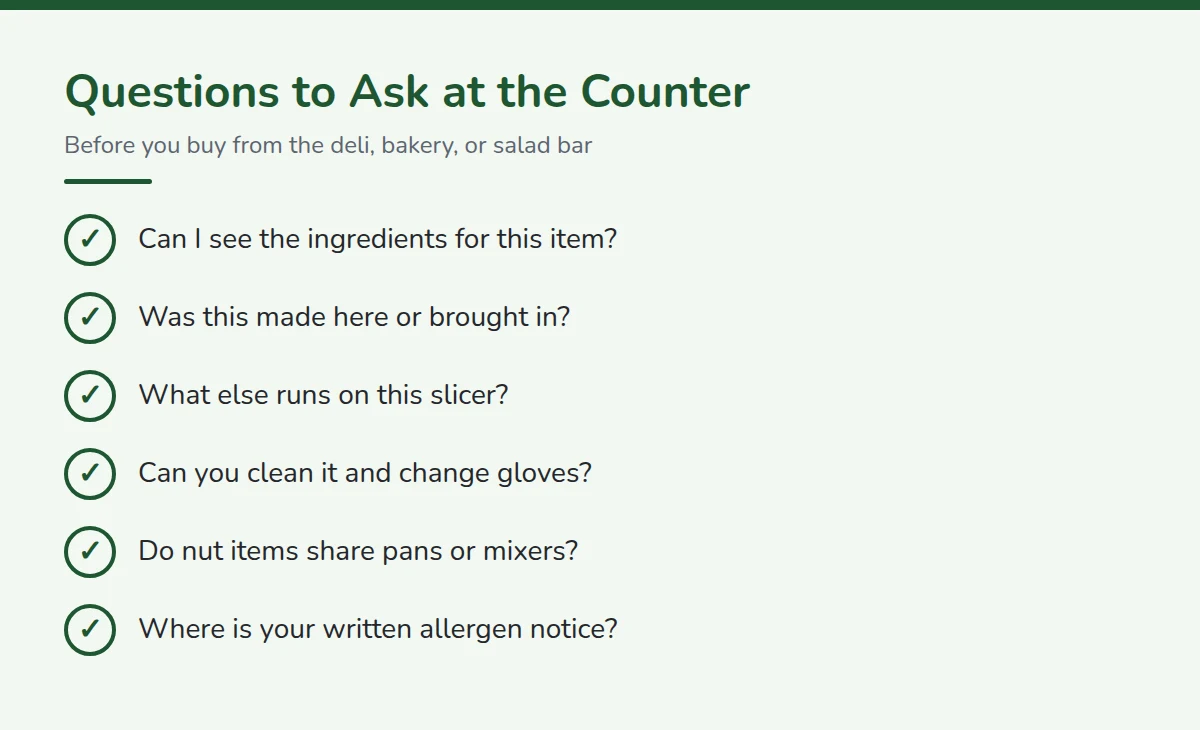
Then read the answer. A clerk who says “let me check” and actually goes to the label, the binder, or a manager is doing it right. A quick “oh, it’s fine” without looking is a guess. “We can’t guarantee it” is not a brush-off. It is an honest description of a shared kitchen, the same signal our guide to restaurants that refuse an allergy order explains.
When You Find a Mistake
If anyone reacts after eating store-made food, use epinephrine and call 911. Then keep the package and its label, or photograph them, along with the receipt. Tell the store manager, because a label error in a store’s system can be printed on every item in the batch, or on every store’s copy of the same product. Report it to your local health department, which inspects the store’s deli and bakery, and to the FDA, which can follow a problem across a whole chain. If a recall follows, our guide to decoding FDA and FSIS allergen notices explains what each notice type means for food already in your refrigerator.
A store-printed label deserves the same careful reading as a factory one, and a little more doubt. It is a copy of information that lives somewhere else, made by busy people, sometimes by hand. When the label is missing, the rules expect you to ask. When it looks wrong, assume it is.
Further reading (sources)
- FDA on its December 2020 warning letter to Whole Foods Market over 32 allergen recalls
- FDA Food Code 2026 for the model rules on labeling store-packaged, self-serve, and unpackaged food
- Public Law 108-282 with the text of FALCPA, including the 1999 bakery and candy findings
- Sharma, Ma and Luccioli on the root causes of allergen recalls from 2013 to 2019
- Khuda and colleagues for undeclared egg measured in packaged bakery and snack foods
- Ventura County Environmental Health on California’s SB 68 allergen disclosure rules for chain food facilities